Online Reporter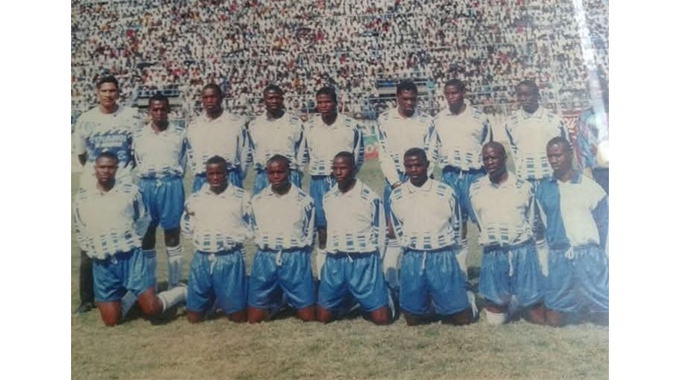
Solomon Mujakachi and Golden Guvamatanga
IN the struggle for the independence of Zimbabwe, nationalism, in its many manifestations, was the driving force.
Nationalism, according to the Oxford Learner’s Dictionaries, is a feeling of love for and pride in one’s country, sometimes to the point where it’s seen as superior to others. It can also refer to the desire of a group sharing the same ethnicity, culture, or language to form their own independent nation. Essentially, it’s a belief in the importance and unique identity of a nation.
For avoidance of doubt, ‘patriotism’ also refers to devotion to a particular place and involves social conditioning and personal opinions. Nationalism involves national identity and a superior feeling towards one’s own nation.
So we see Adolf Hitler parroting: “Deutschland über alles!“ which translates to: ‘Germany above all’ or ‘Germany above everything’.
It’s the opening line of the German national anthem, the ‘Deutschlandlied’. While the phrase itself isn’t inherently negative, it gained negative connotations due to its association with German nationalism and particularly its use during the Nazi era.
Across oceans today, we also hear the US president trumpeting: “Making America great again!”
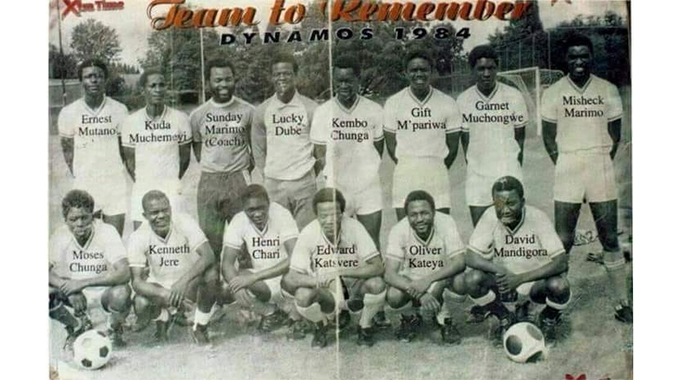
The formation of ZANU PF, as a manifestation of political nationalism, and Dynamos FC, as sporting nationalism, was neither coincidence nor convenience.

The two formations were nuanced on the lack of freedom of association and identity for blacks in the then Rhodesia.
And ZANU PF and Dynamos were not, and still are not, mere institutions in the history of the struggle for Zimbabwe.
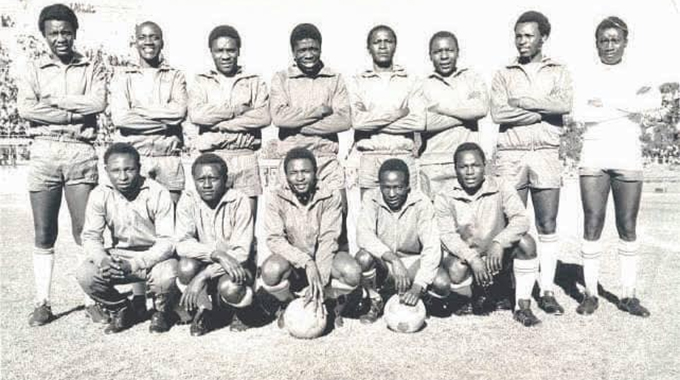
According to Taurai Matokoza, a member of Dynamos FC: “…the club was formed in 1963 by Sam Dauya, Richard Chiminya, Obadiah Sarupinda, Freddy Mukwesha, Jairos Banda, Denver Mahachi, Morrison Sifelani, Shacky Chitimbe, the late Danny Bricks Thomas, the late Josiah Akende, and the late Patrick Amato Dzvene in the Mbare suburb of Harare. The birth of Dynamos was necessitated by the disbanding of two major football clubs Salisbury City and Salisbury United in 1962. Hence this created the need to have a black dominated football club to compete against the white dominated clubs such as Salisbury Callies. Thus the formation of
Dynamos was in a bid to address the segregatory nature of the white minority which was common during the colonial period. Soon after its formation, Dynamos embarked on a development path which saw it producing good results. In 1964, the club produced the first black player to play outside the country Patrick Dzvene who played in Zambia for Ndola Football Club. Over the years, Dynamos achieved success at various levels in the football fraternity.”
The founding principle/goal of DeMbare at its formation was reportedly to address segregation during the colonial era. The primary motivation was to create a football club for black players, as white-dominated clubs, like Salisbury Callies, reflected the broader societal segregation by the racist whites.
Dynamos quickly became a strong force in Rhodesian football, achieving significant success, including winning the national championship in its first year.
The club’s success reportedly became a symbol of resistance against racial discrimination and a source of pride for the black community in Rhodesia.
Soccer became the sporting glue that bound the people together; transcending tribal and religious boundaries. On the pitch DeMbare became the voice of the voiceless and the marginalised. Their roars on the terraces echoed their frustrations with the system, their hunger for equity and their triumph as they the thrashed the white-dominated teams. Many fans from the townships wished Sundays could last forever! They were brief escapist Sunday afternoons where people forgot who was who — they roared with one voice!
What else was talked about during these seemingly innocent, fun-filled Sunday outings is subject to your imagination!
On the other hand, ZANU’s (now ZANU PF’s) stock was also rising, going by the grassroots support for the war effort.
However, recently, Dynamos’ misfortunes — which are mostly self-inflicted through outright disregard of the people’s aspirations and a departure from the team’s founding principles — are tumbling.
DeMbare’s original intentions and objectives were clear from the onset; that they were fighting a common enemy and that their success would revolve around capacitating the ordinary black person.
They presented the face and logo of a true and independent Zimbabwe.
But, unfortunately, and given the divergent routes that the two organisations have taken in recent times, that is where the comparison ends.
And the difficulty has always been on separating the two from each other.
Both institutions owe and trace their formation and existence to the need for serving the masses and subsequently delivering freedom — political and sporting freedom.
Where one has excelled, the other is staring at the reality of untimely demise.
Something has to give, and give very soon.
Where ZANU would be instrumental in taking the enemy head-on through guns and bullets, Dynamos simply had to conscientise the masses on the ills that were being wrought on them by the settler-regime; that of sporting exclusion.
That has all drastically changed, agonisingly so.
And that 45 years later we will be talking about the two entities in completely different terms is an embarrassing indictment on how DeMbare has fallen behind in terms of taking the lead in football development in the country.
‘Chazunguza’, as it is affectionately known by its many of supporters, is no longer shaking anything but its sorry self — having abandoned its objectives and founding principles.
ZANU was formed on August 8 1963 when Ndabaningi Sithole, Henry Hamadziripi, Mukudzei Midzi, Herbert Chitepo, Edgar Tekere and Leopold Takawira decided to split from ZAPU at the house of Enos Nkala in Highfield, Salisbury. The founders were dissatisfied with the non-confrontational tactics of Joshua Nkomo who was leading ZAPU.
Fast forward to 2025, three weeks ago in particular.
While ZANU PF was converging at the party headquarters from 2 July to 4 July in Harare, charting ways to further strengthen its eternal bond with the masses, DeMbare was further untangling its ties with its supporters in Mbare where it was formed.
A two-nil defeat at the hands of minnows Herentals at Rufaro Stadium ensured that DeMbare sunk deeper into the relegation waters, further compounding long-held fears that the giants are finally falling apart.
Bernard Marriot Lusengo, who tells people that he is the ‘owner’ of the club, even though his name is missing from the list of founding members, has been doing all he can to ensure that the club collapses.
His deficiencies are not about preserving a legacy.
Dynamos is now just an empty shell that has been sadly allowed to collapse, not by the people of Zimbabwe nor by its followers but by Marriot’s selfishness.
This is not about having a controlling stake in the team.
It is about milking a sickly and dying cow. – The Patriot