admin
admin
Gibson Nyikadzino Correspondent
THE term democracy has become an inherently unstable phenomenon to which progressive states now adopt and implement its ‘tenets’ based on their environments. It reminds this writer of Tanzania’s founding President Julius Kambarage Mwalimu Nyerere when he warned African countries against stampeding to embrace Western models on what a “government of the people by the people” constitutes.
He warned, “democracy is not a bottle of Coca-Cola which you can import.”
In contemporary times, Nyerere’s views have recently been emphasised by Chinese Foreign Minister Wang Yi saying: “Democracy is not like Coca-Cola that promises the same taste everywhere in the world.”
Simply put, China’s democracy has its own flavour, the US’, Canada’s and British democracies also taste differently. This does not exclude Zimbabwe, Rwanda, South Africa, Cuba and Japan. In its existence, historical or modern, democracy should therefore be understood as an unfinished work of art. It cannot be perfected instantaneously. India is regarded as “the biggest democracy” in the world because the country takes an average six weeks for people to vote, bearing in mind their population. Counting on the six-week period, democracy is such a long process.
Issues of accountability, freedom, socio-political justice, fighting corruption and even development are also tenets of democracy that most states are facing up to. These are not geographically and racially limited to the west or east. They are essentially universal. There are societies in Africa, traditional African societies, where today people respect accountability, fairness, justice and integrity without any trace of Western or Eastern influences. Such can always be done in all aspects, even governance.
For example, Somaliland, a country that broke away from mainland Somalia 30 years ago, this year held elections in which 15-year-olds were allowed to vote.
That is Somaliland’s view of what democracy should entail when choosing leaders, 15-year-olds should vote. No European, North American or Asian country has reached such a feat. Commenting about the development in Somaliland, the director of the Rift Valley Institute said: “Somaliland could well end up as the only place in the Horn of Africa that has any form of democratic election at all this year.”
The Somaliland case is an inspiring aspect that the West will not adopt. These ‘paragons’ of democracy today have always made reference of Athenian democracy as a model to what this phenomenon is.
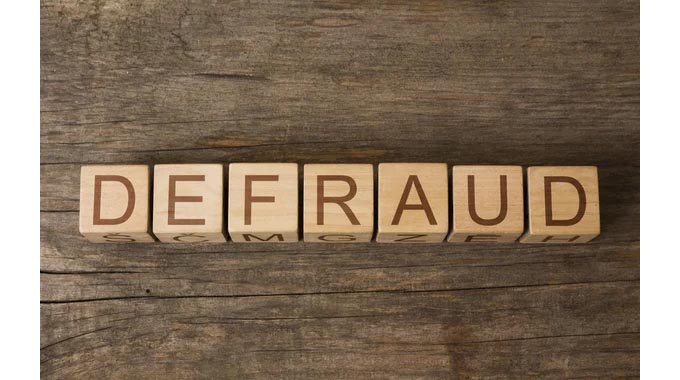
For the record, Athenian democracy, in all its value, worthiness and praise, was nothing but a fraud that has been used to hypnotise people.
In Athenian democracy, people are not told that the system was caste based. Under this ‘democratic’ system, it was just a little group of aristocrats that met in the public square in Greece to make decisions for everyone. Under them was a huge mass of citizens who had no rights, then called foreigners, and below them was an even larger mass of slaves. That was the Athenian “democracy” which is a reminder of today’s modern capitalist system. There were classes and the aristocrats, foreigners and slaves are today seen as equal participants, when they were not.
The fraud of Athenian “democracy” is that its adoption has tried to be smuggled and ‘universalised’ yet it addresses the interests of the modern aristocrats and bourgeoisie versus the masses. To this day, Western democracy has become a platform that advocates for freedom, rights and opportunities that only exist for those that agree with the capitalist system as engineered by the aristocrats and bourgeoisie against the masses. These are the ones who ‘shape’ public opinion, they ‘create’ opinion and even create the people’s political convictions and beliefs, all in the name of “democracy.”
It is anti-democracy for the ‘aristocrats’ that borrowed Athenian “democracy” and put it as a model to Africa, Asia and Latin America. The global citizens are not a ubiquitous arena. Their understanding of democracy is informed differently based on their histories, beliefs, political and social environments.
To those that bore the brunt of colonialism, western invasion, apartheid and social deprivation, democracy is beyond the Athenian version of what the West teaches. In the countries that suffered colonial exploitation, besides electing representatives, democracy also means development in order to improve the systems that were underdeveloped through colonialism. When Africa had its monarchies, its organised systems were interrupted and destroyed by the west through slavery and colonialism.
The Western values being imposed in Africa today will systematically divert Africa’s values and institute what only works for the West.
For others, democracy is the right to have a freedom of expression and having a voice to make decisions in matters that affect people directly, indirectly, in an institution or a country. Before Zimbabwe’s independence, when democracy was then conceptualised, it was seen through the “one-man-one-vote” scenario in many instances. But today, it can be seen different as participating in fighting neo-colonialism, embracing economic opportunities, taking back land, improving the rights of women, children, access to education, deracialising institutions, access to healthcare and also freedom of worship.
Contrary to Western beliefs, democracy is not racial profiling, killing of people based on their colour and gun violence. It is implementing what benefits people without prejudice, malice and contempt.
For example, a 2020 study by the US’ Stanford University found out that of the 100 million traffic stops by police departments across the country, black drivers were about 20 percent more likely to be stopped than white drivers.
Furthermore, African-Americans got searched twice more than white drivers even though they had statistically less illegal items than those carried by white drivers. For centuries, these scenarios have been happening against blacks in the USA, but the “democratic” state has neither addressed racism nor created an equal society.
Without fear of contradiction, the institutions in the USA are founded on institutionalised racism which cannot even be unshackled by their “progress in democracy”.
For the world to be secure and have independent states who believe in their sovereignty, the need to rethink and reorganise what democracy is, it is key in implementing people’s aspirations.
Western democracy and its tenets simply has little value to Africa’s needs.
The gruesome murder of Libya’s Muammar Gaddafi almost ten years ago at the instigation of Barack Obama, Nicholas Sarkozy and David Cameron gives a vibrant conclusion that democracy is just a paradise in the minds. Before Gaddafi’s annihilation, the United States, Britain and France, using United Nations Resolution 1973, sold the idea that they wanted Libya to be a “democratic state”.
After Gaddafi, the West left Libya a tattered and abandoned enclave that has become a ground of human slavery, itself a source of labour that built the US.
Closer home, the parochial and bigoted in Zimbabwe’s opposition body politic view democracy as simplistic and through their intolerance they only imagine the view of democracy as synonymous with the fall of ZANU PF. This view is not grounded, it is superficial, it is utopian and is an unreal language. What informs that “Zanu PF must fall” is not the voice of the people, but the voice of the imperialist vassals fronting western agenda.
To them, democracy is a source of achieving power and control by replicating the Libyan situation and wrestling power from the people and undermine Zimbabwe’s heritage by handing it over to imperialists.
Their yardstick of democracy is to denigrate the country’s painful past and creating alliances with the outsiders to shake the foundations of Zimbabwe. They think democracy is a religious and spiritual practice in which it is hinged on the “if you ask anything in my name I will do it” biblical teaching. No! Democracy is worked for. It is a people’s development pattern, socio-political convictions and norms. It is not turning a blind eye to the diversity and context to which people are living.
No state has the right to lecture a sovereign on what democracy is.
The term is polysemic, unstable and turbulent. Those that tame it to fulfil their aspirations can only calm and interpret it correctly.


 Online Reporter