admin
admin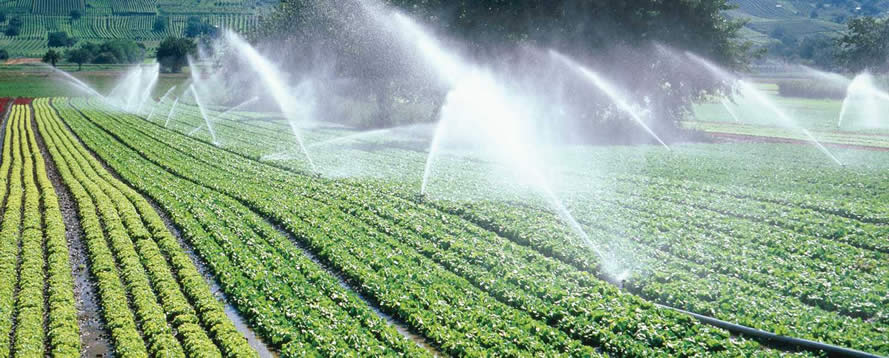
Dumisani Nsingo Senior Farming Reporter
THE Department of Irrigation last week trained farmers at the newly commissioned Pollards and Hauke irrigation schemes in Bubi district, Matabeleland North province in a bid to impart them with the requisite skills to turn their agricultural enterprises into viable entities. The two district irrigation schemes with an average budget of $2 million each have been under construction for close to a decade. Pollards (now known as Ilamba) measures 45 hectares and is home to 119 farmers while Hauke is 40 hectares and houses 80 farmers.
“We trained the farmers in issues to do with leadership, this entail coming up with constitutions and by-laws. These include basic operations and governance of their schemes. We also trained them in crop production, HIV-Aids in agriculture, water management as well as in issues to do with mechanisation and irrigation.
“Irrigated agriculture is a new enterprise in this area and mainly it comes with farmers or people working in a group and as such these have to be imparted with the requisite skills to run their enterprises without any squabbles so as to ensure the viability of their schemes,” said Matabeleland North provincial chief engineer Charles Makhula.
The two irrigations have a thriving maize crop after receiving input starter packs comprising of seed, fertilisers both top dressing basal as well as herbicides. Zimbabwe Commercial Farmers Union Matabeleland North provincial chairman, Mr Winston Babbage commended the efforts being done by Government through the Department of Irrigation of rehabilitating and developing irrigation, stating that irrigating was proving to be the most sustainable and reliable way of cropping in the wake of climate change, which has led to the country and the entire globe’s rainfall patterns perennially being disrupted.
“The teaching of farmers by the Department of Irrigation is a very commendable and noble idea especially if you take into consideration issues to do with climate change. As it is the rains are late and relying on rain-fed cropping is no longer ideal nowadays. In actual fact farming should cease being seasonal but should be done right round the year,” Mr Babbage said.
Irrigation provides a powerful management tool against the vagaries of rainfall and makes it economically attractive to grow high-yield seed varieties and to apply adequate plant nutrition as well as pest control and other inputs, thus giving room for a boost in yields.
Zimbabwe’s economy is driven by agriculture and the majority of the rural people depend on it for their livelihood. Moreover, about 80 percent of the rural population live in natural regions III, IV and V where rainfall is erratic and unreliable, making dryland cultivation a risky venture. The success rate of rain-fed agriculture in natural regions IV and V has been known to be in the order of one good harvest in every four to five years.
The Government has recognised the role of irrigation development as a key drought mitigation measure. Tremendous strides have been made by the Government, the private sector and the donor community in the area of irrigation development since independence in 1980. It is estimated that 120 000 hectares are under irrigation of which only 11 percent are on smallholder and out-grower schemes.
Mr Babbage said the onus were now on Government departments to assist farmers’ unions to advocate for financial institutions to accept 99-year farm leases as collateral to enable farmers to access loans so as to enhance the productivity of their agricultural enterprises.
“We are now looking forward to Government departments like the Department of Irrigation to assist farmers’ unions to advocate banks to accept 99-year leases as collaterals and have banks like the Agribank reverting to their old state where the financial institute was solely there to lend farmers loans to improve their agricultural enterprises unlike now whereby the bank is only giving personal loans to civil servants and employees in the private sector,” he said.



 Online Reporter