admin
admin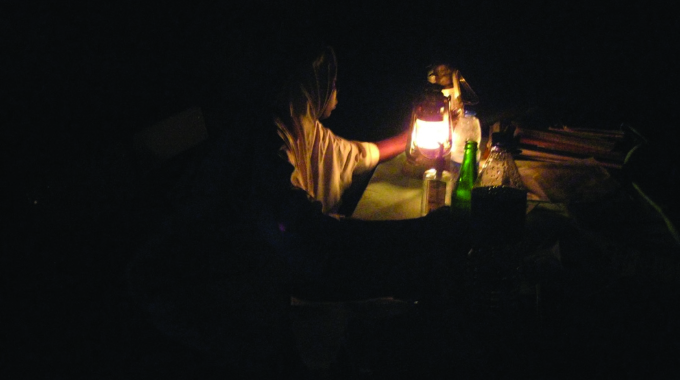
Ivan Zhakata recently in Dete, HURUNGWE
For years, when the sun set over Dete Rural Health Centre in Hurungwe, the real struggle began.
Expecting mothers in labour would arrive at the small clinic, but without electricity nurses had no choice but to deliver babies under the dim glow of their cell phone flashlights.
It was a desperate, often terrifying experience, one where every birth carried the weight of uncertainty.
But today, the nights in Dete are different.
Thanks to a 120kW solar mini-grid installed by the Government in partnership with the United Nations Development Programme (UNDP), the health centre now has reliable electricity for the first time in history.
And for the women who come here to give birth, that simple fact has changed everything.
Mr Fanny Mapondera, a primary care nurse who is also the nurse-in-charge of the center has worked at the clinic for years.
Mr Mapondera remembered the struggles all too well.
“There were times when I had to hold a phone in my mouth while delivering a baby because I needed both hands,” he said.
“We were always worried. What if there was a complication? What if we could not see well enough to help?”
In those moments, the nurses had no choice but to improvise.
Some mothers had to endure painful procedures under near-total darkness, and in more severe cases, those with complications had to be rushed to a better-equipped hospital, often too far away to make it in time.
Ms Chipo Moyo, a mother of two, still also remembered the fear she felt during her first pregnancy.
“I went into labour at night, and when I got to the clinic, there was no light,” she said.
“The nurse used a candle at first, but it kept going out because of the wind.
“Then she switched to a phone flashlight. I was so scared something would go wrong.”
That fear is now a thing of the past.
With steady electricity, nurses can monitor pregnancies more carefully, perform deliveries with confidence and even use modern medical equipment that was once useless without power.
Vaccines that previously spoiled due to a lack of refrigeration are now stored safely, ensuring newborns receive the care they need from the very first moments of life.
“There is such a big difference now,” Mr Mapondera said smiling.
“We no longer worry about losing battery power in the middle of a delivery.
“We can see everything clearly, and that means we can save lives.”
The change has also restored dignity to the birthing process.
Women no longer have to endure labour under makeshift lighting.
They can now bring their babies into the world under safe, clean and well-lit conditions. For the people of Dete, this is more than just an improvement in healthcare, it is a symbol of hope.
The once-forgotten rural clinic is now a place of safety, where new lives begin in the glow of steady, reliable light.
And for every mother who walks through its doors, that light is a promise that she and her baby will make it through the night.
The initiative, which began in 2022, has provided clean energy to 500 households, complementing the Government’s rural electrification drive.
The mini-grid, completed in 2024, has already begun transforming the lives of villagers by powering Dete Rural Health Centre, Dete Business Centre, local primary and secondary schools, a community borehole, and 26 homesteads.
Additionally, four solar energy kiosks were installed to further support the growing energy needs of the community.
For many, the arrival of electricity has been life-changing.



 Online Reporter