Online Reporter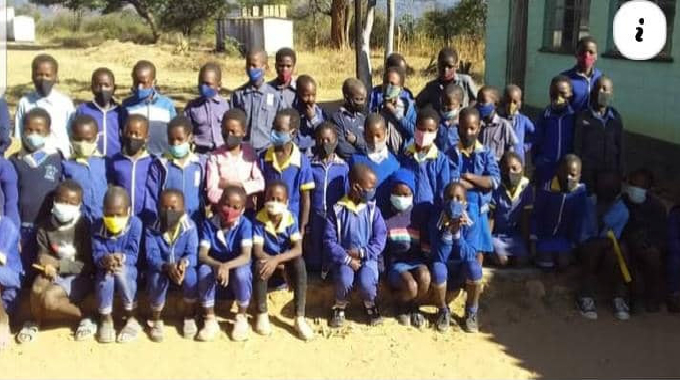
Nothando Zondo, [email protected]
On a dry winter morning in Ward 7 of Umzingwane, children at Silobi Secondary School are filing into a science laboratory that, until recently, existed only in textbooks.
Glass beakers sit neatly on benches, a Bunsen burner hisses, and a teacher guides learners through their first practical chemistry lesson in years. A few kilometres away, at Ntshamathe Clinic, a young mother holds her newborn in a newly commissioned maternity ward, grateful that she did not have to travel 20 kilometres in labour.
In Ward Four, villagers are loading maize onto a truck that can finally reach them because Mbizingwe Road has been graded after months of community fundraising.
These scenes, repeated in different forms across the constituency, tell the story of Umzingwane today. It is a story of bricks being laid, pipes being connected, and classrooms being filled. It is a story driven by the Constituency Development Fund and powered by residents who have decided that waiting is no longer an option.
Since his election as Umzingwane legislator, Brigadier-General (Retired) Levi Mayihlome, who is also the Deputy Minister of Defence, has made infrastructure the face of his tenure.
Working with ward councillors, traditional leaders, school development committees and health centre committees, his office has channelled CDF resources into projects identified by communities themselves.
The fund, a Government initiative that allocates resources to Members of Parliament to implement community-prioritised projects, has become the main engine of service delivery in the district. For many residents, it is the first time they have seen consistent, visible development across all wards within a single term.
The list of completed projects already feels long. At Ntshamathe Clinic, the new maternity ward has reduced referrals to distant hospitals and given expectant mothers dignity and safety closer to home. Science laboratories at Silobi, Mvuthu, Nswazi and Esihlengeni schools have been upgraded, allowing learners to move from theory to practice.
At Nonkwane Primary School, water reticulation now runs to taps on the school grounds, ending years of children fetching water from distant sources. The substructure of Nsezi Bridge has also been constructed, a critical step toward a crossing that will keep children in school during the rainy season.
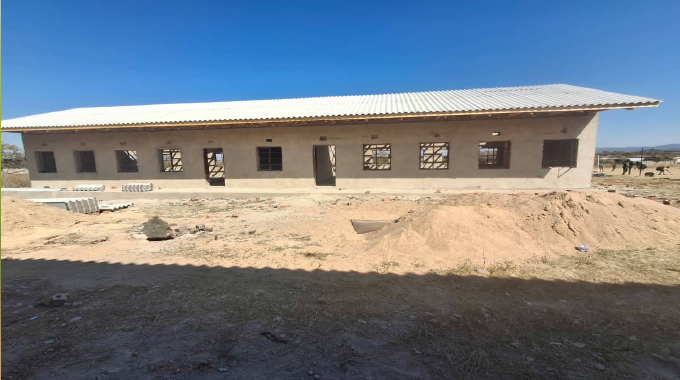
Ongoing work is just as ambitious. Classroom blocks are rising at Godlwayo and Nyankuni primary schools. A staff house is under construction at Mbizingwe Primary School to attract and retain teachers.
At Malilangwe Clinic, a new clinical ward is being built to expand outpatient services. Contractors are also attending to water infrastructure and ablution facilities, with ward monitoring teams on site to check materials, timelines and quality.
Brig-Gen Mayihlome said the scale reflects a deliberate policy shift. “These projects are for every resident of Umzingwane Constituency. As the constituency office, we have worked to ensure that no ward is left behind.
Development is not for a select few but for every community across the constituency,” he said.
“Before the advent of the Second Republic, access to Constituency Development Funds was inconsistent, and communities could not fully realise many of their development aspirations. Today, these funds are being allocated in a clear and structured manner, enabling Members of Parliament to respond to the priority needs of their constituencies. The difference on the ground is evident for everyone to see.
“We are grateful to His Excellency, President Cde Dr Emmerson Dambudzo Mnangagwa, whose visionary leadership and guidance have made these developmental programmes possible. Through his people-centred approach, communities are now witnessing tangible improvements in schools, health institutions and other critical infrastructure.”
What makes Umzingwane’s story different is how Government funding and community initiative are reinforcing each other.
In Ward Four, residents from at least five villages, including Mbizingwe, contributed money to rehabilitate the Mbizingwe Road and then approached the Rural District Council to provide a grader. The result has been immediate. Farmers are spending less on transport. Children are arriving at school on time even after it rains. Traders can move goods without vehicles getting stuck in mud.
That same spirit is showing up elsewhere, and Brig Gen Mayihlome said his office has been alerted to two communities separated by the fast-flowing Mtshabezi River, where children miss school for weeks when the river floods.
He said discussions are underway on how to address the crossing, potentially through a footbridge or drift improvement.
Incomplete Early Childhood Development ablution facilities, he added, have also been flagged, with plans to finish them through a partnership with parents.
Education is at the heart of the development push, and the most emotional example is Nsezi Primary School. A pioneer mission school with more than a century of history, Nsezi was once a beacon in the district.
Today it has just 107 pupils, teachers have left, and pass rates have fallen. The reason, everyone agrees, is infrastructure, crumbling classrooms, no proper ECD facilities, and poor staff accommodation have driven families to take their children elsewhere.
Former learners refused to watch the decline and now through the Nsezi Old Students and Friends Association and an online appeal by administrator Ms Maz Mliliwa Ncube — “Help to build Nsezi Primary School” — alumni have been mobilising support locally, in the diaspora, and from the corporate sector. The appeal has gained traction.
Brig-Gen Mayihlome said the response has been matched by the Government which is now working with various stakeholders to restore this historic institution.
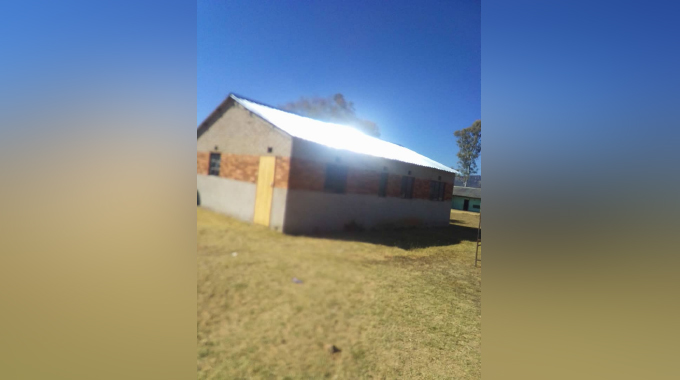
“How Mine and the Constituency Development Fund are looking to construct one classroom block each, while the ECD centre and teachers’ cottages will also be rehabilitated. The state of the school’s infrastructure has resulted in very low enrolment, which now stands at only 107 pupils. It has also contributed to the departure of members of staff and declining pass rates,” he said.
“We are asking the community and well-wishers to partner with us in rebuilding one of the pioneer mission schools with a very rich history in Umzingwane Constituency. Together, we can restore the school and provide a conducive learning environment for our children.”
Organisers expect the rehabilitation to boost enrolment and restore academic performance, giving Nsezi a new lease of life.
With an upgraded lab, it now means a learner in Esihlengeni can sit for practical exams without travelling to another school.
In addition, a maternity ward means a mother in Ward 2 can deliver safely and return to her fields sooner, and a bridge substructure means fewer missed lessons when the river rises. A staff house means a qualified teacher agrees to take a rural posting. Water reticulation means a school can run a nutrition garden and teach hygiene properly.
Brig Gen Mayihlome said the projects align with the Government’s National Development Strategy 1 and 2, which prioritise infrastructure, service delivery and inclusive socio-economic development.
“They also speak directly to Vision 2030’s goal of an empowered upper middle-income economy,” he said.
In Umzingwane, Vision 2030 is not a slogan on a banner. It is cement, steel, roofing sheets, and a tap that runs.
He said monitoring teams have been set up in each ward and quarterly feedback meetings are planned so residents can ask questions and suggest adjustments.
In addition, traditional leaders are involved in site selection to avoid conflict and ensure projects serve the most vulnerable, while school development committees are keeping records of materials so that communities know where every dollar goes.
As more CDF disbursements come through and as community contributions grow, Umzingwane is beginning to look like a model of what happens when government resources meet local determination. The service delivery challenges have not disappeared, but the response has. Schools, clinics, bridges and roads are all being touched at once, and residents are being invited to shape what comes next.