admin
admin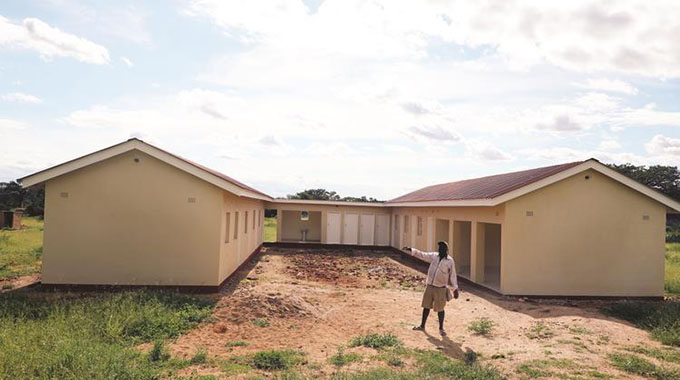
Senior Health Reporter
The devolution programme has helped local authorities across the country boost health service delivery, particularly in rural areas, where millions of Zimbabweans quite often face long journeys when ill to obtain treatment.
Government started disbursing funds to local authorities in 2019 to enhance infrastructure development in line with the Vision 2030 which seeks to create an upper middle income economy.
Devolution is enshrined in the 2013 Constitution, but its implementation began in earnest with the coming in of the Second Republic under President Mnangagwa when funds were budgeted to top up what local authorities raise themselves for essential infrastructure development in their areas.
Last year, Treasury budgeted $19,4 billion for devolution in the 2021 National Budget to give impetus to the promotion of inclusive and balanced socio-economic development. Local authorities themselves choose what they want to spend the money on, and most rural local authorities, after consulting the residents, go for clinics and schools as the most important gaps that need filling.
So most local authorities channel a significant chunk of funds towards health service delivery with a number of clinics being built, upgraded and equipped to offer better health care to the population.
In Manicaland, all seven districts have so far built new clinics or upgraded the existing ones.
Last year, Makoni Rural District Council opened Nzvimbe Clinic to the public after its construction was completed.
The construction of the clinic had stalled for over a decade forcing more than 13 000 villagers to travel more than 30km from the furthest part of ward 31 to access health services.
In Buhera, over 10 000 villagers are now benefiting from Mbundire clinic which was constructed using part of the $22,5 million allocated to the council under devolution.
Villagers in Ward 1, where the clinic was built, had to walk long distances to access health services, with some even travelling further into Chikomba district.
Not only has devolution funds been used to build health facilities, Buhera has also used funds to construct an access road to link Mbundire clinic to the business centre, other essential facilities and the communities.
Chimanimani RDC also prioritised the completion of the Hotsprings clinic which was constructed using devolution funds.
Although work stalled last year due to the Covid-19 pandemic and subsequent lockdown measures announced by the Government, the hospital was completed this year and is now offering services to more than 10 000 villagers in the surrounding communities.
The local authority also channelled funding into the refurbishment of Mhakwe Clinic, constructing housing for nurses at Muchadziya Clinic as well as construction of a new clinic at Hlabiso in ward 22.
In Mashonaland West, Chegutu RDC has also prioritised health care services and clean water delivery to communities since the inception of the devolution programme.
The local authority said it had prioritised the building of clinics using devolution funds to ensure communities have more health care facilities and services closer to them.
A clinic was built in Ward 22 and is already offering services while Katawa Clinic in ward 26 is being constructed.
Makonde RDC transformed a disused farm-house into a clinic to address the health care needs of over 7 000 people in the district.
Gandawasvika clinic became operational in October this year while Mpata and Magogi clinics were also targeted for completion this year.
In Matabeleland South, Tshabili clinic in ward 2, Dumba clinic in ward 15 and Mazunga clinic in ward 14 were constructed using devolution funds.
Construction of Tshabili, which began in 2003, was completed in partnership with the International Organisation for Migration (IOM) and the Zimbabwe National Army
In Midlands, villagers in Mberengwa, Chirumhanzu, and Gokwe South also benefited from health facilities constructed under devolution.
Garinyama, Hwata and Mapfungautsi clinics are just three of the many facilities that were completed to improve the lives of thousands of villagers in the province.
Matobo Rural District Council in Bulawayo managed to complete the Umlugulu clinic in ward 24, a resettlement area which had no health facility in the past.
In Mashonaland East, Goromonzi RDC constructed two clinics, Pote and Rochester, while a waiting mothers’ shelter was constructed at Rusike clinic.
This year Masvingo province also made significant headway in increasing access to health services where Ndanga hospital in Zaka was refurbished using devolution funds. At other health service centres, devolution funds were used to build waiting mothers’ shelters and expand maternity wings in a move meant to stem infant mortality rate and maternal deaths.
Many other health service centres were constructed and rehabilitated across the country last year.
Although the Covid-19 pandemic put a spotlight on the challenges that already existed in the healthcare system, particularly in access of health services for under-served communities, the devolution programme has been instrumental in addressing some of the challenges to ensure universal access to health care.
With over $42 billion earmarked for devolution this year, more health facilities are expected as President Mnangagwa lives his promise of cutting the distance that villagers walk to access the nearest health facility.


 Online Reporter