dyton mupawaenda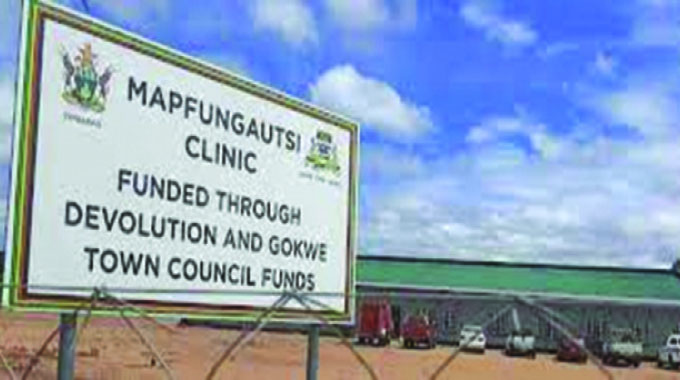
Lovemore Chikova-Development Dialogue
The acceleration of devolution as announced by President Mnangagwa at the recent Zanu PF annual National People’s Conference in Gweru will change the country’s status as a developing country and ensure the achievement of Vision 2030.
Vision 2030 entails that the country becomes an upper-middle-income economy by that year.
Devolution is provided for in the Constitution as one of the key pillars of development under the New Dispensation, resulting in various activities being carried out to advance the concept this year.
It signifies a new direction in how the country’s system of governance works to ensure tangible economic benefits for the people.
The idea is for provinces to spearhead the economic transformation of their areas, and then ultimately help the national economy grow.
Devolution is provided for in Chapter 14 of the Constitution, with its main goal being the equitable allocation of national resources and the participation of local communities in the determination of development priorities within their areas.
It entails that provinces should have economic and social indicators to track their development in terms of productivity, employment creation, export earnings and import substitution initiatives as part of the periodic provincial reports and briefs they present.
As President Mnangagwa said at the Zanu PF annual National People’s Conference, devolution is part of the perfection of the liberation war gains.
One of the popular Zanu PF philosophies during the liberation war was “power to the people” (masimba kuvanhu).
Devolution does exactly that by ensuring that communities have the power to make their own decisions on development.
President Mnangagwa said at the Zanu PF conference: “The Devolution and Decentralisation Agenda carries with it our enduring revolutionary philosophy ‘masimba kuvanhu’. Through this agenda, a marked transformation in the infrastructure landscape across districts is evident for everyone to see.
“During this new term, and as encouraged by this conference, devolution projects will receive greater support to improve the quality of infrastructure and services for our people, particularly those in rural areas.
“Our Zanu PF Government will equally ensure the delivery of quality services and that all projects are completed on time, in keeping with the culture of the Second Republic.”
President Mnangagwa said apart from seeking to develop and empower all communities across the country, devolution was also a way for Zanu PF to repay the public for supporting it when it waged an armed struggle to end the repressive Ian Smith colonial rule.
“Let us, therefore, solve their (rural communities) needs and keep their development aspirations in mind,” he said. “In addition, harnessing their comparative advantages to accelerate rural industrialisation is of paramount importance.”
Theme of the conference was aptly crafted as — “Towards Vision 2030 through Devolution, Industrialisation and Modernisation”.
It is then expected that after the clarion call made by President Mnangagwa for the acceleration of devolution, provincial authorities now must ensure they fully play their part.
Zimbabwe is endowed with vast natural and human resources that have the potential to change its status by helping achieve the devolution agenda.
The provincial authorities should by now have already mapped how their areas can maximise devolution and ensure they play their part in uplifting the lives of the people.
Each province has its own potential based on the types of resources available there, and it should be clear by now how best these resources can be exploited for the benefit of local people.
The sectors that anchor devolution like mining, agriculture, infrastructure, manufacturing and tourism need to be fully developed at the provincial level to increase the Gross Domestic Product of the province.
There is also a need to upskill human resources so that effective plans can be drafted, while there is accountability of the process.
Experts should be mobilised so that projects can be successfully carried out under devolution.
Another important area to move forward the devolution agenda is for the provinces to seek partnerships in various fields, especially when it comes to the exploitation of natural resources and infrastructure development.
In mining, for example, a partner can bring in equipment and new technologies that quicken the exploitation of the mineral resources for the benefit of the local communities.
Such win-win partnerships can help fill the gaps that exist in providing the means to exploit the abundant natural resources in the provinces. Provinces should ensure that the programmes they institute can quickly turnaround their fortunes and contribute to their GDP.
President Mnangagwa has since indicated that provincial GDP will be used by the Government as a yardstick to measure the success of devolution in provinces.
Opportunities abound in the provinces.
There are already developed service centres that can be easily used as the base to kick-start industrialisation in the districts.
This can include the setting up of industrial zones, special economic zones and other production centres that can help increase the provincial economic output.
It is a good initiative that the Government is availing funds to provinces and districts under devolution.
This is important to help the provinces and districts establish a foundation for further development.
But the provincial officials must not relax as this dependence on central Government for development funds will soon dry up.
The provinces will be asked to show their own output and how they intend to re-invest the money they would have raised through various projects.
This will enable the provincial authorities to be accountable and also ensure they work for the people in their communities.
A lot has been happening in provinces and districts that have been using devolution funds on various projects.
There has been the building of new clinics and schools and rehabilitation of the existing ones, upgrading of roads, construction of bridges and water bodies and establishment of irrigation schemes using devolution funds availed by the Government.
Such projects are mainly concentrated in the crucial sectors of health, education, water and sanitation and road infrastructure.
They are being implemented in line with the National Development Strategy 1 and as part of attaining Vision 2030.
A glimpse of the provinces indicates they have the potential to do extremely well in increasing their GDP and coming up with projects that benefit locals.
The provinces can leverage their work around minerals that are found in almost every province of Zimbabwe.
The Second Republic has been constructing dams and other water bodies in various parts of the country, making agriculture one of the major prospects in driving devolution through irrigation.
These water bodies assure the provinces of food security and food exports.
It is then important that everyone participates in ensuring that devolution is a success and that communities benefit from this empowerment gesture.
Devolution entails that Zimbabwe maintains its unitary State system, where, apart from the central Government, the other levels of governance are either the local or municipal level whose powers are not accorded constitutional status.
In this system, the central Government makes a decision on which powers to devolve to the lower levels, and in the case of Zimbabwe, Government is giving local councils and provinces the mandate to make decisions on socio-economic issues.
The preamble for the Constitution’s chapter 14 states that there will be devolution of power and responsibilities to lower tiers of government, but taking into cognizant desirability for “the preservation of national unity in Zimbabwe and the prevention of all forms of disunity and secessionism”.
What this means is that there should be constant interaction among the central Government, provincial structures and local government structures because the powers being devolved will still be superintendent by central Government.
Lovemore Chikova is the Assistant Editor at The Herald with an interest in developmental issues. He holds a Master of Social Science in Development Studies.
Feedback: [email protected]


 Online Reporter