

 admin
admin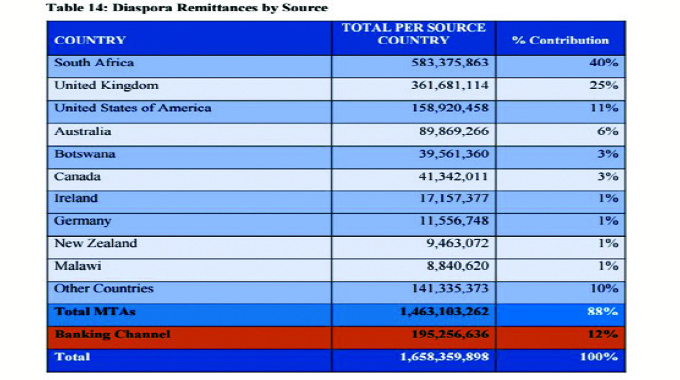
Dr Masimba Mavaza
The Zimbabwean diaspora is found in countries all over the world, including the United Kingdom the Americas, Europe, Africa and Asia.
It is common knowledge that the Zimbabwean diaspora contribute to Zimbabwe’s GDP and development through investment, remittances, and the transfer of skills and knowledge.
Diaspora investments also add significant value to Zimbabwe enterprise.
The World Bank records over US$80 billion sent to and within Africa in 2020 and Zimbabwe benefited immensely from the diaspora.
The Zimbabwean diaspora, the dispersal of people of Zimbabwe throughout the world, has had a significant impact on both Zimbabwe and the Zimbabwean diaspora communities.
These diaspora communities have made significant economic, social and political contributions to their host country.
Zimbabwe must harness the diaspora investment to the best interest of the country. Diaspora investment is crucial for the development and growth of home country.
It is imperative to channel diaspora’s financial and human resources into productive investments in the home country, and this objective should be at the heart of authorities.
Remittances from diaspora significantly impact the economic development of their home countries, but the mobilisation of their savings is necessary to channel them into productive investments.
Through various activities and initiatives, diaspora collaborates with local stakeholders and institutions to facilitate diaspora investments in the countries of origin.
The goal is to generate income and employment at the local level through the promotion of local products, public-private partnerships, and market linkage activities, leveraging diaspora networks.
There groups also connect local service providers with diaspora business partners to facilitate market linkages and increase diaspora participation in the economy.
With these efforts, Zimbabwe aims to re-channel remittances and increase diaspora investment in the home country, ultimately contributing to sustainable development and integration of the countries of origin into the global economy.
John, a Zimbabwean who stayed in the United Kingdom for 30 years has retraced his way back to Zimbabwe.
He is now in the mining business where he is working together with local miners.
John confirms that he gets over 30 000 pounds a month from the two mines he is mining from.
While some of his friends who remained in the UK still work for 2 000 pounds per month, John feels vindicated by his choice to return home.
The diaspora has the potential to make significant contributions to the development of the country.
“The Zimbabwean diaspora has significant financial resources and can invest in various sectors such as real estate, infrastructure and small and medium-sized enterprises. These investments can create jobs and stimulate economic growth, ultimately leading to an increase in GDP,” Absolom Kuza a Zimbabwean social worker in the UK said.
“I do keep contacts with home and go home as much as possible so that my business does not go down.”
Remittances, or the transfer of money from diaspora members to their country of origin, is another way in which the diaspora can contribute to the country’s development.
Maria Matemba, who runs a money shop sending money to Zimbabwe said: “The World Bank estimates Africans in the diaspora save about US$53 billion per year and, in 2020, recorded remittances reached over US$80 billion sent to and within Africa.
“These figures reflect the magnitude by which Africans in the diaspora are participating in the continent’s economic development. The latent potential of the Zimbabwean diaspora community to mobilise greater human and capital assets in support of their home communities is also evident.”
According to The Africa Report, reducing the burden of sending remittances can maximise the critical flow of financing for development.
Policymakers must ensure that remittance service providers can partner with correspondent banks without challenges.
Moreover, remittance channels, such as money transfer operators (MTOs), national banks, and telecommunications companies can also serve as avenues to mobilise diaspora investments – through diaspora bonds – and bond financing – through securitisation of future flows of remittances.
World Remit can now be collected from banks and many organisations which send money home are now linked to the Zimbabwean banks and this is making the banking system work again.
The Zimbabwean diaspora can also contribute to Africa’s development through the transfer of skills and knowledge.
Many members of the Zimbabwean diaspora have received higher education and have acquired valuable skills and knowledge in fields such as business, technology, law medicine and healthcare.
Through the transfer of skills and knowledge, the diaspora can contribute to a wide range of sectors, from entrepreneurship and technology to healthcare, education and investment. Entrepreneurship is one area where the Zimbabwean diaspora can make a significant impact.
Diaspora entrepreneurs can bring new business ideas and models to the continent, as well as access to capital and markets.
They can also serve as role models and mentors for aspiring entrepreneurs in Zimbabwe, providing valuable guidance and support.
Mika Marambwa collects items which are about to be thrown away in hospitals and donates them back home.
Many remote hospitals are now equipped with high technology in Zimbabwe.
Another area where the diaspora can contribute is technology.
Professionals in the diaspora who work in the technology sector can help bridge the digital divide and support the development of Zimbabwe’s ICT infrastructure.
They can provide expertise in areas such as software development, data analytics, and cybersecurity, helping to build a more robust and resilient digital ecosystem in Zimbabwe.
The Mayor of Corby, His Worship Tafadzwa Chikoto, said: “In the healthcare sector, diaspora healthcare professionals can provide expertise in areas such as medical education, research, and clinical care. They can help to improve the quality of healthcare services in Zimbabwe and support the training of the next generation of healthcare professionals.”
Mr Tadiwa Mapani a former teacher said: “Education is another important area where the diaspora can contribute. Diaspora educators can support the development of educational systems in Zimbabwe by sharing best practices and providing training and professional development opportunities.
“They can also help to promote international collaboration and support the exchange of ideas and knowledge between Zimbabwe and the rest of the world.”
Investment is yet another area where the diaspora can play a critical role.
Diaspora investors can provide capital for infrastructure projects, small businesses, and real estate development, supporting economic growth and job creation.
They can also help to attract foreign investment to Zimbabwe which can support the continent’s economic development.
In addition to these areas, the Zimbabwean diaspora can also contribute to development through policy. Diaspora leaders can use their positions of influence to advocate for policies that support development, such as trade agreements, foreign aid, and debt relief.
They can also raise awareness about development challenges and opportunities among their peers in the international community.
Zimbabweans in Diaspora have implemented several projects to utilise diaspora investments to promote economic development in Zimbabwe.
Many Zimbabweans in Diaspora are willing to go back home and contribute in the development of the country and many have taken education seriously and they will return home with knowledge meant to develop Zimbabwe.



 Online Reporter