


 admin
admin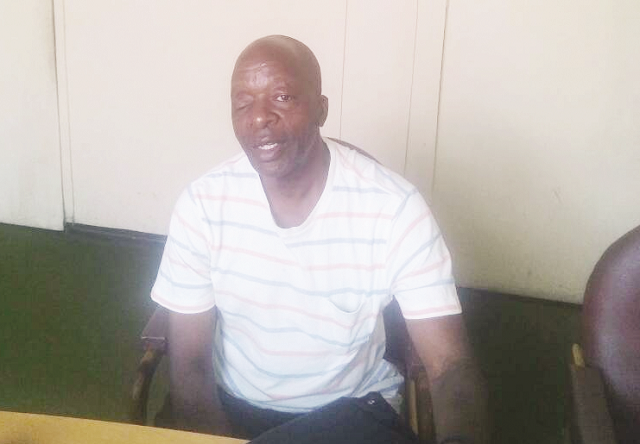

NAMPUNDWE Camp, a main site of induction for new Zipra recruits located about 25km outside Lusaka in Zambia in the 1970s was not a facility for the faint hearted.
That is where the new recruits had a brush with the military life and it was the place where people had the first taste of military life. One of the Zipra instructors at the “cauldron” called Nampundwe was Cde Cetshwayo Sithole whose pseudonym was Tonderai Ngoma. Our Assistant Editor Mkhululi Sibanda (MS) last week traced Cde Sithole to give an insight on how the situation was like at Nampundwe. Below are excerpts of the interview:
MS: Cde Sithol, most people call you by your pseudonym Tonderai Ngoma. Our readers would first like to know who is Tonderai? Your brief background.
Cde Sithole: I was born on 25 June 1953 at Emagedleni, Matshetshe area of Gwanda District, Matabeleland South. I started primary education at that local school where I went up to Standard Three. I then went to Dambashoko for my Standard Four.
For Standard Five and Six I was at Shake, all these schools are in Gwanda District. My first school Magedleni belongs to the United Congregational Church of Southern Africa (UCCSA) formerly known as London Missionary Society (LMS) while the others belong to Brethren In Christ Church (BICC). Then I came to Luveve Secondary School and that was in 1969. However, I only went as far as Form Two as I was being raised by a single parent, my mother, whose name was Anny Nkala. After school I worked at Leather and Plastics, which was later on bought by Monarch, which belonged to Treger Group of Companies. I also worked for Damick where I spent one-and-a-half years. Damick was also bought by Treger.
MS: When did you start getting an interest in politics?
Cde Sithole: Politics could not have escaped me because where I come from there were outstanding political personalities such as the late national hero and former combatant Cde Sikhwili Khohli Moyo and former Bulawayo Town Clerk, Moffat Ndlovu. These were some of the politically influential people from our area and it could have been in 1965 or 1966 thereabout when our primary school was burnt. Such an atmosphere blended well with the fact that when I was working, I was staying in Phelandaba where Joshua Nkomo was staying, so the influence was very high. I was also an admirer of the Angolan army, the MPLA. There was also that zeal to hold an AK-47, it was within our, in my feeling. But when Joshua Nkomo came out of prison in 1974, when we welcomed him there were very long queues just to go and shake his hand. That was so motivational.
MS: When did you reach the stage when you felt you were ready for the war?
Cde Sithole: It was in early 1975, the zeal at least to go out, be part of the war, was so high, you know high. The feeling to go to war was within me. One day we were discussing these issues as a Zapu youth with a guy whose father was working for the Rhodesian Railways now National Railways of Zimbabwe and used to live is Sizinda. Then this guy said to me if you want to go to Botswana with a goods train, it’s easy. He then said he will show me how they used to get onto them, after which they would drop off at Emganwini and come back with the other ones. I then said it’s a good plan. Then on a Friday after getting paid we went to the railways premises near Sizinda. That guy took us to a spot located on high ground and the goods train will be travelling at a very slow speed and then told us to jump in, I did jump in, we were three of us. We were all from Pelandaba, myself, Reginald Khumalo and Remigious. We went up there to Emganwini, the goods train stopped and we felt that at least maybe there were going to be some security guards who were going to be searching the train, so we alighted. However, I went to the train, but the other two guys remained behind when the train left. They had to walk back to Pelandaba.
MS: So what did you do to avoid being spotted by the train crew?
Cde Sithole: I just went under the canvas up to Francistown. I did not encounter any problems at the border as I kept my cool and when I got to Francistown I disembarked and that should have been around four or five in the morning. I then went straight to the police station where I told them I was Zapu. They kept me there and later in the day, that is mid-morning then came three guys, Normal who was called Dick Vuma, Elliot Mnyamana and Bruce Makona. They then took us with others I had found at the police station to Minestone just on the eastern side of Francistown. Remember when I went to war Zapu was still banned and in 1972 there had been the Pearce Commission, that in some way forced the leadership of both Zapu and Zanu to at least try to get people together. That period ushered the era of Bishop Abel Muzorewa and the likes, to lead what looked like a neutral party, the ANC, which was actually a caretaker organisation. So the people who were coming out during our time were to fall under the ANC. So when we got to that house in Minestone there was a man called Saunyama who represented Zanu. So at that time we co-existed with the guys from Zanu and those from the Muzorewa side. So we stayed there for some time and it was at that time when one of our commanders was actually abducted from Botswana, Ethan Dube.
His traces could still be found, they used to show us, the enemy had pulled him away from where he was staying. However, at that time it was difficult to share such information with the recruits as they were not even sure who was loyal, who has been sent by the enemy. To add to the suspicions we were living in a house shared by three different groups.
MS: How long did you stay there?
Cde Sithole: One day we were rounded up by the Botswana army early in the morning and we asked ourselves what was happening, only to discover later that there was a man who had come to address us. The man was none other than Dumiso Dabengwa. He told us that a plane had been organised to fly us to Zambia. That period should have been August 1975. Our group had been affected by delays because of the political bickering that was there. You know at that time Muzorewa was claiming that he was in charge of everybody, all the recruits to say. I went there as Zapu, but Muzorewa was claiming that he had the leverage to at least communicate with the leadership of the Frontline States. When we got to Zambia we were taken to Nampundwe.
MS: Everybody talks of Nampundwe and you were later on to be based there. When was it established?
Cde Sithole: It was established quite a long time prior to Zanla being housed there. It was a camp that was being used by Swapo. So Zanla when Herbert Chitepo was assassinated, the relationship between the Zanu leadership and the Zambian government was strained. That relationship became so bad that Zanla was removed from Nampundwe and sent to Mboroma.So when we were taken from Botswana to Zambia, we were taken as a group that belonged to various parties and specifically they thought we belonged to Bishop Muzorewa, but Abel Muzorewa had no external base whatsoever during that time. So we stayed there, again for a very long time and during that time, Saunyama who was in Francistown used to visit Nampundwe where we were being looked after by the Zambian army. What we should bear in mind is that at that time, it was the détente period. During the détente the operations, the military operations were almost frozen to give an opportunity because the leadership of the detained parties had been released from prisons.
MS: How long did you stay there and what were you doing?
Cde Sithole: I can’t remember exactly, but it should have been six months. But our stay there, you know there was a trained guerilla who was trained by Zipra, but was a Mozambican whom we called Humpty Good. There we were plus or minus 300 of us.
To be continued next week



 Online Reporter
 Bongani Ndlovu