Online Reporter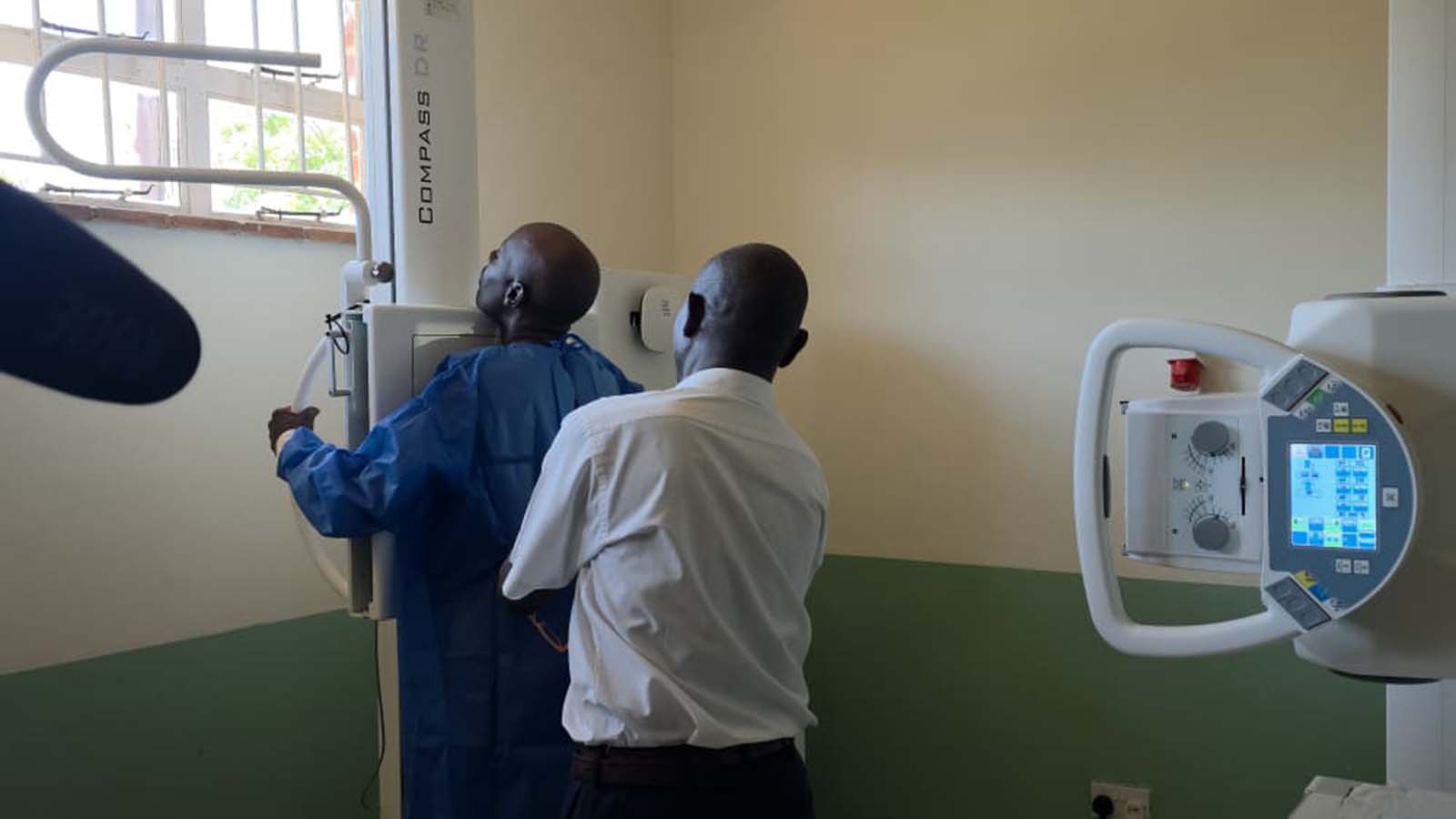
Rumbidzayi Zinyuke recently in HAUNA, Honde Valley
FOR 62-year-old Gogo Chipo Simanga, living with HIV since 2001 has meant regular visits to health facilities and a lifetime of managing her condition.
But when she began developing other complications, including hypertension and diabetes, her health took an uncertain turn.
“I started feeling unwell, but the doctors could not immediately tell what was wrong,” she recalls.
She was referred for an X-ray at Hauna District Hospital, where the underlying problem was identified, allowing doctors to prescribe the correct treatment.
“After the X-ray, they quickly knew what was wrong and gave me the treatment I needed. Since then, I have been stable and healthy,” she said.
Her story reflects the shift taking place in Zimbabwe’s rural health facilities, where the introduction of digital X-ray machines is dramatically improving diagnostic services, reducing waiting times and ultimately saving lives.
Under the COVID-19 Response Mechanism, the Ministry of Health and Child Care procured digital X-ray machines for 31 health facilities across the country to strengthen diagnostic capacity.
Hauna District Hospital in Manicaland is among the beneficiaries, and the impact is already evident.
For years, rural facilities relied on analogue X-ray systems, which were slow, costly and often unreliable. Patients had to wait for films to be developed, sometimes only to discover that the images were too dark or too light to make an accurate diagnosis.
In many cases, this meant repeating the procedure or referring patients to distant facilities such as Mutare or Bonda Mission Hospital.
Acting Manicaland provincial medical director, Dr Cephas Fonte, said the transition to digital technology has been a game-changer.
“Previously, with analogue systems, you needed film, chemicals and a technician to develop the image. If any of those were not available, the service would stop. Even when available, the image quality could be poor, leading to misdiagnosis or repeat procedures. With digital X-rays, the image is produced instantly and can be shared among clinicians in real time. The turnaround is quick, and decisions are made immediately,” he said.
Beyond speed, the new systems are also integrated with modern technologies, including telemedicine and artificial intelligence, enabling remote diagnosis and specialist consultation.
“An X-ray taken in Hauna can be sent instantly to a specialist in Mutare for review. This is critical for rural areas where specialists are not always available,” said Dr Fonte.
The integration with diagnostic tools such as GeneXpert machines has also strengthened the detection and management of tuberculosis, including drug-resistant strains.
“When we identify abnormalities on the X-ray, it becomes easier to refer the patient for further testing. This ensures that patients are started on the correct treatment without delay,” he added.
Behind the installation of the new digital X-ray machines has also been a significant investment in upgrading health facility infrastructure, supported by the United Nations Development Programme (UNDP) with funding from the Global Fund.
To accommodate the transition from analogue to digital systems, facilities underwent electrical upgrades to ensure they could safely handle the higher power demands of the new machines. This included strengthening power supply systems, sockets and cabling.
Mechanical improvements were also introduced, with air conditioning systems installed to regulate temperature, as the advanced machines generate more heat and require controlled environments to function optimally.
In addition, radiation safety was enhanced through the installation of lead-lined doors in X-ray rooms, protecting both patients and healthcare workers.
At Hauna District Hospital, X-ray operator Mr Benard Kwaramba said the transformation has made a significant impact.
“Previously, using the analogue system, it would take between 15 to 25 minutes to process one X-ray. Now, with the digital machine, it takes about three minutes,” he said.
The improved efficiency has significantly increased the number of patients that can be attended to each day.
“Before, we could only manage about five to 10 patients per day. Now we can attend to more than 20 patients, and the results are more accurate,” he said.
For patients, this has translated into shorter waiting times and faster access to treatment.
“I came here after my child fell and broke her arm, and within a short time, my baby was attended to and had an X-ray,” said Ms Primrose Muchuchu.
“The results were sent to the doctor immediately, and I was told what treatment she needed. This means I do not have to go back home and return later. Everything is done in one visit.”
The introduction of solar power systems has further enhanced service delivery, ensuring that critical equipment continues to function even during power outages.
Globally, digital radiography is transforming healthcare systems by improving image quality, reducing radiation exposure and enabling faster, more accurate diagnoses.
In Zimbabwe, the adoption of such technologies aligns with the National Development Strategy 2 (NDS2), which prioritises strengthening health systems, improving access to quality healthcare and leveraging innovation to achieve universal health coverage.
By bringing advanced diagnostic tools closer to rural communities, the Government is addressing longstanding inequalities in healthcare access, ensuring that patients in remote areas receive timely and accurate diagnoses.
Dr Fonte said while the progress is commendable, there is still a need to expand such interventions to more facilities.
“Our hope is that every health facility will eventually have access to such technologies. Resources may be limited, but we are targeting high-volume sites to maximise impact,” he said.
For communities in Honde Valley, the coming in of digital X-rays is not just about machines, but about improved access, efficiency and a healthier future.