

 daniel chigunwe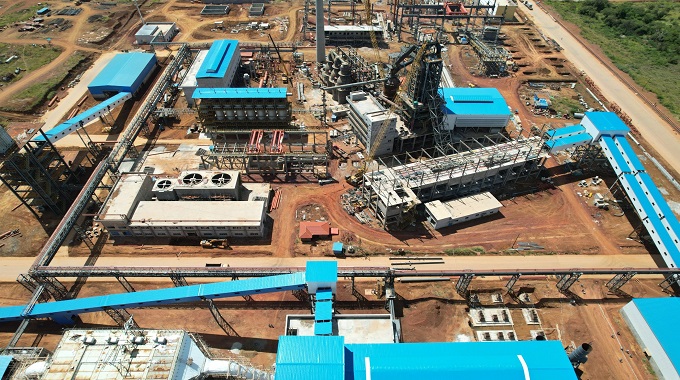
THE US$1,5 billion steel plant by Dinson Iron and Steel Company is operating at 60 percent capacity and the figure is expected to reach 75 percent in the second quarter next year.
The steel plant, which commenced operations under the first phase of production in July this year intends to start manufacturing steel bars in the second quarter — a development that will see the company that is presently producing pig iron and steel billets improving its capacity utilisation.
In addition to improving capacity utilisation, the steel plant that is situated in Manhize near Mvuma in the Midlands province, anticipates to create 500 additional jobs during the second quarter next year.
It is hoped that 10 000 people will be employed directly under the firm’s 4th and final phase of production. Presently, the Dinson project touted as Africa’s biggest steel plant employs 2 200 people.
Speaking by telephone yesterday, Dinson projects director Wilfred Motsi said they intend to start manufacturing steel bars that are also part of the firm’s product range under the first phase of production, in the second quarter of next year.
“Currently, we are operating at 60 percent capacity utilisation and we expect to reach 75 percent in the second quarter next year when we introduce steel bars on our product range.
“Employment figures as a result of the steel bars that we will be producing will rise to 2 700,” he said.
The steel plant is one of the three local subsidiaries of China’s Tsingshan Holdings Limited and the group’s other subsidiaries in Zimbabwe are Afrochine Smelting in Selous, Mashonaland West province and Dinson Colliery in Hwange, Matabeleland North province.
The steel plant is projected to produce 600 000 tonnes of products annually under the first phase rising to 1,2 million tonnes in the second phase.
Production will then rise to 3,2 million tonnes in the third phase and ultimately five million in the final phase supplying a full range of steel products to local and foreign markets while 500MW would be required to power the steel plant.
Recently, the steel producer launched its 50MW power plant to achieve energy self-sufficiency and decrease its dependence on the national grid.
At present, the steel plant is consuming 28MW and plans are underway to synchronise the remaining capacity into the national grid.
Net revenues are expected to be at US$10 million in the first phase and will rise to US$4,5 billion in the final phase of production.
Zimbabwe is expected to earn millions of dollars in exports once the firm starts exporting to regional and international markets such as Asia and Europe.
“So far, we haven’t started exporting but we are producing for the local market. As for the tonnage that we are producing, I don’t have the figures off hand but we have started selling and in terms of our sales figures so far, I would need to get those from our sales department,” said Motsi.
Since the closure of the Redcliff-based steel manufacturer, Zisco — once the largest integrated steel plant north of Limpopo in 2008, local industries have been importing steel and other related raw materials in the region and abroad to countries such as China and India.
At its peak in the 1990s, Zisco produced over one million tonnes of steel annually employing more than 5 000 people directly. — BH24


 Online Reporter