

 admin
admin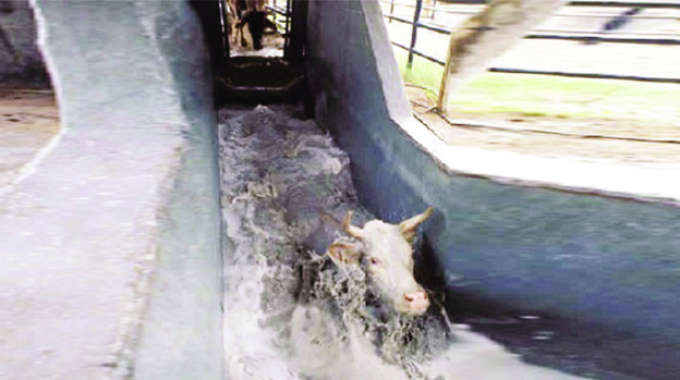
Conrad Mupesa Mashonaland West Bureau
FOR Mrs Tsigirai Marume of Chirikiti Village in Sanyati’s Ward 8, losing her livestock herd to Anthrax and January Disease in 2020 was a huge blow and a bitter pill to swallow.
She lost 8 cattle out of 10 to the two diseases that swept throughout the country decimating cattle particularly in Mhondoro, Chegutu, Hurungwe and other districts of Zimbabwe.
While she and her husband had hope of disposing of some of the beasts to pay school fees and purchase inputs , the yearning desire was short-lived.
The couple looked helplessly as their creatures died one after the other within a short space of time.
Recounting the horror, Mrs Marume said she lost eight cattle out of a herd of 10.
“Almost every villager here lost heavily to the diseases. I lost two beasts in just one day. Only two beasts survived of ten This became common here in 2020 and 2021. We were badly affected,” she said.
The area is close to Chegutu 6 Game Area and lumpskin had become rampant as domestic animals mix with buffaloes and other animals from the conservancy area.
Other villagers in the area including Mr Ellen Mhanya who are still counting losses from the outbreaks of the disease, blamed the dilapidated and few dip tanks in the area.
She too, lost cattle to the outbreaks of the disease.
In a bid to address the challenges and ring-fence the community’s source of wealth in line with Zimbabwe’s Livestock Recovery Plan, Sanyati Member of Parliament, Dr Polite Kambamura has joined hands with the community.
The Livestock Growth Plan seeks to address a number of challenges that are constraining livestock production, productivity, and profitability.
The plan targets to ameliorate challenges in the key areas of animal health, animal genetics, animal nutrition, and other related parameters.
Dr Kambamura is provided with building materials for the construction of the dip tanks while the community chipped in with labour and bricks.
A target of two dip tanks per Ward, has been mooted with the mutual understanding between the two parties .
More dip tanks have also been constructed in Wards 9, 10a and 11.
Apart from the construction of the dip tanks, the legislator has started drilling boreholes at each facility to reduce the distance travelled by villagers to fetch water for cattle dipping.
Before the drilling and installation of a bush-pump borehole at Makwechere dip tank, Mrs Marume and other villagers would travel a distance of about 10 kilometres to fetch water.
Makwechere dip tank is currently serving at least 23 villages including Musona, Mupozhori, Chiyangwa and Machokoto.
Musona village head Mr Philip Musona said the borehole drilled at the dip tank saved villagers from his jurisdiction from walking more than five kilometres to fetch water to fill up the tanks.
“At least 23 villages are benefiting from the dip tank. In my village, 180 households have started seeing the benefits of this new facility,” he said.
The dip tank chairman, Mr Elisha Kuchicha (42) said over 3 000 cattle use the dip tank.
“At least 3 000 cattle go through the dip tank during sessions done every Monday per week in summer and once per fortnight during other seasons,” he said.
The previous dip tank, adjacent to the newly constructed would leak large volumes of water through cracks created by aging.
The pro-developmental initiatives by the community and local MP has also been lauded by Ms Marjoury Jambo an Agritex officer who usually interacts with villagers on daily basis.
She was optimistic that the dip tanks will see an increase in livestock production which would subsequently raise the areas’ crop production bar.
Dr Kambamura reaffirmed his commitment is ensuring that his constituency has enough dip tanks.
“We want to ensure that each ward has at least two dip tanks to lessen the distance travelled by villagers. Villagers must not travel long distances to have dip their cattle,” he said.
Provincial veterinary services director, Dr Thokozani Mswela said the distance travelled has to be less than 10 kilometres with every dip tank servicing at least not more than 1 500 cattle.
“In Mashonaland West, this is however a difficult situation since we are faced with livestock diseases. We have even reduced that number to 300 per dip tank,” said Dr Mswela. He, however, encouraged farmers to use other methods of dosing their livestock, including spraying.
The Sanyati community is best known for cotton farming and the drop in the international price market had seen many relying on livestock as a source of income and wealth.



 Online Reporter