Online Reporter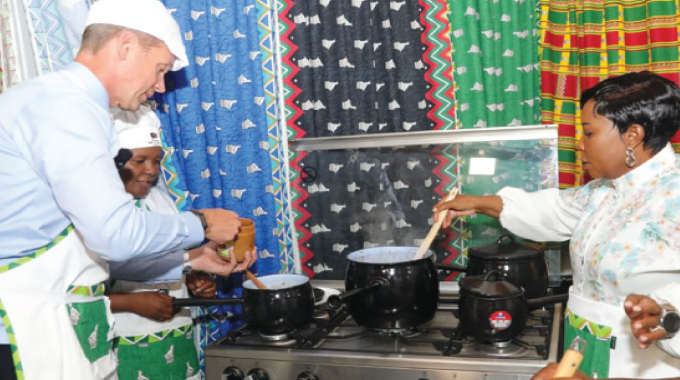
Blessings Chidakwa, [email protected]
DIPLOMATS traded suits for aprons during a lively cookout competition hosted by First Lady Dr Auxillia Mnangagwa at Amai’s Kitchen at the Zimbabwe International Trade Fair, where Botswana President Duma Boko also passed through accompanied by President Mnangagwa.
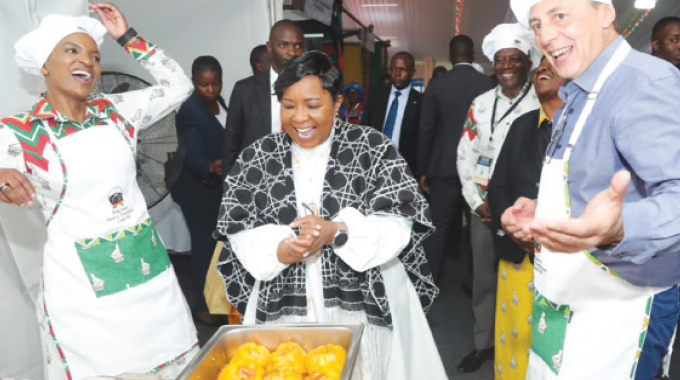
Amai’s Kitchen left a lasting impression at ZITF as several diplomats accredited to Zimbabwe prepared and showcased traditional dishes from around the world, while President Boko appreciated the various cooking techniques and cuisines on display.
The visit provided an opportunity for President Boko to get a first-hand feel of the cultural initiative that has become one of the First Lady’s signature platforms for engagement, empowerment, and national pride, as he paid glowing tribute to her for safeguarding cultural heritage.
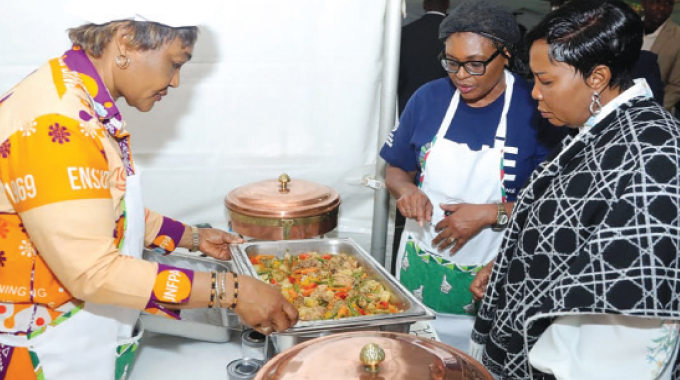
As the culinary contest unfolded, British Ambassador to Zimbabwe, Mr Pete Vowles, joined Dr Mnangagwa at the Zimbabwean stand to prepare local cuisine, recalling how he had learnt to cook indigenous dishes in the early 1990s in Mudzi, Mashonaland East Province.
He personally took part in preparing sadza rezviyo and vegetables with peanut butter.
Other diplomats from Serbia, Kenya, Tanzania, Botswana, Malawi, among others, prepared dishes from their home countries, while representatives from international organisations, including the United Nations Population Fund (UNFPA), also participated.
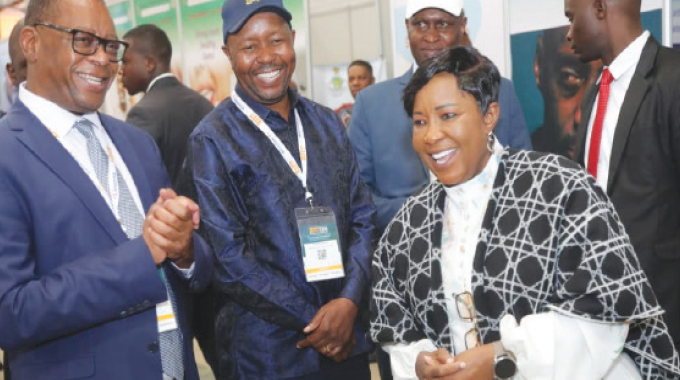
Participants prepared dishes representing their countries, exchanging recipes, cooking techniques, and cultural stories, while Zimbabwean hosts ensured that the gathering reflected the warmth and generosity for which the nation is known.
Amai’s Kitchen also served a wide range of Zimbabwean traditional delicacies, which attracted large crowds and added colour to the ongoing ZITF programme.
The cookout competition added a distinctive cultural flavour to this year’s ZITF, reinforcing the fair’s status not only as a hub of commerce and investment but also as a meeting point where cuisine became a universal language of friendship.
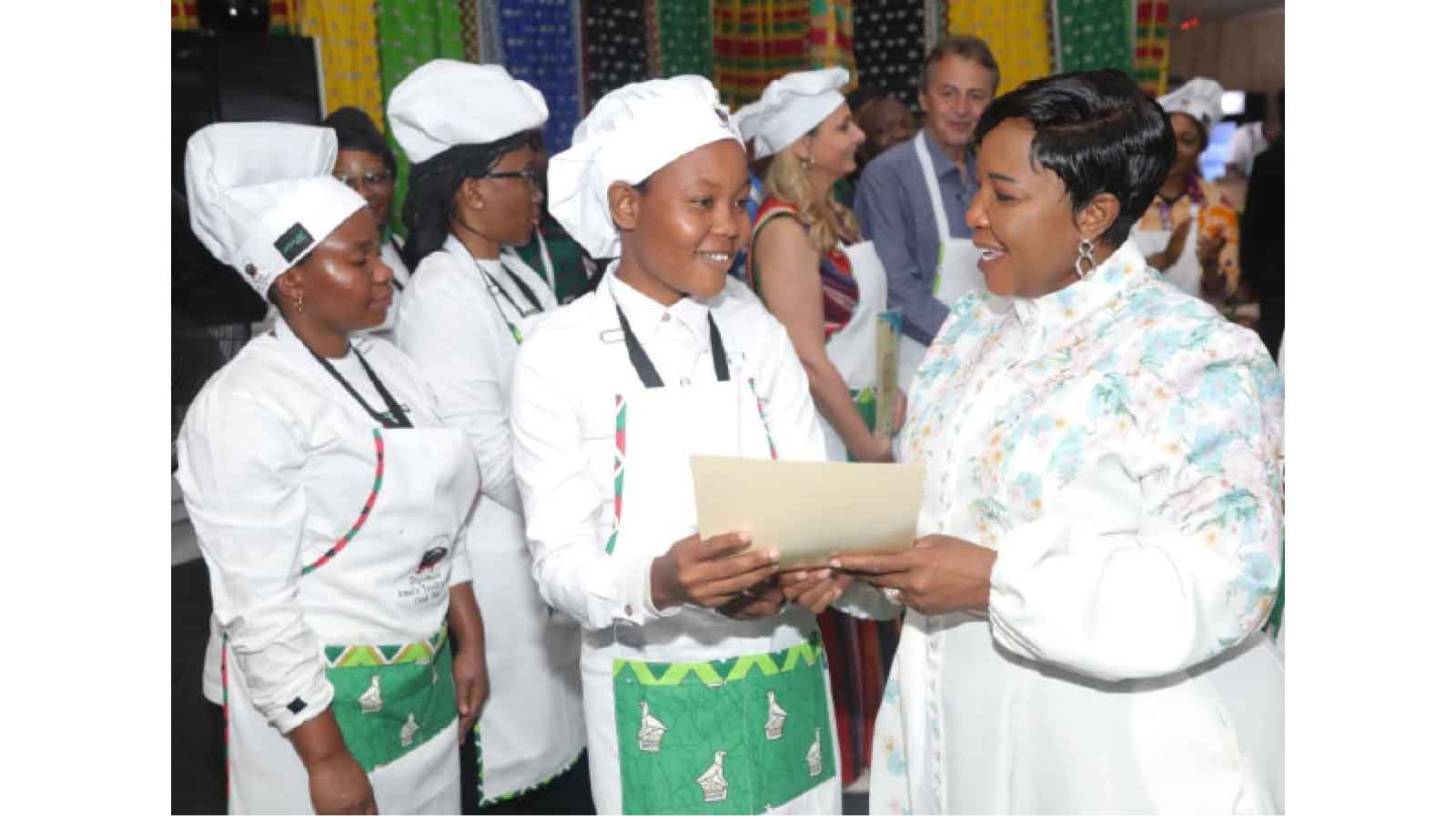
Indeed, the First Lady’s renowned Amai’s cookout competition showcased Zimbabwe’s hospitality while encouraging visiting missions to celebrate their cultures through food in a setting designed to promote unity, understanding, and cooperation.
The diplomats hailed Dr Mnangagwa’s cookout competition for offering a refreshing approach to diplomatic interaction, proving that partnerships between nations can be strengthened not only through policy discussions but also through shared experiences.
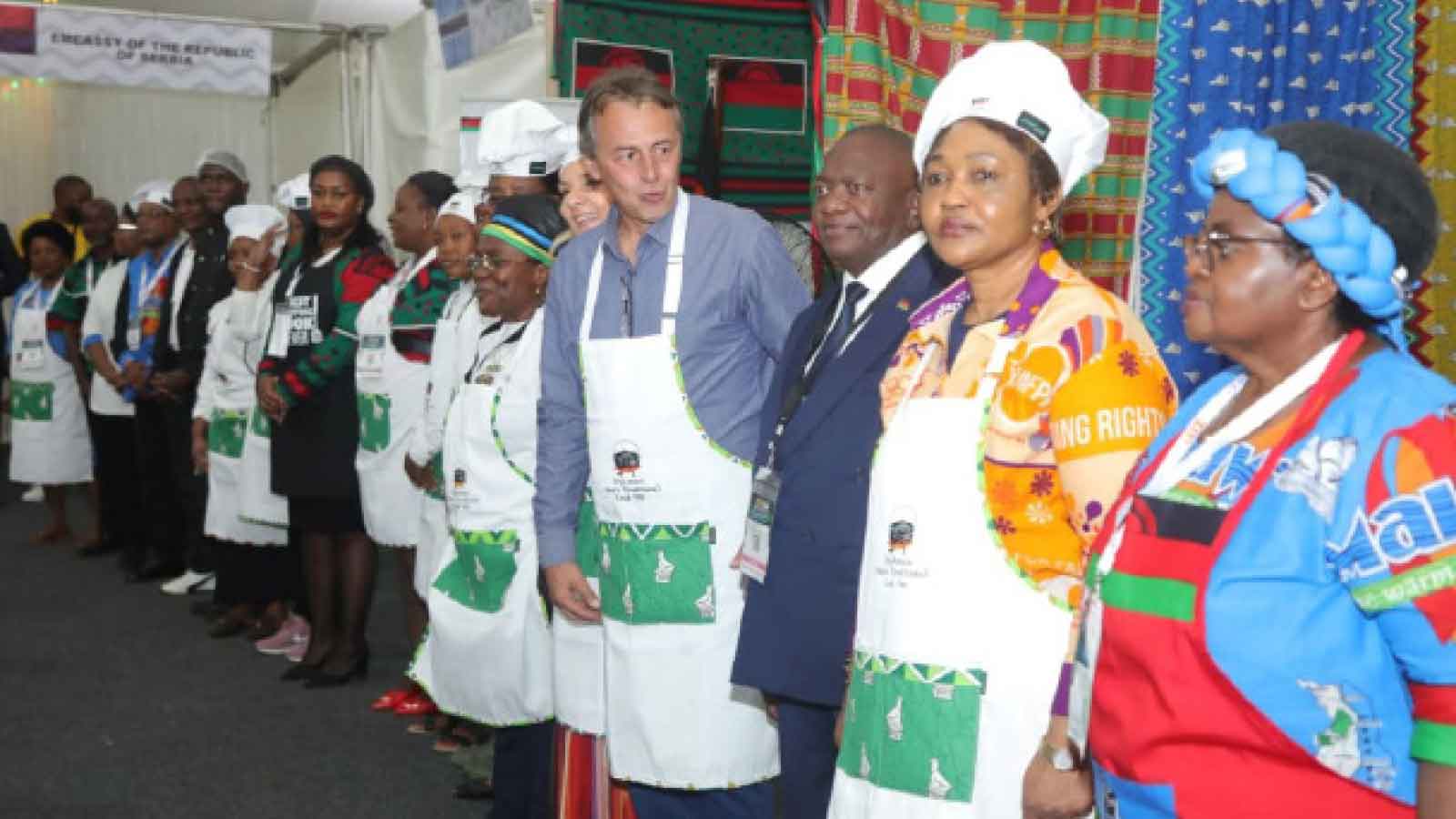
Serbian Ambassador to Zimbabwe Mr Radiša Grujic hailed the multi-layered approach to engagement, blending cultural warmth with strategic leadership interactions.
“We want to express our gratitude to the First Lady, Her Excellency Dr Mnangagwa, for organising this very extraordinary and nice event devoted to the diplomatic cookouts.
“It was our honour and pleasure to participate as representatives of Serbia. We are so happy to have the chance and opportunity to show Serbian traditional food,” he said.
Tanzanian Ambassador to Zimbabwe Suzan Kanganda said traditional cuisines are mostly tasty and medicinal while emphasizing that cooking knows no status or gender, applauding the First Lady’s initiative.
“I am an ambassador in the kitchen; cooking does not justify the level or status of a person. Each one of us should know how to cook and prepare their own traditional food. It does not matter whether you are a man or a woman.
“So the importance of this cooking, apart from sharing the knowledge of different cultures, is also to showcase that cooking is paramount to any person, any human being, so long as you want to keep your health,” she said.
Tanzania prepared its traditional cuisine, including ndizi bukoba, kande, nyama choma, senene, among others.
As diplomats continued to grill, serve, and sample dishes from different corners of the world, the atmosphere at the ZITF grounds carried a clear message: Zimbabwe is open, welcoming, and committed to building bridges.
UNFPA representative in Zimbabwe Ms Miranda Tabifor said she was “very happy” to be part of this cookout organised by the First Lady, as the nutrition that she is propagating is linked to the health of the mother.
Ms Tabifor said people live very well and healthily with good nutrition, the same for pregnant women, helping prevent many maternal deaths that are sometimes caused by poor nutrition.
“The vision of the country is that no woman should die giving birth. We really want to congratulate the First Lady for her leadership in leading this whole initiative that will see the linkage between maternal health and good nutrition,” she said.
“We are actually working to ensure that when the mother eats very well during pregnancy, she will give birth to a bouncing, healthy baby.”
The head of the diplomatic spouses’ association, wife of Serbian Ambassador Mirjana Grujic, applauded Dr Mnangagwa, saying the First Lady’s programme added a powerful human touch to the fair’s economic and trade-focused agenda.
“It is very important to share diversity, different cuisine, different culture, and to be together in one event, like today’s event, and to do that together and to show the recipes and to travel.
“You witness that when you are travelling from one tent to another. That is the same as when you are travelling from one country to another to share the culture,” she said.
Wife of the Malawian Ambassador to Zimbabwe, General (Retired) Peter Andrew Lapken Namathanga, who also showcased their traditional cuisines, said it was important for elders to pass on knowledge to the youth.
“We have prepared these things so that we teach our children so that they should keep our culture,” she said.
She also explained one of their unique ways of cooking vegetables with peanut butter, saying they take groundnuts, pound and sieve them, and use that powder to put in the vegetables.
Malawi prepared its traditional food, including kilombero rice, nsima, chambo fish, and nkhuku ya Lokolo.
A representative from Kenya, Mrs Antonina Magio, thanked Dr Mnangagwa for affording them the opportunity to showcase their traditional cuisine.
“We want to thank the First Lady for creating this environment for us as African delegates to come and cook and enjoy African culture.
“So we are excited that all of us can come, enjoy what we enjoy, and celebrate together African peace,” she said.
The event also served to showcase Zimbabwe’s cultural richness and culinary diversity to the international community.
At Amai’s Kitchen, the rich aroma of sizzling meat, the sound of laughter, and friendly banter filled the air, with patrons thanking the First Lady for the delicious traditional cuisine. An elderly man in his 70s, Richard Maporisa, shared the benefits.
“I am what I am today due to eating this healthy food. I encourage young people to continue with these foods which are tasty and healthy,” he said.
His wife also applauded the First Lady for continuing to promote traditional cuisines.
In hosting the event, the First Lady once again demonstrated her ability to use culture as a tool for unity and goodwill, turning a simple cookout into a meaningful platform for strengthening international friendship.
Meanwhile, Dr Mnangagwa, who is also the country’s Health Ambassador and had a packed schedule at the trade fair, toured several stands at the exhibition and unveiled a state-of-the-art mobile hospital and mobile clinic for cancer screening.
The First Lady also toured stands manned by female entrepreneurs in the SME sector, who were showcasing beautiful wares, including artefacts and handmade bags crafted from locally sourced materials.
The world-class mobile hospital is equipped with an ultrasound scanner, an advanced gynaecological oncology screening unit, and a radiation machine.
It enabled people from Bulawayo and beyond to undergo screening for cervical, breast and prostate cancer.
Thanks to the advanced equipment, breast cancer can be detected at an early stage, significantly reducing the risk of cancer-related deaths.
Mrs Suzan Chuma, who was screened, said the process was smooth, conducted openly and freely.
“This programme is laudable because it is usually costly to undertake these screenings, but she saw it fit to bring the services to the people.
“The programme is benefiting everyone free of charge. I am one such proud beneficiary,” she said.
Another beneficiary, Ms Wendy Muzuva, said cancer screening is vital as she has personally witnessed several people who died due to lack of knowledge.
“I have close relatives, some of whom refused to be diagnosed despite having symptoms, and they passed away, while those who chose to be screened are still alive today. So I urge people to take screening seriously,” she said.
The event concluded on a unifying note, reaffirming the role of cultural exchange, health awareness, and shared experiences in strengthening international friendship and co-operation.