admin
adminand lack of organs within governments that drive their cause and aspirations.
“Makadii sekuru,” greeted Johnson (not his real name) ,a 10 year-old lad, referring to a 25-year-old physically challenged young man.
Stereotypical innuendos and name calling are being normalised as ways of addressing people with disabilities.
It is now almost two months since the commemoration of the International Day of Persons with Disabilities on December 8, where victims surprised many with shocking tales of the level of discrimination meted out against them but nothing is yet to be done.
International Day for Persons with Disabilities is commemorated globally by individual disabled persons and groups on December 3 every year.
This day presents an opportunity for disabled persons and advocacy groups to pressure governments, civil society organisations and the business sector to pay particular attention to the concerns of disabled people in the community which are social, economic and political in nature.
Disabled people are often forced to deal with offensive words hurled at them by able-bodied fellows.
For instance, a woman who attended the celebrations testified that a man once said to her “Makadii nemuviri” to refer to her left leg amputee condition, a term usually associated with sick persons.
Kombi touts have even went to extremes calling disabled persons “datya” meaning “frogs” particularly the wheelchair-bound.
National Council of Disabled Persons of Zimbabwe Chitungwiza branch chairman Alexious Zindoga said his organisation is thriving for 100 percent participation of persons with disabilities in the society.
He commended Government’s efforts in identifying and removing barricades that are impeding persons with disabilities from fully enjoying their inalienable rights.
“The Government has already started working towards inclusiveness in the education sector and we hope the programme will cascade to all spheres of society,” opined Zindoga.
He added that there are some social barriers faced by the disabled and that make them appear irrelevant.
“Several buildings where social gatherings usually took place are not disability friendly and the disabled always find it difficult to participate in important social activities.
“The majority are failing to attend social gatherings like churches due to inaccessibility of venues hence the need to advocate for an inclusive and accessible society,” said Zindoga.
NCDPZ is a welfare organisation representing the concerns of persons living with disabilities and has over 87 branches nationally.
Deputy Mayor of Chitungwiza, who is also the councilor for Ward 24, Clara Makwara said Chitungwiza Municipality is set to address the exclusion of persons with disabilities through giving preference to the physically challenged in their recruitment.
“The council has made it a policy to first consider the physically challenged whenever there is an available job within council structures.
“We are fully geared to fight discrimination and eliminate all forms of barriers to ensure that the physically challenged fully participate in society.
She urged concerned stakeholders to stand firm in identifying all subtle stereotypes that were protracted to hinder empowerment of the physically challenged.
Accessibility and inclusion of persons with disabilities are fundamental rights recognised by the Convention on the Rights of Persons with Disabilities.
The CRPD (Article 9, Accessibility) seeks to enable persons with disabilities to live independently and participate fully in all aspects of life and development.
It calls upon State parties to take appropriate measures to ensure that persons with disabilities have access to all aspects of society, on an equal basis with others, as well as to identify and eliminate obstacles and barriers to accessibility.
In Zimbabwe today, lack of awareness and understanding of accessibility as a cross-cutting development issue remains an obstacle to the achievement of progress and development through Millennium Development Goals, as well as other internationally agreed outcomes for all.
Simon Sekete, a resident of Glen View 8, who is visually impaired lamented challenges he faced as an airtime vendor day in day out.
Making a living through vending is a challenging job for him as he realises meagre profits in what he says is a product of his physical condition.
“I make a living through vending as I am being pushed by a strong desire to work with my own hands and not burden anyone.
“This, however, was not a solution as I was faced with yet another challenge immediately after joining the bandwagon of hustling for a dollar.
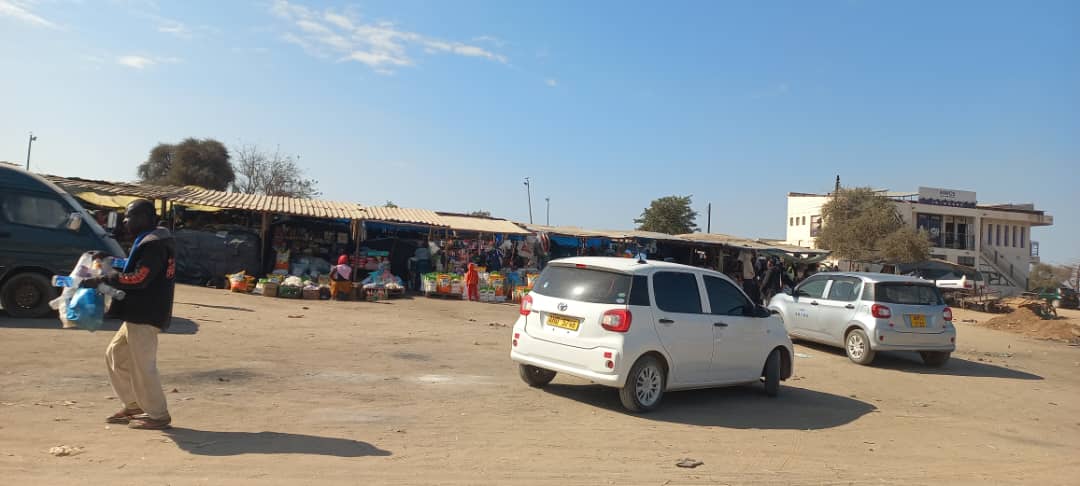
“I spent most of the time playing cat and mouse games with the municipal police, who are a major barrier in the smooth flow of my business.
“I cannot engage in a meaningful business due to lack of capital and banks cannot give me a loan as there will be no collateral,” said Sekete.
The call for people with disabilities to be exempted from council by-laws on vending is met head-on with denial and discrimination from the municipal personnel as it appears in bold print but not in practice.
Estella Makombore, who uses crutches, said discrimination is still at alarming proportions in society, hence the need to sensitise the nation to shun intolerance towards persons with disabilities.
Makombore said policymakers must come up with policies that take out barriers and guarantee the inclusion of persons with disabilities in our communities.
“Persons with disabilities are among the poorest in society, because they are largely excluded in social and economic activities.
“We always find it very difficult to enjoy human rights as employment and shelter among others cannot be obtained easily. Some organisations will not countenance the idea of employing a physically challenged person as they are considered incompetent and not capable even if they are qualified.
“When it comes to housing the able-bodied will grab everything as there is discrimination in the allocation of housing stands,” said Makombore.
Chitungwiza District Administrator Zivai Chisango, while speaking on behalf of the Provincial Administrator, Harare Metropolitan Province Mr Tome, urged policymakers to come up with stringent programmes that remove all barriers currently preventing the disabled from participating in issues of governance.
She further explained that barriers can take a variety of forms, including those relating to the physical environment or to information and communications technology, or those resulting from legislation or policy among others.
“Other barriers emanate from societal attitudes or discrimination and the result is that persons with disabilities do not have equal access to society or services, including education, employment, health care, transportation, political participation or justice,” said Ms Chisango.
She added that when barriers are removed and persons with disabilities are empowered to participate fully in societal life, their entire community benefits.
She said barriers faced by persons with disabilities are a detriment to society and accessibility is necessary to achieve progress and development for all.
Challenges currently being faced by persons with disabilities in Zimbabwe include accessibility of infrastructure, employment opportunities, housing opportunities, communication, education, mainstream into HIV and Aids programming and involvement in local decision-making processes among others.


Online Reporter
- Herald
- July 31, 2026
- 24 views
Norton Town Council renews integrity pledges
Diana Nherera Norton Town Council councillors and management on Thursday renewed their integrity pledges as part of the local authority’s commitment to promoting ethical conduct and combating corruption. Speaking…