admin
admin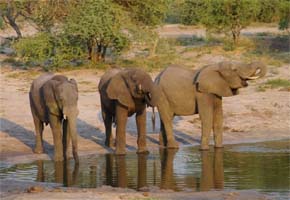
that were succumbing to thirst in Hwange National Park.
Before the rains fell, 77 elephants died of thirst in the country’s largest game sanctuary after water sources dried up.
According to the National Parks and Wildlife Management Authority, between August and October, Main Camp lost five calves and 25 adult elephants, Sinamatela lost six calves, 13 sub adults and six adults while Robins Camp lost seven calves, eight sub adults and seven adult elephants.
Hwange National Park has an estimated elephant population of 34 322.
A visit by Chronicle to the Main Camp at the weekend revealed a totally different state of affairs from two weeks ago when wild animals were suffering and dying because of lack of water and the heat wave when the temperatures soared to above 40 degrees Celsius.
Workers who included researchers and conservationists working in the park said the looming disaster in the park had been averted by the rains as the worst was over.
“Things are a lot different now as there is grass, trees sprouting and water sources all over the park. We pray that the rains continue to fall as we are still cautious about everything,” said one source.
“Because of the rains that fell recently, there are now a number of water sources and elephants are no longer forced to walk long distances for water. Since the rains started falling we have not recorded a fresh case of elephants death.”
ALSO SEE
The National Parks and Wildlife Management Authority said it was using up to 500 litres of diesel a month to pump water into pans in the national park.
Hwange National Park has no perennial rivers and receives little natural surface water, making it dependent on wells supplying artificial watering holes known as pans.
The authority said Main Camp had 39 boreholes of which 32 were diesel powered while two used solar power, four wind and one submersible.
Sinamatela had eight boreholes, five diesel, two solar, four wind and one submersible and Robins Camp had two diesel powered boreholes.
“Pumping of water is done in August, September, October and November with 500 litres of diesel being used every month to pump the water,” said the authority in a statement.
It said the increasing elephant population in the park was a major challenge as culling had been suspended after some countries lobbied the Convention on International Trade in Endangered Spices to place restrictions on trade in elephant products.



 Online Reporter