


 admin
admin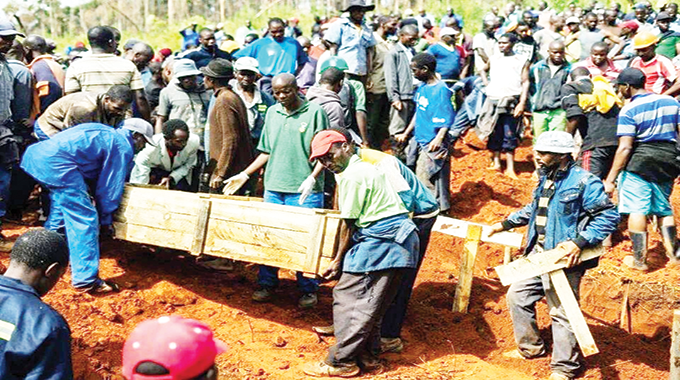
Michael Mhlanga
On 22 February 2000, Zimbabwe was hit by a devastating tropical cyclone with strong winds called Cyclone Eline. The cyclone affected the eastern and southern parts of the country. Nineteen years later, the eastern part of Zimbabwe is again lashed by a hydro catastrophe and the effects dig in to the question of how prepared Zimbabwe is for natural disasters given the possibility of using Early Warning Systems to enable Government’s effective and efficient evasion of catastrophes.
Cyclone Eline happened during a period when the country was experiencing a deep economic crisis. There were shortages of petroleum fuels due to lack of foreign exchange for procurement, ironically, Cyclone Idai happened within the same context. Like in the case of Eline, the national response to the emergency was generally well with food supplies, clothing and various funds set up to support the affected.
As a response to disasters, the Government of Zimbabwe (GoZ) created the Department of Civil Protection and charged it with the onus of co-ordinating and managing disasters and reducing hazards. If the resources of the GoZ are overwhelmed, a presidential declaration of national disaster would be made and regional and international resources would be sought, likewise, this is what is happening in the face of humanitarian organisations actively assisting in Chipinge and Chimanimani.
Less disaster preparation is not peculiar to Zimbabwe, if such an excuse makes any difference. Some 50 developing countries face recurrent earthquakes, mudslides, floods, hurricanes and droughts, yet many of them do not seem to recognise that they will recur. Investment in Disaster Response Management (DRM) is very low in most developing countries and represents a tiny proportion of their budgets. The majority of Disaster Response Management (DRM) related development financing remains for emergency response and is commonly disproportionate to the demands and expenses incurred when it happens. This is because decision makers in most developing countries tend not to prioritise investments to build resilience, as these do not produce immediate gains or benefits.
This situation must change. If we are ready to invest sizable funds to establish mechanisms to withstand financial crises, we need to do the same with the escalating hazards of nature. Even the possibility of a future disaster has real impacts on present-day decisions and economic growth. High aversion to risk often restricts businesses and vulnerable populations from making potentially profitable investments that could improve welfare and development. In contrast, action to manage disaster risk can encourage forward-looking planning, long-term capital investment and entrepreneurship. Investing in DRM actions can also generate specific economic, social and environmental benefits. These secondary and tertiary dividends can deliver benefits even if a disaster does not happen for many years.
The frequency and intensity of natural disasters have been rising sharply in recent decades. Today Zimbabwe witnessed the loss of lives and livelihoods from the deadliest flooding in decades, the full impact of which is yet to be fathomed. Emergency relief, health care and reconstruction are of great urgency. From a developmental-humanitarian lens which understands Zimbabwe’s dependency on agronomy, when floods and intensive rains wash away infrastructure, homes, crops, seed stocks, grain and other reserves, it is crucial to re-establish agriculture without availability of communication infrastructure, adequate social services and accessible rural investments. It is also vital to confront the threat to livelihoods, especially in the absence of insurance mechanisms.
The total number of disaster events has been increasing since the 1980s. This trend is set to continue, driven by population growth, urbanisation, more people living in coastal areas and floodplains, the degradation or loss of natural ecosystems and climate change. Economic losses from “natural” disasters are now reaching between $250 and $300 billion each year up from $50 billion in the 1980s. Future expected losses are estimated at $314 billion per year in the built environment alone. Disasters disproportionately impact lower income countries and poor and vulnerable communities.
We know that poverty and marginalisation makes things worse for victims of natural disasters. Natural disasters in poorer countries have higher casualties than disasters of similar magnitude in wealthier countries. Within countries, it is often the marginalised groups who suffer disproportionately. In ecological Colombia and the Philippines, for example, it is usually poorer, marginalised groups who live on the slopes of volcanoes. People with more resources choose to live elsewhere. And so, when the volcanoes erupt, it is the poor who suffer disproportionately. In Central America and Brazil, it is the poor who live in shanty towns on the hills surrounding major cities hills which are susceptible to mudslides at times of heavy rain. After Cyclone Idai, Government should explore maximising livelihoods and improving economic conditions for the people of Chipinge and Chimaninmani because logically there is a strong correlation between low income/poverty and decision making.
Despite the swift and impressive response by Government and International NGOs and the patriotic Zimbabweans, let us not forget the streak and lessons we should draw from then. Once the tragedy drops off newspapers’ front pages, international donors, like many developing countries like Zimbabwe find it hard to stay engaged with prevention efforts. This also means that the world’s attention will no longer be fixed on natural disasters until the next big one hits us. All development planning should therefore integrate appropriate disaster resilience measures. In addition, investing in Disaster Risk Management yields multiple benefits. It helps avoid losses when disasters strike, unlocks development potential and produces economic, social, and environmental co-benefits.
For development towards an Upper Middle Class economy to be sustainable, risk assessments should inform national and sub-national policies and investments.
This is the first step for Zimbabwe’s legislature to understand risk, reduce existing risk and prevent the creation of new risk through active and deliberate debate on biased financing of Early Warning Systems.
The direct and the indirect benefits from investing in prevention and preparedness measures are far greater than the potential costs that would be incurred without them. Even in the absence of a disaster event, investing in resilience can yield significant benefits.


 Online Reporter