Online Reporter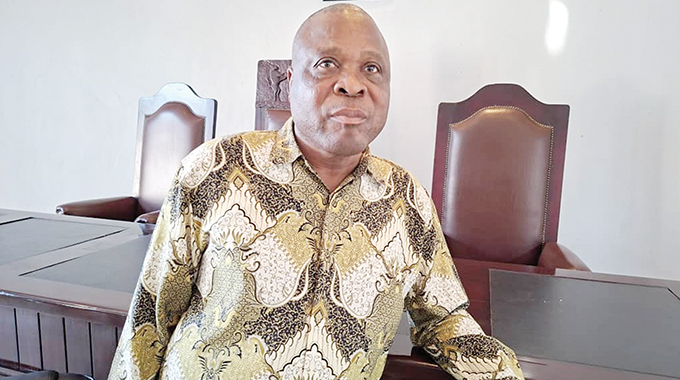
In the high-stakes world of international peacekeeping, the Zimbabwe Republic Police (ZRP) has earned a solid reputation for professionalism, discipline and excellence. Since first joining United Nations peacekeeping missions in 1991, the ZRP has deployed hundreds of officers to volatile conflict zones across the globe — from Angola and Somalia to Kosovo, East Timor and Sudan.
One such officer is Retired Inspector Jimmy Sibanda, a veteran of peacekeeping operations who proudly served Zimbabwe and the international community with honour. In an exclusive interview, Zimpapers reporter Thupeyo Muleya (TM) sat down with Rtd Inspector Sibanda (JS) to reflect on his remarkable journey, the challenges of peacekeeping and lessons for future officers.
Below are excerpts from the interview.
TM: Can you describe your background before joining the ZRP and later peacekeeping?
JS: I was born in the then Maramani Tribal Trust Land, which is now known as Shashe. I attended Beitbridge Mission for primary education and Zezani High for secondary. During the liberation war, I was a mujibha (war collaborator). After independence, I briefly worked as a temporary teacher before joining the ZRP in 1985. I trained at Tomlinson Depot and was deployed to the Support Unit in Bulawayo, where I later specialised in weapons handling and became an instructor.
TM: What preparation and training did you undergo for international missions?
JS: Later in the years of service, around 2001, I was selected to undergo rigorous training with two other senior officers to go for a peacekeeping mission in Kosovo, Europe. I was representing the ZRP Support Unit. We went through a United Nations standards training for four weeks on report writing, how to record statements, driving, handling small arms and language interpretations. This was critical for effective policing considering that we were heading to carry out a peacekeeping mission in an area where an ethnic tribal war was raging between Serbians and Albanians in Kosovo. This was called a Sat-Test. We had to learn many languages so that we could, during the mission, record and report correctly. We were evaluated by UN officials from New York and we all passed the tests, including the medical check-ups. It was critical for us to conform to UN policing standards. The testing was tough for us, considering we were from a former British colony where English was a major language.
TM: Which peacekeeping missions did you serve in, and what were your roles?
JS: I served in Kosovo (2002–2004) in Mitrovica District at Skenderaj Police Station as the sole Zimbabwean officer.
My job involved training local police, patrolling with them, and evaluating them before full deployment. I later served in East Timor (2007–2008), where we also escorted VIPs and aid workers, and recovered bodies for DNA identification and burial. Both missions were emotionally taxing but rewarding.
TM: What were some of the most difficult situations you encountered?
JS: In Kosovo, the most challenging issues were driving in the snow and the steering wheel on their vehicles was on the left side as opposed to the right side back home. In some instances, the wheels were chained. We also had issues with the type of food, which was normally bread, chicken and spaghetti, given that we were used to our Zimbabwean stable food, isitshwala/sadza. However, we had to adapt fast and in terms of languages, we had Nigerians, British and Canadians in our team who could speak English. The weather conditions in Kosovo were so cold and we had to wear appropriate clothes to stay warm. We had to often drink vodka or juice to avoid having frostbite. Our movements were strict and we were not allowed to over-familiarise ourselves with the community members. Although the mission was similar in East Timor, when we arrived, the war was still raging and there were fears of us being attacked by either side of the warring parties. However, through collaboration, dedication and discipline, we managed to achieve the peacekeeping mission.
TM: How was the co-operation with other international agencies and forces?
JS: There were a lot of organisations and partners on the ground, among them Plan International, Unesco, among others. We had clear guidelines on what needed to be done and we would complement each other’s roles to succeed on the mission. Forinstance, before going into an area, an integrated intelligence unit would have done ground work and cleared us on security issues. While we travelled by road, we had helicopters doing aerial patrols and escorting us. In East Timor, we had the Australian army on our side, considering the volatility and negativity on the ground from locals. We had to strictly keep to UN peacekeeping guidelines to achieve the mission.
TM: How did your experience in peacekeeping missions impact your understanding of regional and international co-operation in maintaining peace and security?
JS: I have learnt that with ICT policing, we can achieve more and the UN policing standards are way ahead of some nations and if used to the fullest, we can have a better world with well-equipped police officers. Upgrading oneself on peacekeeping-related issues and discipline is key in achieving a mission and you can’t underestimate the power of collaboration. In these missions, police officers and security agents from different countries share one vision, same goals, same spirit, which worked well in bringing peace in East Timor and Kosovo, where I had been deployed. It is critical that if you apply rules and less emotions, you can achieve more, especially when you keep your eyes on the ball.
TM: Can you describe any specific instances where regional or international co-operation was crucial in achieving mission objectives?
JS: Regional and international co-operation was critical in both scenarios for many countries through the UN to intervene in Kosovo and Indonesia. The situation could have been worse had we not stepped in to restore and maintain peace in those regions. Adhering to set ground rules, information sharing and collaboration were important tools among collaborating nations to achieve and create a peaceful environment in war-torn areas.
TM: Which peacekeeping mission was the most exciting and which one was more challenging for you?
JS: The situation in Kosovo was relatively not tense and when we arrived, the war was almost over and we had many English-speaking partners and a welcoming community. However, in East Timor, life was difficult because we were dealing with a resistant community and the war was raging, with some turning against peacekeepers. Fortunately, I returned home without encountering any incident. With teamwork and dedication from all key players, we did our part, there is peace in those areas now. This is something we should be proud of as Zimbabweans.
TM: Did you by any chance, engage in a gun fight with locals or rowdy elements during the missions?
JS: Not at all. We relied on intelligence officers who would do reconnaissance and clear us before going to a particular area. These were very effective and at times, the army service men would get to the area before the peacekeeping police officers. In Kosovo, Pakistani military guys did well, they were being called military experts more often and so was the Australian army in East Timor.
TM: What lessons did you learn from your experience in peacekeeping missions that you believe can be applied to policing in Zimbabwe?
JS: I am proud of the ZRP, our policing standards are top notch and in most missions, including those I attended, Zimbabwean police officers would lead operations. However, something we need to consider seriously is digital migration to make use of ICT policing. All police officers must be computer literate. They must be equipped on that front. It’s pleasing to note that, as a country, our police force has already taken the digital migration route. We need to invest in modern radio communications. The world is evolving into the digital age. Going through the peacekeeping training inculcates a sense of honour, a culture of discipline and helps in many aspects of team building. There are a lot of codes that you don’t break and it’s good to have well-trained, disciplined and dedicated police officers.
TM: How has your experience in peacekeeping missions impacted your community or the broader region?
JS: Wonderful! I have learnt great lessons and since retiring from the police force, I joined the Beitbridge Municipality as a security officer. Here, I deal with several stakeholders, some of whom can be rowdy and violent when we try to enforce by-laws. This is almost the same, but less volatile compared to what I experienced in war-torn regions. So, as a seasoned peacekeeper and having learnt a lot from the UN, it is now easy for me to handle any volatile or potentially volatile situations. When handling an angry crowd, you must not use emotions but wisdom. As an instructor/trainer, I have also trained a number of police officers on peacekeeping, crowd control and conflict resolution.
TM: When did you leave the police force at what rank?
JS: I retired from the ZRP in 2013 at the rank of an Inspector and I am now working Beitbridge Municipality as a municipal police officer.
TM: Looking back on your experience, what advice would you give to current or future peacekeepers?
JS: One needs to note that when they are for peacekeeping in the region or international missions, they are brand ambassadors for their clan, deployment station, the police Commissioner-General, Home Affairs Minister, the Head of State and the country. This then calls for them to be exemplary and disciplined in the discharge of official duties as peacekeepers. The UN is strict in enforcing ground rules. I am pleased to report that we haven’t had any negative reports of ZRP police officers during such missions. This leaves future peacekeepers with an onerous task to maintain this reputation. In Kosovo, one Nigerian police officer died after he went off the tangent and had a sleepover at an alleged girlfriend’s house outside our zone. Some locals planted a grenade on his vehicle, and it exploded as he was about to leave that house. So being disciplined and following rules is important.
TM: Are there any recommendations you would make to improve the effectiveness of peacekeeping missions or the preparation of police officers for these missions?
JS: Well, the world is evolving and dynamic. There is a need for continuous and thorough training of peacekeepers; challenges are coming from many angles, so they should be able to deal with any situation. We need to train on proper firearms use and disposal. Police officers must be good listeners so that they don’t act on assumptions.
TM: Any major awards or accomplishments you got during or post-peacekeeping missions?
JS: In Kosovo, I received two medals, one for carrying out a successful peacekeeping mission and another Brave medal for leading a successful weapons recovery and destruction mission. I also received another medal for a successful East Timor peacekeeping mission and the fourth medal is for carrying out a successful escort mission of a visiting South African diplomat to Kosovo during the mission.