

 admin
admin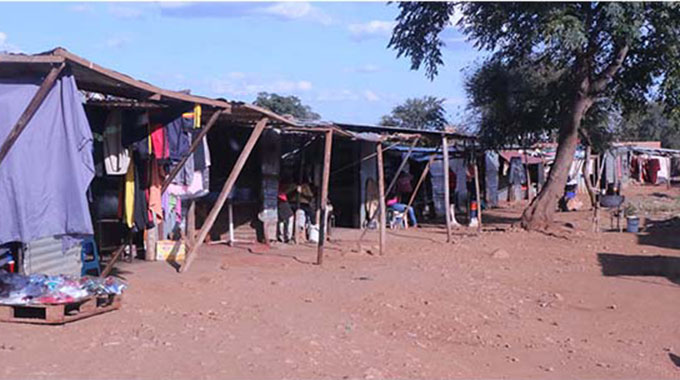
Bulawayo Bureau
NESTLED in an area barely larger than two football grounds, Shangani Shopping Centre in Matabeleland South is a hub of economic activity that can be easily overlooked by everyday drivers en-route to or from Bulawayo and Harare.
But for the growing population of residents of the medium and high-density suburbs and rural settlements around the area, the shacks that travellers see on their way past the joint sustain the local economy.
Our Bulawayo Bureau travelled to Shangani and spent an afternoon there, discovering the remarkable stories of the local women, children, and hustlers who call the place home.
The shacks that line the dusty roads leading up to the centre are a testament to the enterprising spirit of the local community.
Sthembeni Mlilo, who sells sneakers, overalls, jeans, T-shirts, and other clothing items, explains that artisanal gold miners are the major source of income for the small businesses at the shopping centre.
“If you drive across the main road, down that dusty road and drive about five kilometres from here you will see a number of mines,” she said. “Most of them are disused by the original owners but a lot of local guys still get gold from there.
“There are a lot of amakorokoza who work in those mines and they are our major customers. Those guys spend.”
Mlilo’s shop is not just a shack, she insists.
It is a business that will one day, if funds permit, be turned into a local authority-approved building to conduct business.
The power of gold is clearly on display at Shangani Shopping Centre.
She recalls several incidents when an artisanal miner would come to her shop and ask for new clothes — from head to toe.
“Just last week, two guys walked into my shop and bought new sneakers, jeans, T-shirts, satchels and speaker boxes,” said Mlilo.
“They took off their old tattered clothes that they were wearing in-front of everyone and put on their new clothes. They paid for everything in cash and walked away,” she said.
Her neighbour, Nokwanda Sibanda, sells sadza and trotters, and the number of customers that the news crew observed patronising her food court is impressive.
“If I can pay school fees for my two girls, then I’m happy to come here and cook sadza for my customers every day,” Sibanda says.
According to her, she makes at least US$15 profit on a good day, which helps her pay school fees for her two daughters.
Because her profit is in hard cash, she appreciates the money any day of the week and doesn’t complain.
Our Bulawayo Bureau took a 20 minutes-drive to an area commonly known as koMoffat in the artisanal miners’ circles.
There are four mines operating by the amakorokoza and more mines are in operation further down the dusty road for approximately another 10 kilometres.
Driving around the area confirms that the main source of income is gold, judging by the number of artisanal miners that roam the area and the mining equipment that is visible from the side of the main dusty road.
“We are walking back to the centre to buy beer,” an artisanal miner told our Bulawayo Bureau on his way from an informal mine that is operated by omakorokoza.
The local community benefits from the miners’ spending, which is evident in their purchases at the shopping centre.
As Mlilo puts it, “those guys spend,” and their purchases are a testament to the power of gold.
For those who call Shangani home, the shopping centre is not just a place to conduct business, but also a vital part of their daily lives.
Shangani Shopping Centre may be small, but it is a hidden gem that sustains the local economy and the lives of those who call it home.



 Online Reporter