admin
admin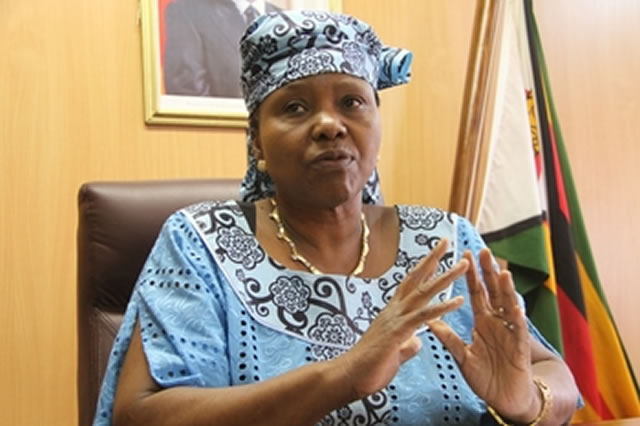
Vaidah Mashangwa Gender
Theoretically, women can acquire more political power than men because female voters outnumber male voters and in most instances women also work as volunteers in political campaigns. While this is the case, most women feel that politics is a male activity and that women should not find themselves entangled in this male world.
Where a woman campaigns vigorously society starts scrutinising whether she is married or not and she is regarded as a neglectful wife or mother. If a man campaigns vigorously as well, he is considered a great political asset and no negative comments are passed
The Electoral Act (1990) allows women to participate in general and by-elections or in Parliamentary and local elections as voters or candidates without any discrimination. Although in recent years more and more women have assumed political leadership, they still have a long way to go as locally, globally and internationally women still lag behind as political leaders.
Why is that women have not used their power as the majority of the voting population to elect more women candidates? Women should realise that it takes guts, courage and strength to run a household and that it takes the same qualities to work outside the home even as a politician.
Currently, Oppah Muchinguri-Kashiri is the Minister of Higher and Tertiary Education, Science and Technology Development, Sithembiso Nyoni being the Minister of Small and Medium Enterprises and Cooperative Development and Prisca Mupfumira being the Minister of Public Service, Labour and Social Welfare. The Ministers of State for Provincial Affairs being Cde Eunice Nomthandazo Moyo (Bulawayo), Cde Mirriam Chikukwa (Harare), Cde Shuvai Mahofa (Masvingo) and Cde Mandiitawepi Chimene (Manicaland).
Everyone would agree with me that these are also wives, mothers, sisters, aunts and grandmothers who have persevered over the years besides being faced with a double burden of looking after their homes and the political office. Women should pluck a leaf or two from such practical examples. It can be done.
According to the book, Sociology: A Brief Introduction, women constitute more than 50 percent of the voting population yet they capture not more than 50 percent of all public offices. In social circles, airline passengers would react differently when the captain’s voice belongs to a female and colleagues or managers would react differently when a man announces that he would be late for work because he would be taking a sick son to the doctor. We always assume that parental duties are maternal duties and the same can be likened when it comes to politics.
Societies feel that politics should be dominated by men and cross-cultural studies have shown that this type of gender differentiation contributes to overall social stability. According to the Functionalist view, women take the expressive, emotionally supportive role and men the instrumental practical role, with the two complementing each other. However, it must be borne in mind that this applied in the 1950s when more women were full-time homemakers and this does not apply today any more.
More and more women are in paid employment, have more access to resources and are more educated, hence they are participating in the socio-economic and political arena more than ever before.
On June 10, 2015, the Zimbabwean populace elected Members of Parliament in by-elections around the country. Did women vote for female candidates? While it is disappointing, it is not surprising that women do not usually vote for women candidates. According to research women have also internalised sexist attitudes. They behave aggressively and compete with other women.
Unlike men, women are jealous of any woman who rises above others. They do not experience the triumph of another woman as symbolically theirs. That is one reason why at times women can actually betray their best friends and snatch their spouses. Women tend to trust, respect and turn to men for protection and this includes male candidates. Women are not yet sure that other women can protect them or their families in the public realm. Women tend to view other women as they view themselves (if I cannot do it how can she do it).
Generally, women analyse the person first then the policy, at times they even judge the person in terms of how she dresses, talks, her lifestyle and whether the person is married or not. Once they make a judgment, that becomes final, they do not go beyond to see if the female candidate can turn the constituency around and execute her vision. In the end social issues become a wall between women voters and female candidates.
One study revealed that female candidates are less confident, less competitive and less likely to consider themselves qualified to run for any post. They are more risk-averse, more likely to find the electoral environment extremely competitive and biased against women and are more sensitive to media criticism.
Some authors have argued that a candidate’s gender is not very important in elections as people generally vote for their parties. They believe that gender is only important for independent candidates. Such views however do not consider the issue of primary elections where candidates from the same party contest against each other and hence the issue of male and female comes in.
Some women just dislike other women and can actually inflict pain and can go out of the way to ensure that other women suffer. There are real life stories of women who assisted men to rape other women including female relatives and young girls, mutilate or kill newly born babies and so on. Phyllis Chesler in the publication, On the Issues, pointed out globally there are women who collaborate in the honour killing of their daughter-in-laws. She documented how a New Delhi prison has a special wing for mothers-in-law who murdered their daughters-in-law for their dowries.
In Afghanistan stories of mothers-in-law who beat their daughters-in-laws and force them into prostitution abound. A simple example too is women who mistreat their female domestic workers to the extent of making them wash their spouses’ undergarments. All this shows the extent of how other women can mistreat other women.
Many people still find it difficult to conceive of women as subordinate and oppressed group yet all major institutions of our society that is, the government institutions, armed forces, large corporates, the media, universities, and the medical establishments are controlled and led by men.
It is high time that women learned to respect, trust and vote other women into any other decision-making positions including politics. At village, district and provincial levels, women should learn to elect other women even for simple tasks such as the chairperson of the School Development Committee.
Vaidah Mashangwa is Provincial Development Officer for Bulawayo in the Ministry of Women Affairs Gender and Community Development. She can be contacted on 0772111592 email [email protected]


 Online Reporter