Temba Dube, Zimpapers Metros Deputy Editor
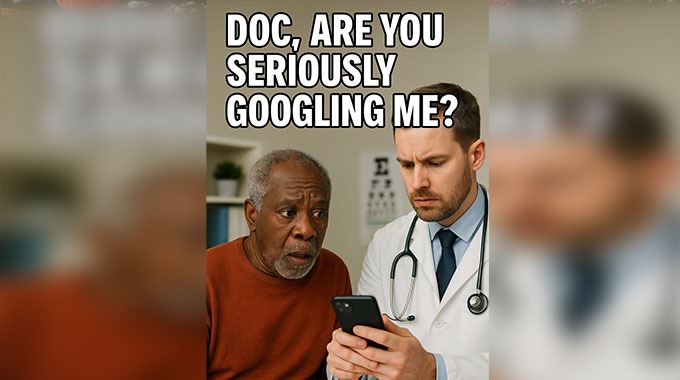
A Growing number of frustrated patients are raising the alarm over a disturbing new trend creeping into hospitals and surgeries, Google medicine. From cellphones and open laptop tabs to AI chatbots in the middle of consultations, some doctors are being accused of relying more on the internet than on actual medical training.
The result? Patients walk out with mountains of costly tests and very few answers, wondering if they just paid for a doctor, or a glorified search engine.
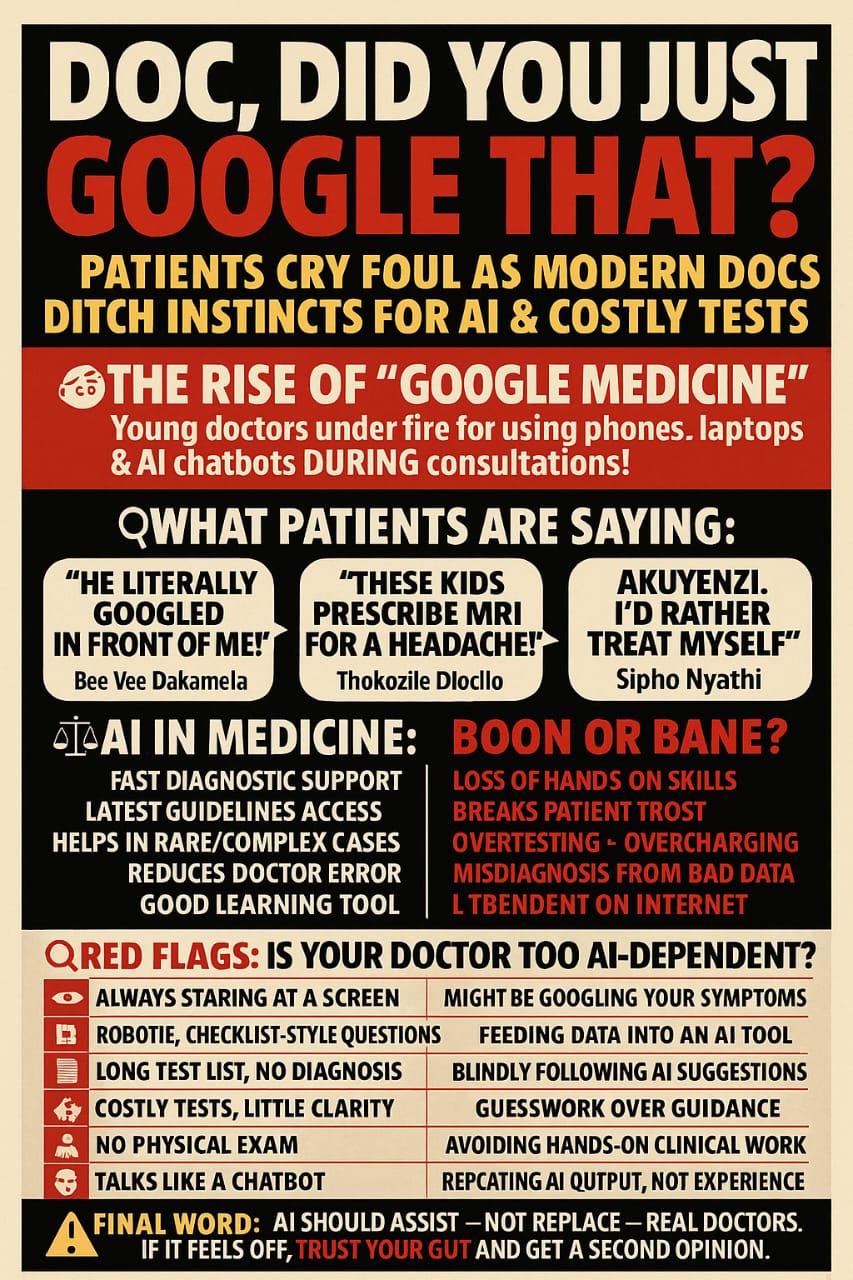
“Honestly, it’s ridiculous,” fumed Thokozile Dlodlo. “These young, fresh-out-of-med-school doctors just Google as they speak to you, even for a simple headache. Before you know it, they’ve printed a list of tests as long as your arm: MRI scan, blood tests, COVID-19 test, brain scan, full blood count… It’s so expensive that people are broke before they even start treatment. Meanwhile, old-school doctors like Dr Msimanga just listen to you, maybe use a stethoscope, and tell you what’s wrong, no drama, no debt.”
The situation has sparked growing debate across social media, with patients venting their frustrations on platforms like Facebook. One commenter, Bee Vee Dakamela, recounted an unsettling experience.
“There’s nothing wrong with using books or even the internet for reference. But there is everything wrong with copy-pasting a misdiagnosis from some random site and feeding it to me as gospel truth. One doctor literally held his phone to my face to explain something that turned out to be completely wrong. God helped me. Something in my gut just told me—this guy has no clue.”
Ironically, what used to be a joke about self-diagnosing online has come full circle. Henrik Widegren’s satirical 2019 hit “Never Google Your Symptoms” warned that DIY diagnoses would only lead to panic and paranoia. Lyrics like “You’ll end up either dead or pregnant, or both. And that’s just from a cough,” were meant to be humorous. But now, the joke is wearing thin, because it’s the doctors doing the Googling.
Sipho Nyathi didn’t mince words either. “Akuyenzi. I’d rather Google at home, then walk straight into a pharmacy. At least there, I only pay for the medicine, not the guesswork.”
Behind the scenes, even nurses are speaking out. One veteran nurse, who requested anonymity, said: “Some of these young doctors are clueless. We’ve had to step in after they prescribed drugs that should never be taken together. One classic example, warfarin and ibuprofen. Both are blood thinners. Combine them, and the patient could start bleeding internally.”
Another nurse took a more balanced view: “People misunderstand AI in medicine. It’s not there to diagnose, but to offer possibilities. A smart doctor will know how to assess and eliminate options quickly. The problem is not the tech, it’s the lazy reliance on it.”
Even medical aid societies are beginning to feel the pressure. A senior representative admitted: “Yes, there’s a trend where more and more tests are prescribed, some of them seemingly unnecessary. It’s driving up claims. Whether it’s AI influence or not, we’re watching it closely.”
Professor Solwayo Ngwenya, Clinical Director at Mpilo Central Hospital, was blunt. “We’re not trained to use Google or AI during consultations. These tools are useful for research, not diagnosis. Doing it in front of a patient is not just bad manners, it’s dangerous and unprofessional.”
He slammed the “test-fishing” approach being adopted by some doctors. “Proper medicine follows a targeted approach, specific complaint, specific test. This new practice of throwing 20 tests at a patient just to see what sticks? That’s not medicine. That’s gambling with people’s health.”
He urged the public not to completely abandon medical professionals: “You can’t detect cancer or hypertension at home. But if your gut tells you something’s off, get a second opinion or just avoid the Googlers.”
In this AI era, Widegren’s closing lyric may well have been:
“Never Google your symptoms… unless you want to die of Wi-Fi.”