Online Reporter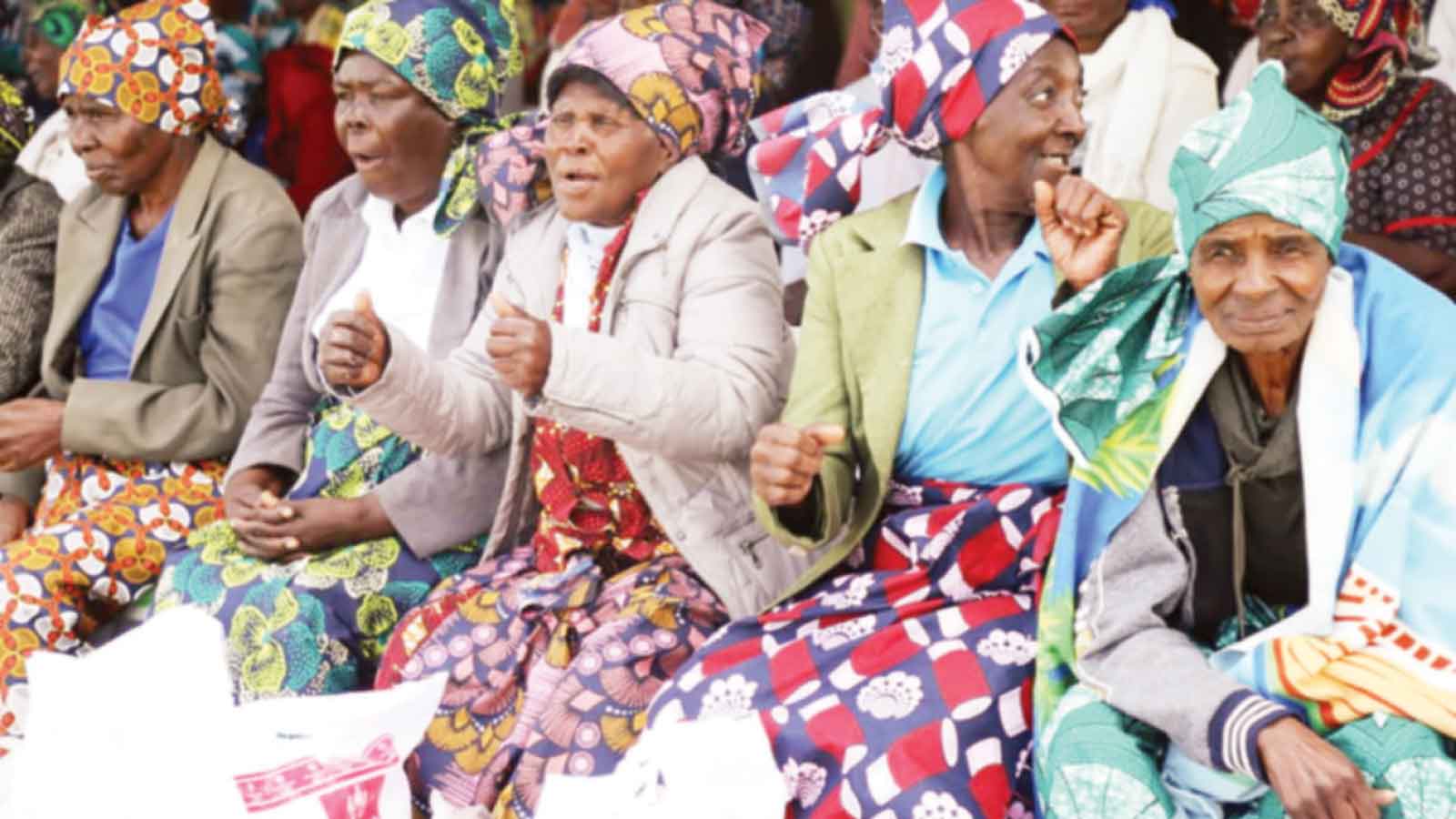
MacDenias Moyo
The convocation at Mkoba Teachers’ College in Gweru was not a mere cultural festival nor a casual assembly of womenfolk, but a monumental proclamation of heritage and empowerment.
It was a gathering that summoned thousands of women from every walk of life and political persuasion, from the humblest grassroots to the commanding summits of power.
It was attended by women Members of Parliament, Senators, Central Committee members, District Coordinating Committee members, Provincial Executives, Politburo members, Ministers, councillors, war veterans, church leaders, businesswomen, civil servants and affiliates of every persuasion.
It was a gathering of unity, a living symbol of solidarity, a demonstration that the doek and the zambia are not garments alone, but banners of identity, emblems of dignity and instruments of cohesion.
Her Excellency, the First Lady of the Republic of Zimbabwe, Dr Auxillia Mnangagwa, through her Doek and Zambia Drive, transformed fabric into philosophy, attire into ideology.
In her keynote address, read on her behalf by Minister of State for Midlands Provincial Affairs and Devolution, Honourable Owen Ncube, she declared with solemn cadence, “This Doek and Zambia Drive initiative comes after the realisation of the negative effects of globalisation, aggravated through social media and people-to-people interactions within the global village, resulting in the gradual erosion of our traditional norms and values that include language, dressing, morality, relationships, business ethics and cultural protocols, mostly amongst our youths.”
These words were not mere lamentation but a rallying cry, a summons to restore the moral fibre of the nation, a call to arms against cultural erosion.
The doek and the zambia are emblems of African womanhood, symbols of rootedness, continuity and resilience.
They carry within their folds the wisdom of generations, the sanctity of tradition and the strength of mothers.
By convening this drive, the First Lady reminded the nation that cultural preservation is not nostalgia, but necessity, not a relic but a foundation.
In a world where homogenisation threatens to erase the uniqueness of peoples, the doek and the zambia stand as banners of resistance, affirmations that Zimbabwe will modernise without surrendering its soul.
Her Excellency’s vision is not confined to symbolism. Through the Angel of Hope Foundation, she has rolled out vast programmes that touch every facet of life.
She has taken mobile health clinics to the remotest corners of the land, ensuring that the rural poor receive medical care.
She has launched Agri4She initiatives—Pfumvudza4She, Banana4She, Fisheries4She, Poultry4She and Horticulture4She—arming women with tools of production, transforming them into engines of food security and economic independence.
Dr Mnangagwa has fought against the scourge of drug and substance abuse, partnering with Dadaya Youth Service Training Centre to rehabilitate youths and reintegrate them into society with vocational skills.
She has provided free health care and food hampers to the elderly, child-headed families, orphans and children living on the streets.
She has championed skills development in collaboration with the Zimbabwe Open University, career guidance for learners and counselling for the vulnerable. These are not episodic gestures but a sustained ideological campaign to uplift, empower and restore.
Her Excellency declared with pride, “Ladies and Gentlemen, the Doek and Zambia Drive complements His Excellency, the President of the Republic of Zimbabwe, Cde Dr E D Mnangagwa’s thrust towards cultural restoration and identity as an unshakable foundation and cornerstone of sustainable development exhibited through heritage-based innovation, modernisation and industrialisation.”
This is the crux of the matter. Cultural restoration is not a diversion from development, but its very cornerstone.
The establishment of cultural centres across the land—Shangwe Culture Village in Nembudziya, Chiwundura Culture Centre in Gweru, Baradzanwa Culture Village in Mazowe and Sizinda Culture Centre in Matobo—are sanctuaries of identity, spaces where intergenerational knowledge is transmitted, where Ubuntu is nurtured and where the young are taught that progress without roots is regression disguised as advancement.
By empowering women, she fortifies the nation’s most resilient constituency.
Women are caregivers, moral anchors and economic actors. In the fight against drug abuse, in the nurturing of children and in the sustenance of families, women are the frontline.
Her insistence that mothers instil Ubuntu in the youth is a recognition that the moral fibre of a nation is woven in the home before it is legislated in Parliament.
She declared with maternal authority, “I, therefore, encourage women to remain confident, proud and rooted in their cultural ethos that define us as Zimbabweans. To this end, I urge mothers and elderly women here present to continue nurturing younger generations by instilling values of Ubuntu.”
These words are not mere exhortation but a philosophical directive, a reminder that the nation’s destiny is sculpted in the hearth and the homestead.
The ideological resonance of the Doek and Zambia Drive is profound. It echoes the President’s philosophy, Nyika inovakwa nevene vayo—a nation is built by its own people. It repudiates dependency; it calls for self-reliance.
By tying the doek, women symbolically tied themselves to the destiny of Zimbabwe, pledging to be co-builders of the upper middle-income society envisioned for 2030.
The First Lady’s interventions in agriculture, health, education and culture are the scaffolding of that vision. They are the bricks and mortar of empowerment, the beams and pillars of prosperity.
The occasion at Mkoba Teachers’ College was more than a gathering. It was a manifesto in motion.
It proclaimed that cultural identity is not a relic but a weapon of empowerment. It demonstrated that the First Lady’s programmes are not isolated projects but a coherent ideological thrust.
In the doek and the zambia, in the mealie meal and the empowerment projects, lies a philosophy of nationhood—rooted in heritage, propelled by empowerment and destined for prosperity.
Her Excellency concluded with maternal generosity, bringing sets of doeks and zambias as well as goodies, including tonnes of mealie meal.
This gesture was not mere charity but symbolic nourishment, sustenance for the body and the spirit, a reminder that empowerment is both material and moral.
The Doek and Zambia Drive must, therefore, be understood as part of a larger renaissance. It is a renaissance of womanhood, culture and identity.
It is a renaissance that insists that modernisation must be anchored in heritage, that empowerment must be rooted in dignity and that prosperity must be built by the people themselves. It is a renaissance that positions women as the vanguard of renewal, as the custodians of morality and as the architects of destiny. It is a renaissance that declares to the world that Zimbabwe will not be a passive recipient of globalisation but an active shaper of its own future.
In the cadence of the First Lady’s words, in the symbolism of the garments, in the programmes of the Angel of Hope Foundation and in the philosophy of Nyika inovakwa nevene vayo, lies the blueprint of a nation rising.
It is a blueprint that fuses tradition with modernity, heritage with innovation and culture with development. It is a blueprint that recognises that the strength of a nation lies not only in its industries and infrastructure but also in its identity and values.
It is a blueprint that declares that Zimbabwe will be prosperous because it will be proud, it will be empowered because it will be rooted and it will be modern because it will be traditional.
Thus, the Doek and Zambia Drive was not a festival but a revolution in cloth. It was not a gathering but a covenant. It was not a celebration but a proclamation. It was the First Lady’s gift to the nation, a gift of identity, empowerment and dignity.
It was a reminder that in the folds of the doek and the zambia lies the destiny of Zimbabwe, a destiny that will be built by its own people, a destiny that will be prosperous, empowered and proud.
It was a reminder that women are not merely participants in the national journey but leaders, vanguards and custodians. It was a reminder that culture is not a relic but a foundation, that heritage is not nostalgia but necessity and that identity is not optional but essential.
It was a reminder that Zimbabwe is rising, and it is rising with its women at the forefront, with its culture as its foundation, with its identity as its compass, with its empowerment as its engine and with its dignity as its crown.