admin
admin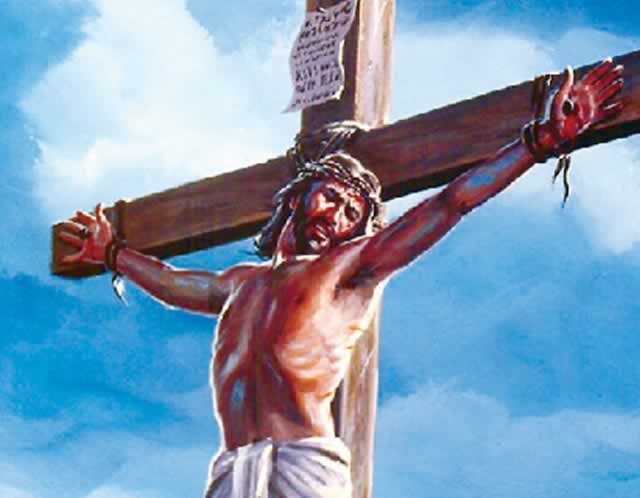
 Cuthbert Mavheko
CHRISTIANS the world over have been commemorating the death and resurrection of Jesus Christ of Nazareth.
There is no doubt about it, the foundation of Christianity as a religion hinges on the resurrection of Jesus Christ. The resurrection of Christ is arguably the most radical of all Christian doctrines.
Christ’s teachings, the healings He performed, His compassion for others and His martyrs’ death all find parallels in other religions.
However, of no other historical figure has the claim been made that God raised him or her from the dead. This is what distinguishes Jesus Christ from other prophets.
Muhammad said of himself that he was merely a human prophet of the one deity, Allah. Buddha claimed only that he had discovered Enlightenment while Confucious sought to transmit the wisdom of the sages.
Jesus Christ, on the other hand, claimed that He was the Messiah and that He would die for the sins of the world and be brought back to life again.
The doubting Pharisees and Scribes did not believe this and demanded a sign to authenticate His claims.
In response, Christ said to them: “An evil and adulterous generation seeks after a sign, but no sign shall be given it except the sign of the prophet Jonas. For just as Jonas was in the belly of the huge fish, three days and three nights, so the Son of man will be in the heart of the earth, three days and three nights (Matthew12:39-40).”
The Pharisees did not understand this; they had never heard anything so bizarre. The concept of Christ’s resurrection is also unfathomable to many people, even those who profess to be Christ’s followers today. No wonder why some people have postulated that Christ’s disciples fabricated His resurrection in order to woo disciples.
If the resurrection of Christ is a fable, were His disciples prepared to suffer humiliation, beatings, torture and even death for something they knew to be a lie?
Only one conclusion is therefore plausible. The disciples did experience the most astounding event of all time. They saw the crucified Christ alive again if their testimony in the New Testament is anything to go by.
It was the appearance of the risen Christ that ignited the flame of the Christian faith and fired a group of timid disciples to proclaim fearlessly the gospel of the risen Christ throughout the Greco-Roman world. In respect of this, respected author Leon Morris, in the article: “Resurrection of Christ (published in the International Standard Bible Encyclopedia)” writes: “The conviction that Christ is risen from the dead transformed the first disciples…”
These same disciples, through their writings in the New Testament, are our witnesses today that this central event of all history — the resurrection of Jesus Christ — actually took place.”
Today, it is believed that Christ was crucified around sunset on Good Friday and was resurrected at dawn on Easter Sunday.
Is this teaching compatible with Christ’s assertion that He would rise after three days and three nights in the grave? According to the Holy Bible, a daytime period and a night-time period are each 12 hours in length, making a full day (24 hours) John 11:9-10.
From biblical evidence as recorded by Mark (Mark 8:31and Mark 9:31) it is quite clear that the length of time that Christ reposed in the tomb could not be more than three full days (72 hours) or less. It had to be exactly 72 hours and the time of His resurrection and departure from the tomb had to correspond with the time of His burial, but three days later.
If we are to use this plain Biblical truism as our yardstick, then there is no way that one can figure three 24-hour periods between Friday evening and Sunday morning.
It should be noted that Christ was crucified on a Passover on the 14th of Nissan (AD31), on the precise date that Passover lambs had always been slain under the Old Covenant.
The original Passover marked the exodus of the Israelites out of Egypt after God had unleashed a plethora of plagues upon Egypt to force Pharaoh to free His people (Exodus 7:12).
The Passover was instituted as an ordinance forever (Exodus12:17, 24). Christ merely changed the manner of observance of this ordinance. Christians are no longer required to slaughter a lamb and eat its flesh. Instead, Christians eat unleavened bread symbolising Christ’s broken body and drink wine symbolising His shed blood as a memorial of His death.
Christ instituted the New Testament Passover on the evening of the 14th of Nissan (Luke 22:14-15).This event occurred on a Tuesday evening in A.D.31.Today, our days begin at midnight, but in the first century, people in Judea reckoned their days from sunset to sunset.
And so, a few hours after the Passover (now a Wednesday) Christ was arrested and crucified. A few hours later, a new day – the 15th of Nissan-began.
This was a Sabbath, but not the regular weekly Sabbath, which was always observed on the seventh day of the week (Saturday). There were seven special Sabbaths that God commanded His people to keep and these were: Passover, Pentecost, Feast of Tabernacles, Feast of Trumpets, Feast of Unleavened Bread, Day of Atonement and the Last Great Day.
The Sabbath that occurred on the 15th of Nissan in A.D.31 was the First Day of the Feast of Unleavened Bread. So there were actually two Sabbaths that week- the annual Sabbath and the regular weekly Sabbath. In respect of this, John 19:31 says: “Therefore because it was the preparation day, that the bodies should not remain on the cross on the Sabbath (for that Sabbath was a high day).”
Yes, this was an annual Sabbath and not a weekly Sabbath. Luke 23:53-54 also highlights this same truism.
All Sabbaths begin and end at sunset (Leviticus 23:32). So Christ was actually crucified on a day that coincided with a Wednesday — not a Friday .Towards sunset on the same day, Joseph of Arimathea took the body of Christ and laid it in a rock — hewn sepulcher. The body remained in the tomb all through the next day, which is the equivalent of our Thursday.
Now let us humbly count the number of days and nights that Christ reposed in the tomb before His resurrection to establish whether or not He fulfilled the prophecy of Matthew 12:39-40.
Wednesday night is one period of night, Thursday is one daylight period and Thursday night makes it two nights. The daylight part of Friday makes it two days and the night period makes it three nights. The daylight period of Saturday completes three full days. And so, about sunset on Saturday, Jesus Christ rose from the dead after three days and three nights in the tomb as He had prophesied.



 Online Reporter