


 Online Reporter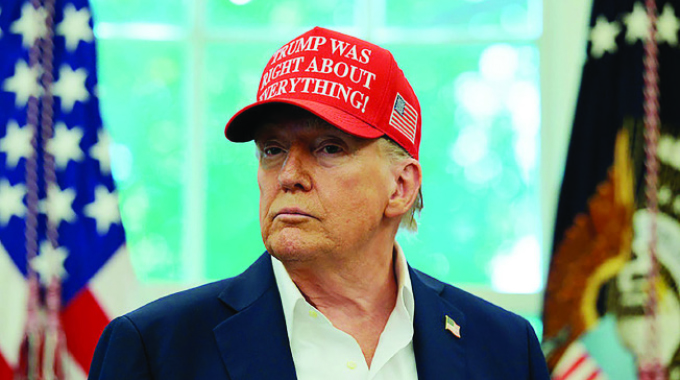
Fyodor Lukyanov
In the early 1980s, former United States President Jimmy Carter visited Stockholm.
At a reception, he approached Stig Ramel, the long-serving executive director of the Nobel Foundation, and asked with some bitterness why he had not received the Peace Prize for brokering the Camp David Accords between Egypt and Israel.
“If I had been awarded it, I might have been re-elected for a second term,” Carter remarked.
He had lost to Ronald Reagan in 1980.
Ramel’s reply was blunt: “I’m sorry, Mr President, but you were not nominated.”
The 1978 prize went instead to Egyptian President Anwar Sadat and Israeli Prime Minister Menachem Begin.
Carter’s story illustrates how the Nobel Prize has always been as much about timing and perception as about substance.
And it brings us neatly to Donald Trump.
Unlike Carter, Trump has no problem with nominations. They come thick and fast, from Rwanda, Cambodia, Gabon, Armenia, Azerbaijan and beyond.
Individuals and organisations have joined the chorus.
Trump has even gone a step further: He has demanded the prize outright, loudly and repeatedly. Vanity, not diplomacy, drives him.
Carter sought the award to improve his electoral prospects.
Trump simply wants every trophy on the shelf.
Does the spectacle make sense?
Strictly speaking, to be considered this year, Trump had to be nominated by January 31 — just 10 days after his return to the White House.
Yet a precedent suggests this is no obstacle.
Barack Obama received the Peace Prize in his first year as president, when he had scarcely done anything to warrant it.
Alfred Nobel’s will set out clear criteria: The prize should go to the person who has done most “for fraternity between nations, for the abolition or reduction of standing armies and for the promotion of peace congresses”.
Judged against that standard, Trump looks an unlikely candidate. He is one of the most polarising figures on the planet.
America’s military budget is heading towards a record US$1 trillion in 2026, hardly a sign of “reduction of standing armies”.
Yet the White House insists Trump deserves recognition.
Officials cite half a dozen cases, from preventing nuclear war between India and Pakistan to halting conflicts in smaller states.
The centrepiece, of course, is Ukraine.
Washington is hinting that Trump’s approach may finally bring the war to a close — with the timing of any peace announcement conveniently close to the Nobel Committee’s own deliberations. The pitch has not been flawless.
In touting his record, Trump recently confused Armenia with Albania.
But these are minor slips. What matters is the narrative that Trump alone can impose order where others have failed.
Is the Nobel Committee likely to indulge him? Its members are not known for rewarding bluster.
But Europe’s leaders are desperate to appease Washington’s eccentric benefactor.
It is not inconceivable that some will lobby behind the scenes in Trump’s favour.
In one sense, awarding him the prize would not be absurd. The Nobel Committee has always sought to encourage gestures towards peace, however imperfect.
Today, in a world of upheaval, genuine solutions are scarce. At best, one can try to ease tensions. Trump, in his way, is doing just that — using every tool available, from demonstrative military threats to wild rhetoric and economic coercion. Others are doing even less.
To paraphrase Lenin, a Nobel for Trump would be “essentially justified, formally a mockery”. It would capture the spirit of the age: a prize not for genuine reconciliation but for the ability to posture as a peacemaker in a fractured world.
Carter, who once felt slighted, eventually did receive the award — more than 20 years after leaving office, in recognition of his peace-making work as an ex-president.
The Camp David accords remain in force to this day, a rare achievement in Middle East diplomacy.
Trump is cut from a different cloth. He will not wait for decades.
By age and by temperament, he demands everything now. Or never at all. — rt.com
Fyodor Lukyanov is the editor-in-chief of Russia in Global Affairs and chairperson of the Presidium of the Council on Foreign and Defence Policy.


 Bongani Ndlovu