admin
admin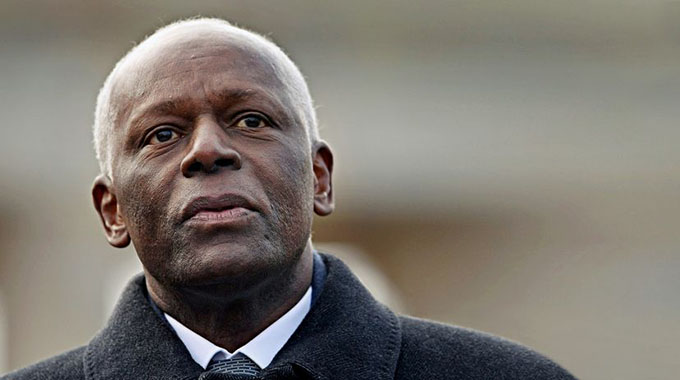
Repatriation of the remains of Angola’s former leader comes days before Angolans head to the polls to elect a new president and a parliament.
The body of Angola’s former President Jose Eduardo dos Santos, who died in Spain in July, has arrived in the Angolan capital, Luanda.
The repatriation of the former president’s corpse on Saturday comes amid a tense election campaign and ended a weeks-long feud between the Angolan government, dos Santos’s widow and some of his children over when and where he would be buried.
A few dozen people gathered at Luanda’s airport to welcome the coffin of the former leader, who had ruled Angola from 1979 to 2017.
Some clapped as the coffin, draped in the Angolan flag, was taken away followed by a convoy of black cars, while more came out on the streets to watch the convoy pass by.
Some cheered, others chanted “Ze Du!”, dos Santos’s nickname, footage posted on social media showed.
“The remains of Jose Eduardo dos Santos have arrived in Angola after a long waiting period,” Marcy Lopes, a government minister, told reporters shortly after the coffin was taken off the aircraft.
The funeral is likely to take place on August 28, Dos Santos’ birthday, said Rui Falcao, a spokesperson for the ruling MPLA party.
There have been weeks of uncertainty over the former president’s final resting place. Dos Santos died on July 8 at the age of 79 at a clinic in Barcelona, where he was being treated following a long illness.
Lawyers representing dos Santos’s daughter, Tchize, had successfully requested a full autopsy citing alleged “suspicious circumstances” of his death, without providing evidence, and had asked for him to be buried in the Spanish city of Barcelona. A Spanish judge ruled last Wednesday that the death was from natural causes, ruling out foul play, and allowed the release of dos Santos’s remains to his widow, Ana Paula.
The judge also granted authorisation for “the repatriation and international transfer of (dos Santos’s) remains to Angola”.
The repatriation came days before Angolans head to the polls on Wednesday in a national vote. Launching his party’s campaign last month, President Joao Lourenco urged people to vote for the MPLA to honour dos Santos’ legacy. The MPLA, which was dos Santos’ party and is that of Lourenco, has governed Angola since it won independence from Portugal in 1975.
“It seems like a very transparent manoeuvre to monopolise the media, as usual,” Jon Schubert, a political anthropologist and Angola expert at the University of Basel, told the Reuters news agency, referring to the repatriation of dos Santos’ body.
Most Angolan media is controlled by the state. Wednesday’s vote, during which voters will elect a new parliament and president, is likely to be the tightest since the first multi-party election there in 1992.
The former president’s daughter, Tchize, who had petitioned to have her father’s body buried in Barcelona, accused Lourenco in an Instagram post of using his corpse as a campaigning tool, which she said was a “world shame”.
Critics also worried that the repatriation was a bid to divert attention from the main opposition UNITA’s campaign and from the electoral process. UNITA is stronger than ever and anger is growing at government failures to convert vast oil wealth — Angola is Africa’s second-biggest oil producer — into better living conditions for all.
The nearly four-decade tenure of dos Santos saw members of his family capitalise on the nation’s oil riches while most Angolans remained mired in poverty. When he stepped down in 2017, dos Santos handed over power to Lourenco, the former defence minister.
But Lourenco quickly turned on the former president, unleashing an anti-corruption drive to recoup billions he suspected had been embezzled under dos Santos, a campaign that has targeted the former president’s family.
Dos Santos never specifically responded to the allegations that he had allowed corruption to become rampant. — AJ News


 Online Reporter