Online Reporter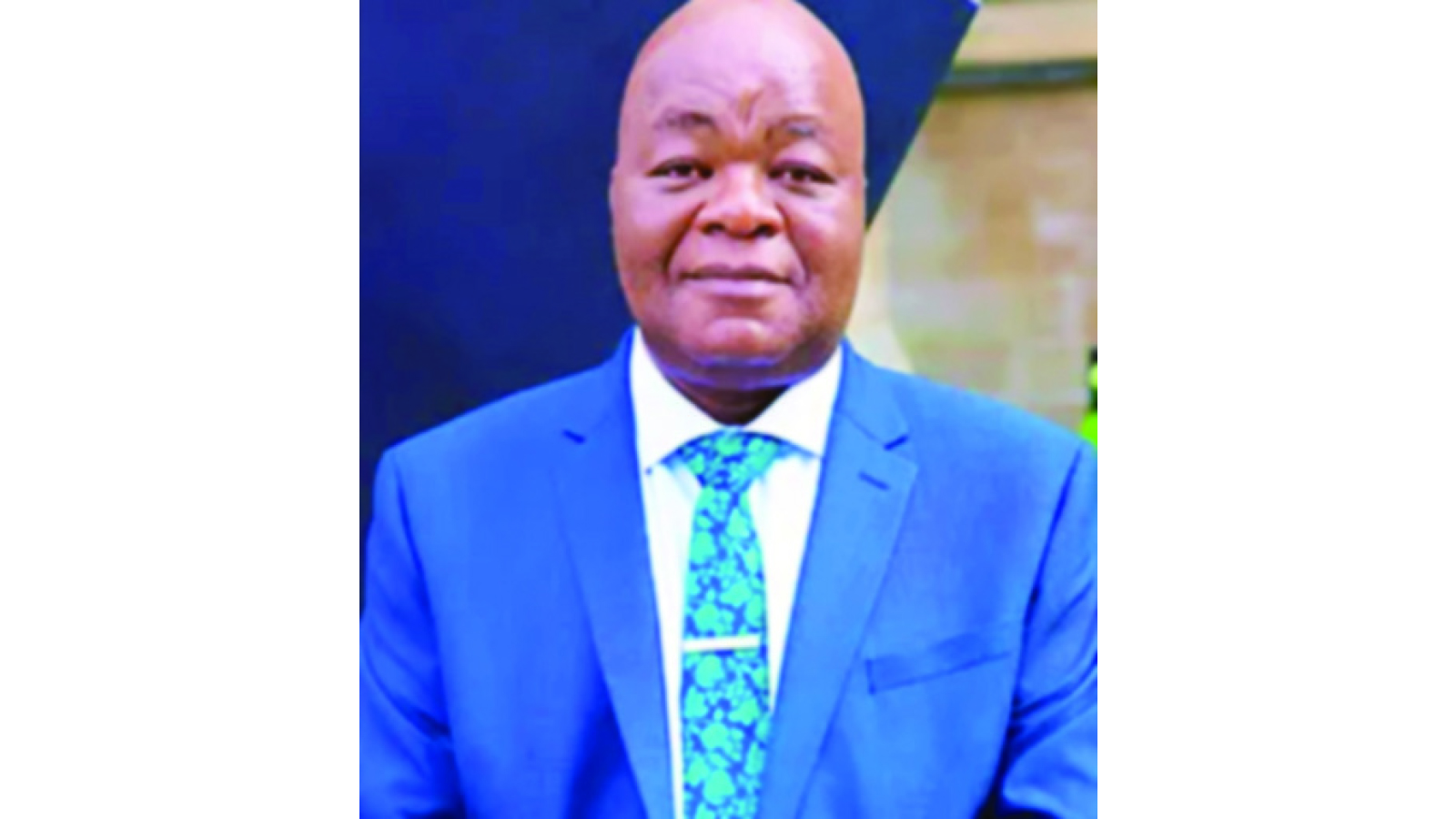
Sifelani Tsiko-Fact Check Editor
THE death of a humble and true giant of the local and global seed industry, Dr Edworks Mhandu who passed away on August 9, 2025, at the age of 67, has plunged the industry into mourning.
Dr Mhandu played a key role in promoting the harnessing of new scientific knowledge and practical application to optimise yields and resource management for sustainable agriculture.
The prominent business executive, who was director of Quton Seed Company, a subsidiary of Seed Co Zimbabwe, passed away at Trauma Centre in Harare, just a day after his birthday commemoration.
Dr Mhandu left an indelible mark on the agricultural community through his work with farmers, researchers and policymakers to address challenges like low cotton yields, climate change, soil health and pest management, ultimately contributing to a more resilient and productive agricultural system.
Though he was in finance and management, his profound depth of knowledge about plants and seeds and the potential of new and emerging biotechnology application later saw him studying for a PhD in biotech cotton.
Driven by his remarkable passion for biotech cotton or GMO cotton, Dr Mhandu was among a few who pushed and advocated for the adoption of GM cotton to boost yields and address new and emerging challenges such as climate change.
He had an indefatigable creative energy and profoundly influenced the initiation of GM cotton trials in Zimbabwe at a time when resistance was quite strong.
Prof Idah Sithole–Niang, Dean of the Faculty of Science at the University of Zimbabwe, said she was devastated to learn about the death of Dr Mhandu.
“I am deeply shocked. My deepest condolences to his family,” she said.
“I first met Dr Edworks Mhandu in biotech circles over a decade ago. For a while I thought he was a plant breeder only to learn that he was in finance. Such was his brilliance in the seed sector. He then pursued his doctoral studies on Bt cotton, and I had the privilege of working with him on the subject.
“We later co-authored a commissioned paper on GMOs that was well received and widely read. He had planned to publish his doctoral thesis and had asked me to write the foreword. He knew the Biotech seed sector back to front, and was instrumental in bringing the much-needed attention to GM cotton in Zimbabwe. My deepest condolences to his family and friends. He will be sorely missed.”
Through his PhD studies, Dr Mhandu found out that Zimbabwe had the potential to increase its cotton output to more than 800 000 tonnes per year — if it starts to grow genetically modified cotton and boost support to growers.
In 2022, he told participants at GMO awareness workshop for policy makers, that with 100 percent adoption of GM cotton it was possible to produce yields of up to 2 tonnes per hectare, earning the country more than US$600 million per annum.
“If we start producing GM cotton we can easily attain the 2-tonne per hectare yield. As a country we have about 400 000 hectares of land available for growing cotton. If we increase our yields to 2 tonnes per hectare on 400 000ha we can easily produce more than 800 000 tonnes of raw cotton,” he said.
“If we gin it and add value to it, it’s possible for Zimbabwe to earn about US$600 million at the current international market prices.”
Zimbabwe has taken a precautionary approach towards risk regulation of GMO products and technologies as reflected and reinforced by the adoption of the National Biotechnology Authority Act of 2006.
Even though the country still maintains a ban on the commercial release of GM crops due to health and environmental safety concerns, it has agreed to allow researchers to conduct trials for GM cotton which is resistant to bollworms.
Dr Mhandu was internationally recognised for his lobby and advocacy work to push for the adoption of GM cotton in Zimbabwe and other African countries.
Experts say Bt cotton can help reduce heavy reliance on pesticides and reduce input costs for farmers.
Dr Mhandu once said Zimbabwe stood to benefit significantly by adopting modern technologies rather than totally banning them.
“Farmers can achieve higher yields and reduce exposure to chemicals significantly. The quality of lint is improved by reduced damaged bolls. The benefits are there and we should harness the benefits that come with this technology,” he said.
“In Kenya farmers are achieving high yields of over 1.8 tonnes per hectare while in Malawi farmers are realising average yields of around 2 tonnes per hectare. The quality of the crop is so good such that grading has now become irrelevant.”
Through his expertise, he has trained and mentored farmers, students and aspiring agricultural professionals, equipping them with skills and tools for the sector.
As a consummate professional, he made an immense contribution to the seed industry in Zimbabwe and across the African continent.
Dr Mhandu also created opportunities for dozens of young managers and professionals to expand their horizons in the seed industry.
At his funeral service, former Zimbabwe Revenue Authority (Zimra) commissioner-general Gershem Pasi, a close friend, described the loss of Dr Mhandu as a huge blow.
“He was a man among men. We were very close friends. I have lost a great friend. I counted on him a lot when I went through difficult and challenging times in my life,” he said.
“He stood with me through my trial and tribulations. He never wavered unlike other people. We loved hunting with Samaita before the land reform programme. He is a former freedom fighter. He took up studies soon after the war in 1980 and he never bragged to anyone that he fought for this country.
“He remained humble, focussed and determined to succeed in his studies and profession.”
Mr Pasi hailed Dr Mhandu for his unwavering devotion to his wife, family and the community.
“He touched the lives of many people. He had this love and belief in the power and importance of community and service.”
Another relative, Tendai Choruwa said Dr Mhandu was the epitome of humility and kindness.
“He was very humble, open and kind. He did a lot for us. He was very generous. Dr Mhandu is a true legend and his death is a huge loss us all. He was a father, mentor and friend,” he said.
His wife, Abigail said Dr Mhandu was the greatest joy to her, the family and friends.
“I want to thank God for the 42 years we have been together. I want to thank God for this. It was God’s grace that we were married for 42 years,” she said.
“He filled us with warmth, love and fun. He loved to learn and he was so determined to acquire higher education qualifications right from the time I met him. I married a Grade 7 ex-combatant when I had O-Levels soon after the war.
“He was a straight forward man. He was not corrupt. He was very honest. I am very proud to say that, in this house, we never ate any money or ill-gotten wealth. He resisted the temptation of corruption even though he had access to many offices.”
Mrs Mhandu described her husband as loving and kind.
“When you marry a king, you become a queen. She treated me like a queen. He assisted me to advance my studies and get to PhD level. He taught me what love is. He loved me very much, he loved his children, he loved his relatives and treated anyone with kindness. Before he died, he was saying deep things of God,” she said.
Kudzai, his son, paid tribute to his father’s unforgettable presence.
He said his father was engaging, witty and endlessly humorous and brought energy and warmth to every conversation.
“He was a man full of humour. He was generous with his time, fierce in his convictions. He foresaw his death and he started preparing me for his death. He told me ‘Kudzai mazuva angu ave mashoma’’,’ he said.
“Knowing that you are nearing the end of your life and that you will be leaving your son can be devastating. What to say and how to support your child during this time can feel overwhelming and scary. He was strong and never wanted us to see the pain deep inside him.
“Dad, the day you passed, a part went with you. In my heart, you have engraved the principles you gave me.”
Dr Mhandu certainly left behind a great legacy. He was a certainly a blessing to many.
“We celebrate Dr Mhandu’s life dedicated to service, innovation, and empowerment. Dr Mhandu’s vision will continue to inspire and shape the future of seed trade and agricultural prosperity in Africa and beyond,” said a colleague in the seed industry.
“He will be fondly remembered by many who had the privilege of interacting with him and at Seed Co. He has passed on a legacy of unsurpassed leadership within the seed industry.”
He was born on August 8, 1958, at Marondamashanu in Chivhu District.
Dr Mhandu is survived by his wife Abigail, children and grandchildren.