Online Reporter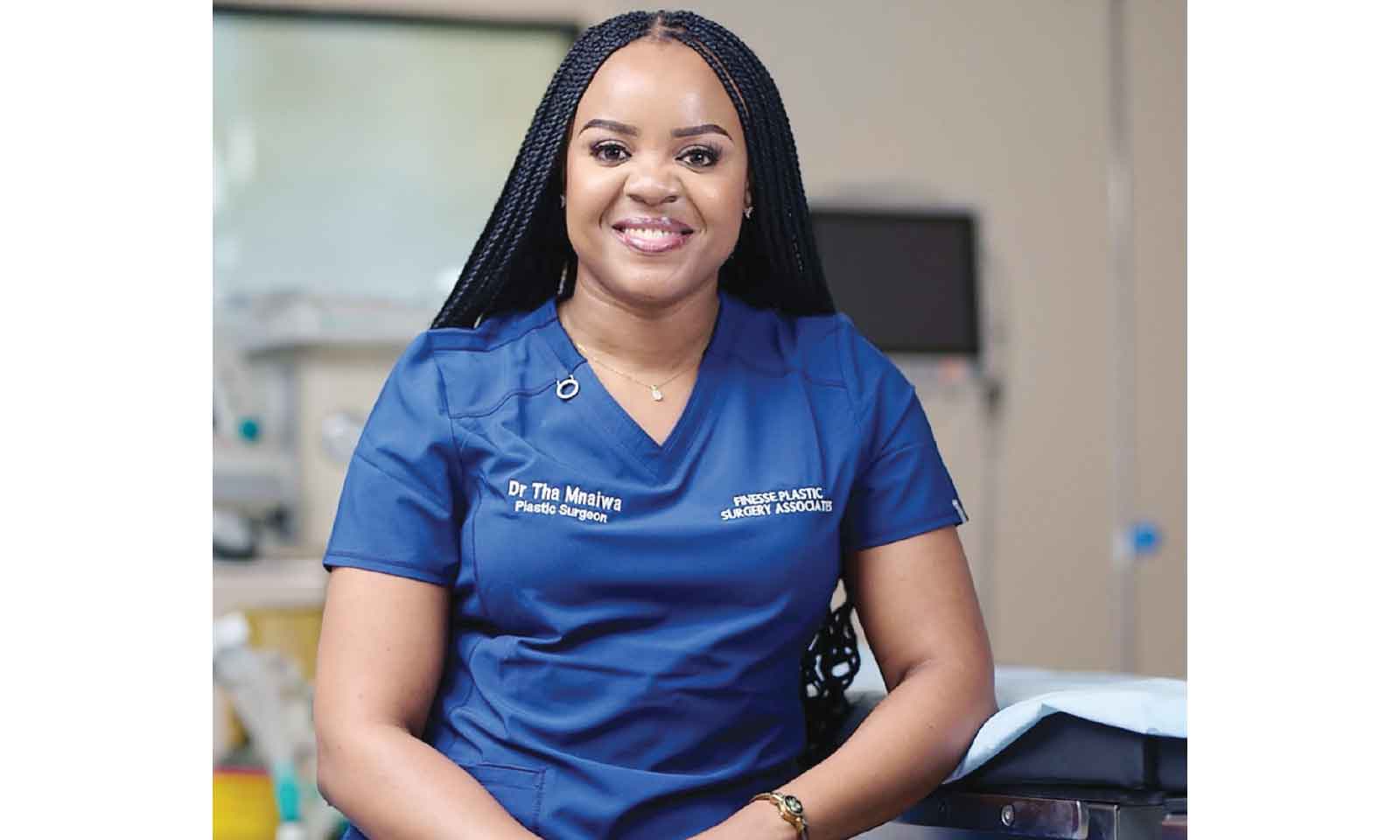
Last week, women shone at the CEO Africa Roundtable Top 40 Young CEOs Awards, with 16 of the 40 nominees being female — a clear signal that women are extending their influence across the country’s key sectors. Among them was Dr Thandiwe Munaiwa, part of a new generation of Zimbabwean medical leaders who are redefining standards in plastic and reconstructive surgery. With more than 500 procedures to her name and growing international recognition, her story is a powerful narrative of local excellence rising to global relevance. She spoke to Zimpapers Politics Hub about her career.
Questions: Give us a brief background of yourself.
Answer: I am a product of Chitungwiza, where I attended Seke 6 Primary, Seke 1 High, and Zengeza 1 High. I went on to study at the University of Zimbabwe, where I obtained a Bachelor of Medicine and Bachelor of Surgery (MBChB) degrees. I am in my thirties and glad to be recognised as one of the country’s top young surgeons.
Q: You are a board-certified plastic and reconstructive surgeon — an achievement that demands discipline and years of training. What inspired you to pursue this specialised field?
A: Plastic and reconstructive surgery drew me in because it is one of the few specialties that restores both form and function, and in many cases, dignity. During my training at Parirenyatwa Group of Hospitals, I saw patients living with preventable deformities, burns contractures, cleft conditions and trauma-related injuries. What struck me most was not just the physical burden they carried, but the psychological and social limitations imposed on them.
That early exposure shaped me profoundly. I realised that plastic surgery is not vanity driven medicine, it is transformative medicine. It allows you to rebuild confidence, restore normalcy and in some cases, change the trajectory of a person’s life.
From Parirenyatwa to where I am today, the journey has been one of discipline, international exposure, constant study and a commitment to raising standards locally. I have always believed that Zimbabwean surgeons deserve to operate at a global level and I have structured my career accordingly.
Q: You were nominated for the prestigious CEO Africa Roundtable Top 40 Young CEOs award. What do you attribute this significant leadership recognition to at this stage of your career?
A: Being nominated for the CEO Africa Roundtable Top 40 Young CEOs award was deeply humbling. I believe it reflects not just surgical volume or visibility, but leadership in systems building.
Running a surgical practice requires governance, ethics, team development, compliance, patient safety structures, and strategic growth. We have been intentional about building a practice that prioritises safety protocols, training, documentation and accountability not shortcuts.
Leadership, to me, means creating structures that will outlive you. It means mentoring younger doctors, contributing to policy discussions and setting an example of ethical practice in an industry that can easily become commercialised. I think the nomination recognises that broader leadership footprint.
Q: With more than 500 surgeries performed, you have witnessed countless patient journeys. You speak about transforming lives, not just appearances. Can you share a moment where you saw a transformation that went far beyond the physical?
A: One moment that remains close to my heart was a young man who underwent gynaecomastia surgery (big breasts on a man) after living with the long-standing breast deformity that was causing him loss of confidence at school. Post-operatively, he said for the first time, “I feel confident with myself and able to join swimming with the other young men without feeling ashamed.”
That statement was powerful. Surgery changed his appearance, yes but more importantly, it changed how he interacted with the world. He became involved in activities he previously avoided. He engaged socially without hesitation.
Those are the moments that remind me: we are not just altering anatomy, we are unlocking confidence and social participation.
Q: You are increasingly recognised on international platforms. What does it mean to represent Zimbabwean medical excellence on the global stage, and what does this say about the calibre of local professionals?
A: Representing Zimbabwe on international platforms is both an honour and a responsibility. It demonstrates that excellence is not geographically limited. Zimbabwean medical professionals are highly trained, resilient, and capable. What we need are systems, exposure, and investment not talent validation. I carry our flag with pride because I know the calibre of professionals we produce.
Q: Beyond aesthetic procedures, you provide free reconstructive surgeries for cleft lip and palate patients in partnership with the Global Craniofacial and Cleft Foundation. What does this philanthropic work mean to you?
A: Partnering with the Global Craniofacial and Cleft Foundation to provide free cleft lip and palate surgeries is deeply meaningful to me. A child born with a cleft in Zimbabwe can face stigma, feeding challenges, speech difficulties, and social exclusion. Yet this is a surgically correctable condition.
Every time we restore a child’s smile, we alter not just aesthetics but nutrition, speech development, and social acceptance. Communities can help by reducing stigma, encouraging early medical evaluation, and supporting outreach initiatives. No child should be marginalised for a condition we have the skill to correct.
Q: What is your vision for the future of plastic and reconstructive surgery in Zimbabwe? How do you hope to contribute to advancing clinical standards and public understanding of the field?
- My vision includes: Standardised safety guidelines for aesthetic procedures and structured mentorship pathways. I would also like to see increased reconstructive access in rural areas. More public education is needed to separate medical practice from cosmetic marketing. This also requires stronger regulatory enforcement.
I hope to contribute through training, advocacy, and building institutions that uphold excellence. Zimbabwe deserves world-class care at home; patients do not have to travel all over the world for surgery.
Q: Finally, if you could leave readers with one important reflection about beauty, self-image, and the decision to undergo plastic surgery, what would it be?
A: Surgery should be an informed, autonomous decision, not a reaction to trends or comparison. The goal is harmony, balance, and confidence, not transformation into someone else. The most powerful enhancement is self-awareness. Surgery should complement that, not replace it.