admin
admin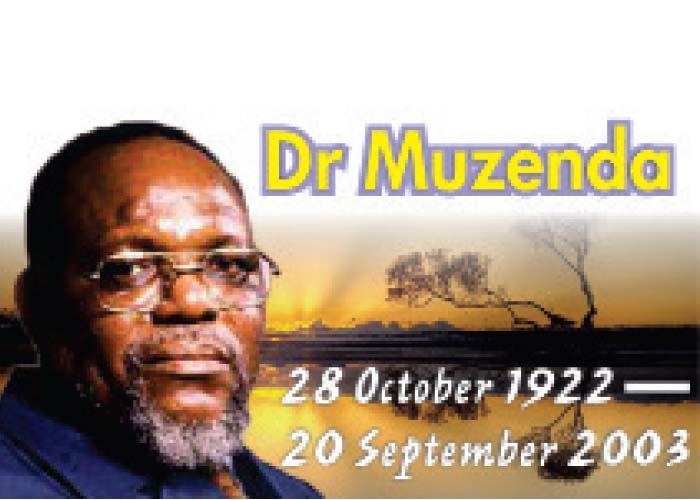
Professor Ngwabi Bhebhe
By the time Muzenda came out of jail, much had taken place in the nationalist movement.
Zapu had been banned. A major split in the organisation had taken place and a new political party, the Zimbabwe African National Union (Zanu), had been formed on August 8, 1963.
Herbert Chitepo, based in Tanganyika, Robert Mugabe, former publicity and information secretary of Zapu, Washington Malianga, Enos Chikowore, Leopold Takawira and Henry Matuku Hamadziripi led the rebellion against Joshua Nkomo.
They were fed up with what they said was Nkomo’s indecisive approach to the liberation struggle for Independence.
When Muzenda was released, he was just in time to attend the first Congress of Zanu, which he had chosen to join before he left prison.
At the Congress, Ndabaningi Sithole was elected president; Leopold Takawira, vice-president; Robert Mugabe, secretary-general; Enos Nkala, treasurer; Michael Mawema, national organising secretary; and Muzenda, deputy national organising secretary.
The chairmanship was reserved for Herbert Chitepo.
By all accounts, the work of organising the party virtually fell on Muzenda, who energetically criss-crossed the country putting up the party structures everywhere.
What must be noted also was that Muzenda’s election to deputy organising secretary was a significant elevation in his political career. In 1961, he had just been a branch leader in Mvuma.
In 1962, Nkomo promoted him to provincial leadership, in which position, as we have seen, he demonstrated enormous organising capabilities.
Now, in 1964, he entered the national leadership, albeit in a junior position.
With more energetic application, he was to end up as number two in the national leadership. But that was still some eight years in the future.
It was at that stage of the struggle that Muzenda’s potent legacy in Masvingo became evident.
First, Zanu failed to win the support of the provincial leadership from Zapu. But many of the youths who had been recruited and worked closely with Muzenda transferred their loyalty with him to the new party.
A case in point was that of Solomon Marembo.
He says, “I took over the youth wing of the entire Masvingo province. We recruited a very strong force…to defend Zanu” when inter-party fighting erupted between Zanu and the People’s Caretaker Council.
But Muzenda’s youths did not just exhaust their energies in fighting Zapu.
They took on the white enemy as well.
They went into a strategic partnership with Malawian miners employed at Mashava Mine to be supplied with dynamite explosives. Muzenda himself was behind the formation of the network of the sourcing and ferrying of the dynamite. At one time, he was living dangerously both legally and physically.
He had a whole drum of dynamite stored in his little hut in Macheke Township in Masvingo.
It could have exploded, killing everybody inside or it could have been detected by the police, leading to a life sentence.
Emmerson Mnangagwa’s parents had migrated to Zambia during the Federation of Rhodesia and Nyasaland. There he was working in the Unip office at Freedom House in Lusaka as a youth secretary for the Lusaka constituency.
The late Willie Musarurwa, who represented Zapu in Zambia, recruited Mnangagwa from Unip to Zapu.
In 1962, he therefore joined Zapu and was in the same year sent for military training at Iringa in Tanzania. At Iringa, there were two groups, one from Matabeleland and the other from Mashonaland.
The Mashonaland group had Muzenda’s confidante called Christopher Sakara and he was the first person to tell Mnangagwa about the political exploits of Muzenda in Zimbabwe’s political southern province.
People talked of Muzenda with a sense of awe and admiration.
When he became deputy to Michael Mawema in Zanu, at Iringa they ignored the existence of Mawema and simply talked of SV (Simon Vengayi) as the organising secretary.
They said SV was in charge of the southern province and that his boss was Leopold Takawira, the Lion of Chirumhanzu.
In the meantime, Mnangagwa went on to receive his military training at Iringa, Egypt and China and came back in 1964.
Before they were deployed for military operations in the country with his fellow combatants, they were instructed to make contact with the legendary Muzenda, who was now with Zanu.
The other names they were given again were part and parcel of Muzenda’s network.
They included Muzenda’s old friend and political ally in Mvuma, Philip Maramba, then Patrick Nharira and Solomon Marembo, the reliable members of the youth wing and Marima in Bikita.
Noel Mukono, then in charge of Zanu military operations in Zambia, had given instructions that they would get their explosives from Muzenda and that they must make immediate contact with him.
But, for fear of exposing the old fighter, another of Muzenda’s link people, Nolan Makombe, offered to provide the service they needed by being the go-between.
In the end, Muzenda ensured ready supplies of dynamite to the combatants through his network. Their first target was what is now a petrol service station on the Harare-Bulawayo Road, just before the Harare-Norton junction and below the flyover.
They secured their dynamite in Masvingo and brought the sticks all the way to Harare.
But before they could carry out their attack, they noticed that the enemy had picked up their trail and they abandoned the target for another one, this time back in Masvingo.
They first planned to blow up two small aircraft in the local aerodrome. But a day later, when they now wanted to blow them up, they found them gone to Chiredzi.
As they were retiring to the township, Mnangagwa and his fellow fighters were now getting quite anxious for action.
They were under pressure from Lusaka to commit something spectacular so that the leaders in Zambia and Tanzania could produce evidence to the OAU Liberation Committee that Zanu, just like Zapu, was a liberation movement which qualified as such and deserved Independent Africa’s moral, diplomatic and material support.
Just then, they came across a stationary train, which seemed to be an easy target because the security guards were warming themselves by the fire at some distance.
Mnangagwa crawled into the driver’s cabin while his friend stood guard ready to shoot should the guards try to interfere.
They used twelve sticks.
To avoid being injured by the exploding train, they took cover in one of the culverts underneath the railway lines.
They lit the fuses, which ignited the explosives and blasted the goods train to pieces.
That was the first serious act of war in Masvingo, which was successfully carried out through the collaboration of guerrilla-trained personnel on one hand and Muzenda’s network of collaborators and suppliers on the other.
After that, Crispen Mandizvidza, one of Muzenda’s district organisers, gave them shelter before they headed back to Harare to send their report back to Lusaka and collect their subsistence stipend.
Zanu National Chairman Herbert Chitepo, who was still operating outside the country, had sent £1 500 through Walter Kamba, a lawyer practising with the firm of Scanlen and Holdernes, for Michael Mawema to collect and hand over to Mnangagwa and his colleagues.
Mnangagwa maintains that Mawema took the money and used it and that it was when they were putting pressure on him to produce the money that Mawema sold them out to the Rhodesian security forces, which managed to arrest Mnangagwa.
His colleague escaped because he stood guard outside when Mnangagwa was in the house putting pressure on Mawema and trying also to compose their report.
Mnangagwa was sentenced to death but escaped the hangman’s noose because he was considered young.
He had to serve 10 years in prison.
Muzenda’s third arrest for political reasons came with the ban of both PCC and Zanu in August 1964.
The Rhodesian Front government claimed that it was banning the two African parties to stop their infighting violence.
Muzenda was in Bulawayo when Zanu was banned and the party car he was driving was immediately taken away from him.
He had to get a lift from Tanyongana, a teacher and educationist, to go back to Harare.
In Harare, he hired trade unionist Ignatius Chigwendere and his friend to drive him home to Mvuma but they never went beyond Skyline just outside Harare, where they ran into a police roadblock.
On being searched, Muzenda was found in possession of a firearm and they were arrested.
They were taken to Southerton Police Station and Muzenda successfully pleaded for the release of the people he had hired as they were innocent.
When he appeared in court, he was granted bail and was able to go back home to Mvuma.
During his trial, subsequently, it was proved that the firearm in question was no more than a toy pistol, only useful for shooting birds.
He was discharged but was immediately rearrested before he could leave, this time for being an official of a banned organisation.
He was first detained at Gweru prison, then transferred to Whawha detention camp and finally dumped at the remote detention camp of Sikombela.
At Whawha, he was with other Zanu officials such as Morton Malianga, Edson Sithole and Edgar Tekere.
Solomon Marembo, his youth leader in Mavingo, joined him at Whawha when the Rhodesians decided to take their independence illegally in November 1965.
Muzenda and other detainees were transferred at different times from Sikombela to Harare Central Prison.
Here, they were quite a group including Robert Mugabe, Leopold Takawira, Rev. Ndabaningi Sithole, Enos Chikowore, Enos Nkala, Eddison Zvobgo and Maurice Nyagumbo.
Whawha was divided into two sections – one for restrictees where Muzenda, Takawira, Zvobgo and others were, and the other for detainees, who included such people as Enos Nkala, Robert Mugabe, and Mubaira Marere.
The detention camp was fenced but the restriction camp was not.
Zapu leaders were also collected and dumped into a new village that had been quickly put up in the Gonakudzingwa forestry and Gonarezhou.
The leaders of both parties had made up their minds that they would not escape. The police just left them alone in their respective camps and did not bother to keep a close eye on them.
Restriction had wide boundaries and the prisoners could wonder widely.
Since Whawha was near Muzenda’s home in Mvuma, he would slip out of the camp at night and come back early in the morning, making sure that nobody saw him except Zvobgo, with whom he shared accommodation. By the beginning of 1965, Muzenda and other restrictees and detainees had been transferred to the remote camp of Sikombela.
Eddison Zvobgo, who was separated from the others to serve a prison sentence in Gweru and Harare from October 1954 to July 1965, rejoined Muzenda and others at Sikombela and lived with Muzenda until November 1965. Zvobgo says that when he got to the restriction camp, there were two paramount issues.
The first had to do with mandating the Zanu leadership outside the country to form a revolutionary council to spearhead the armed struggle.
The second had to do with accommodation. With regard to the war plans, the leaders at Sikombela produced a set of instructions to the leaders outside the country under Chitepo to form a war council.
They gave Chitepo full power to bring into the council anyone he thought was necessary and capable.
They further empowered the council to create any structures to enable the party to recruit and send for military training as many cadres as possible in order to start the war.
The document of instructions became famously known in Zanu party history as the Sikombela Declaration.
The leaders had talked in terms of the war council as the Revolutionary Council, but Chitepo and his colleagues preferred a Shona equivalent – Dare reChimurenga.
Life changed dramatically and became far tougher and more stressful when they were transferred to Harare Remand Prison. When Muzenda was in prison in Harare, Mrs Muzenda and the children could not see him easily. She had to apply to be allowed to visit.
She would be given five to 10 minutes per visit and was allowed to take only one child at a time. The Muzendas threw themselves into a worse position when during one visit Mrs Muzenda and her daughter, Tsitsi, were discovered trying to smuggle out papers from Muzenda.
They were arrested and detained for four days at Harare Central Police Station and then banned from visiting Muzenda.
When the colonial regime granted permission, Christian Care sourced funds from International Defence Aid in London to purchase study material for courses ranging from O and A-Levels to university diplomas and degree certificates by means of correspondence.
Muzenda pursued a diploma in business studies at the same time as he was intensely studying logic.
Some prisoners were studying O and A-Levels, assisted by others such as Robert Mugabe and Eddison Zvobgo.
Apparently, the first two years were easy for the prisoners since they thought they might stay in custody for a short period.
But as the years dragged on, emotional stress and other psychological problems began to show up. Some developments emanating from prison conditions had far-reaching consequences for the Zanu party leadership. The stressful conditions, frustrations and, indeed, mental torture, which led to the suspension of president Sithole and the prison authorities’ inhumane and callous neglect of their prisoners’ health, leading to the death of vice-president Leopold Takawira.
These excerpts are from Professor Ngwabi Bhebhe’s biography of National Hero, the late Vice-President Dr Simon Muzenda, who died on September 20, 2003


 Online Reporter