Online Reporter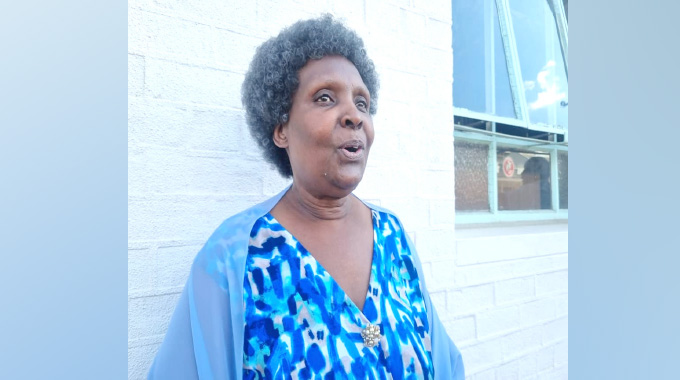
WE conclude our interview with former freedom fighter Cde Thokozile Nyoni (née Ndlovu), a survivor of the deadly ground and aerial attack on the ZPRA female camp, Mkushi in Zambia on 19 October 1978. In this interview, Cde Nyoni pseudonym Cde Silabo Bonke, recounts the devastating assault on Mkushi Girls’ Military Camp, describing the moments leading up to the attack, the chaos and horror that unfolded as Rhodesian forces bombed and fired upon the camp.
She speaks about the desperate attempts by the young female cadres to escape. She also reflects on the decisions made by the camp leadership, the impact of the tragedy on survivors, and her subsequent journey to further training in Yugoslavia.
MS: Before the attack, did you suspect anything?
Cde Nyoni: Up to now, the deadly events of 19 October 1978 are still vivid in my mind. That was the day when Mkushi Girls’ Military Camp was attacked by the Rhodesian forces from both air and ground. The assault began at about 11am. It must have been around 10:50PM when we heard an unusual whistle being blown from the parade square, summoning all of us, both the trained personnel and those still undergoing training to gather.
The camp’s command element had something to tell us. The commanders present included comrades such as Jane Ndlovu, Audrey, Aussie, Castle Thuso, KK and several instructors. At the parade one of our commanders informed us that Freedom Camp (FC), another ZPRA camp near Lusaka was under heavy attack from the Rhodesian forces and that we were to evacuate immediately.
At that time, Cde Phinda (the late Lawrence Makwarimba), our Camp Commander, was said to be out in the mountains, where he had shot a hare. Many believed that the gunshot had signalled the Rhodesians to attack the camp.
MS: Take us through the attack and how you survived.
Cde Nyoni: Within minutes, just as we were about to leave the parade square, two silver jets appeared and began bombing us. In a split second, the ground was melting with napalm as helicopters joined the attack. Napalm is a deadly substance, a combination of naphthenic acid and palmitic acid that melts human flesh.
Some aircraft were dropping paratroopers who attacked us from the ground. Many of our comrades died at the camp, while others were shot by machine guns from the helicopters. Faced with such a deadly situation, comrades tried to run, but it was in vain, as they ran straight into the guns of the paratroopers sweeping through the camp.
MS: Do you think the situation could have been handled differently?
Cde Nyoni: What pains me most is that the Camp Commander, Phinda, had instructed us to dig defensive pits, saying that when the enemy attacked, we would dash into them for cover. Little did we know that we were digging our own graves. Among us girls, the feeling was that Phinda’s tactics had let us down. There was a strong belief, rightly so, I think that when the Rhodesian forces attacked, they knew exactly where to bomb.
Most comrades ran into those defensive pits as instructed, and the Rhodesians bombed them, killing many. They also knew where Mkushi River was and attacked, pushing comrades towards the crocodile-infested waters, where many also perished. That morning, the atmosphere turned red as the blood of our unfortunate comrades was shed.
MS: As the camp was under attack, where were you?
Cde Nyoni: I worked my way to escape the killing zone. As I was running, I saw one of my comrades, whom I regarded as a younger sister, Thembelihle Magutshwa, known as Cde Chiedza fall, covered in napalm. I could not save her. She did not even cry; she simply fell, and that was the last I saw of her.
A comrade running ahead of me was hit by a helicopter machine-gun bullet. Her stomach was torn open, and she fell about five or six metres from me. I ran to her, dragged her, and tried to push her intestines back inside, but they were already mixed with grass and sand.
MS: Faced with such a situation, what did you do?
Cde Nyoni: I took off my shirt and tied it around her stomach so that we could continue towards a safer place, but she was in terrible pain. I carried her on my shoulder until we found shelter beneath a large tree trunk, where we hid for the entire day and night.
Early the next morning, our camp commissar was walking around carrying two weapons and some magazines, searching for survivors. We heard his footsteps and saw his combat boots as he passed our hiding place. We recognised him by his combat gear, and in a low voice I called his name. He turned, came to us, helped carry the wounded comrade, and gave me one of the AK-47 rifles and a magazine.
MS: From there, what happened?
Cde Nyoni: As we skirmished our way towards where most comrades were hiding, I realised we were only 500 to 600 metres from the enemy. They were having a meal, having lit a fire. We thanked God for His protection, as we had seen them before they saw us. We came across comrades hiding in the water beneath a large tree.
The commissar instructed everyone on which direction to take. One of the comrades, Sikhethabahle, had burnt her soles while fleeing; she had stepped on napalm, and both soles had come off, exposing raw flesh and bones. She struggled to walk, so I removed my combat boots and gave them to her so she could continue.
The Zambians had burnt the surrounding area to catch imvukuzane, a small underground-dwelling animal that resembles a mouse. The burnt grass left behind hard stumps, and without my boots I had to endure the pain of walking on them, leaving my own soles covered in dark spots.
MS: As you were fleeing the camp, where were you heading?
Cde Nyoni: We walked until we reached Kafue later that afternoon, where some comrades were already gathered. The injured were taken to hospital for treatment. I never saw the girl with the protruding intestines again; I do not know whether she survived. ZPRA Commander-in-Chief and party President, Joshua Mqabuko Nyongolo Nkomo, came to visit us at Kafue Camp. He broke down in tears upon seeing the brutality of the Rhodesians at Mkushi and was shaken by the number of girls who had been killed. He addressed us with a heavy heart.
MS: What was the next step for you after the bombing of Mkushi?
Cde Nyoni: In November, the following month, I was among the girls chosen to go to Ljubljana in Yugoslavia for further training, specifically in security. We trained in intelligence and immigration control, learning how to manage ports of entry such as airports, borders, and seaports. This was crucial for the new State of Zimbabwe, as we would be responsible for guarding and protecting its resources.
MS: Who were some of the comrades you trained with in Yugoslavia?
Cde Nyoni: There was Maggie, Khatha, Buhle, Ellen Maga, Thoko, and male colleagues such as Sigadula and Mirror, among others. I cannot remember all the names.
We remained in Yugoslavia until 1981. We returned home after meeting one of the senior ZPRA commanders, Cde Abel Mazinyane, who is now a retired Brigadier-General.