malvernmugadzikwa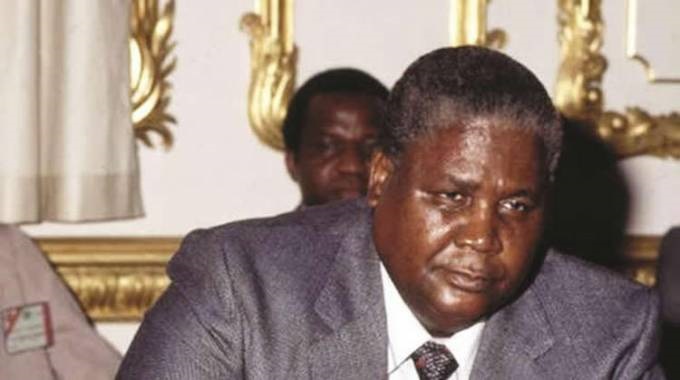
Freddy Mutanda
I STARTED to know and work with the late Father Zimbabwe, Dr Joshua Mqabuko Nyongolo Nkomo, in 1974 when he and other nationalist leaders were released from detention and went for a meeting in Lusaka, Zambia.
At that time, I was 17 years old and felt privileged and honoured for the opportunity to closely associate with him and other leaders.
As we celebrate the 25th anniversary of Dr Nkomo’s death on July 1, 1999, we should all remember that the late Vice President was a larger-than-life character. Witnessing the injustices of colonial rule fuelled his passion for equality. Dr Nkomo’s unwavering determination led him to co-found the Zimbabwe African People’s Union (ZAPU) in 1961.
In 1974, I was in the ZAPU Youth League and was involved in recruiting young people to join the armed struggle, having been deployed to Mashonaland Central.
At that time, Mashonaland Central was a political hotbed due to the setting up of protected villages in areas such as Madziwa and Chiwenga. It was that experience that Dr Nkomo recognised when he recruited me to work in his office. My colleagues included Cde Alex Magwaza and another comrade named Ncube, who was a driver at Salisbury United, now ZUPCO. Working with Dr Nkomo was a huge honour. It was also an enlightening opportunity for me to learn from him and understand the liberation struggle better.
Dr Nkomo was a supremely intelligent man. His favourite food was chicken.
One of his favourite musicians was Otis Redding from his time in detention, but after his release, he hardly had the time to listen to music. His passion was to see Zimbabwe freed and for black people to get back their land. He was a fierce advocate of land reform.
I also worked in his office when he was the Minister of Home Affairs from 1980 to 1981. In 1981, he published a small booklet outlining his vision for a new Zimbabwe post-independence.
The publication dwelt comprehensively on land, highlighting his deep desire for redistribution of the resource from white commercial farmers to landless blacks. I also lived with him whilst he was in exile in the early 1980s. He fondly referred to me as Tshilisi.
How I grew close to Dr Nkomo
I was based at the ZAPU external head office in Zambia in the 1970s. Cde Mvenge and myself were deployed to the National Security Organisation (NSO), which was the intelligence and political wing of ZAPU. Cde Mvenge was Cde Dumiso Dabengwa’s deputy, and I was Cde Gordon Butshe’s deputy.
One incident that caused my relationship with Dr Nkomo to evolve was the death of Cde Jason Ziyaphapha Moyo, who was killed by a parcel bomb in January 1977.
The death of Cde JZ Moyo undermined the integrity of NSO within ZIPRA commanders. Investigations into the death of Cde JZ Moyo opened a can of worms. Also, the shooting of ZIPRA commander Nikita Mangena revealed a lot of organisational problems for ZAPU.
Cde Dabengwa then decided that I should report directly to Dr Nkomo. So, my personal relationship with Father Zimbabwe grew, as I became his close confidante.
During this time, I presented analyses and issues to him. I was then sent to Cuba for further training. On my return, I was based at Dr Nkomo’s office before going to the Soviet Union for further training.
I returned from the Soviet Union in April 1979 and continued to work for him as a special force and intelligence analyst.
Surviving the assassination attempt in Zambia
It had always been suspected that the Rhodesian forces would attack Dr Nkomo’s residence that was very close to the Zambian State House.
We received a briefing from Cde Nxele on Rhodesian forces who were spotted crossing the Zambezi River into Zambia. Indeed, the residence was attacked in 1979.
I commanded the troops who had remained there with me. We lost four of our men.
Cde Alexio Magwaza was at the gate and ordered the Rhodesians to stop, but they opened fire on him. He escaped without any injuries.
Comrade Joseph Maphosa was inside the main house. He is the one who took the bullets for Dr Nkomo, who had escaped. Cde Maphosa went to East German for treatment. That night, Cde Lookout Masuku drove out of his house and the Rhodesians caught up with him and his wife lost a breast when they were ambushed. The NSO head office was also attacked.
Peacemaker and the Unity Accord
One thing that stood out in Dr Nkomo was that he was a peacemaker. He incessantly spoke about the need to avoid bloodshed. It pained him that many young men and women who left their homes to join the armed struggle were perishing. Dr Nkomo taught me many lessons, but the most important one was that he wanted peace. He was prepared to defend Zimbabwe in any capacity for the good of the people.
He continued to seek peace, which resulted in the 1987 Unity Accord.
On June 7, 1983, from London, having skipped the country to go into exile because of the Gukurahundi disturbances, Dr Nkomo wrote a 15-page letter to then-Prime Minister Robert Mugabe, refuting allegations that he plotted to overthrow the Government.
The 117-paragraph letter formed the basis for the Unity Accord dialogue.
Dr Nkomo was sincere on his wish for internal disturbances to end. He agreed to a lot of compromises to forge unity and ensure the end of the conflict in Matabeleland provinces and the Midlands. Some political analysts have said Dr Nkomo capitulated and ZAPU was swallowed by ZANU. Nothing could be more distant from the truth. The fact is Dr Nkomo cherished peace more than anything else. There were a lot of issues that ZAPU cadres felt were not resolved, such as that of ZAPU properties which had been seized by the Government in February 1982. However, Dr Nkomo saw beyond all this as he was determined to ensure that the country achieved peace at all costs.
A legacy beyond borders
Dr Nkomo was a towering figure, not only in Zimbabwe, but also in the entire SADC region. His sphere of influence spread beyond the borders of Zimbabwe, as he worked closely with leaders of the Federation of Rhodesia and Nyasaland, Presidents Kamuzu Banda and Kenneth Kaunda. He was also very close to the ANC of South Africa. Many comrades from the ANC’s military wing, uMkonto we Sizwe, were stationed in Zimbabwe during apartheid and Dr Nkomo hosted them.
Also, as ZIPRA, we had very close association with the MPLA of Angola, SWAPO of Namibia and Frelimo of Mozambique.
Cde Freddy Mutanda is a war veteran who worked as Dr Nkomo’s aide before and after independence. He was speaking to The Sunday Mail Political Editor Kuda Bwititi.


 Online Reporter