Chronicle Editor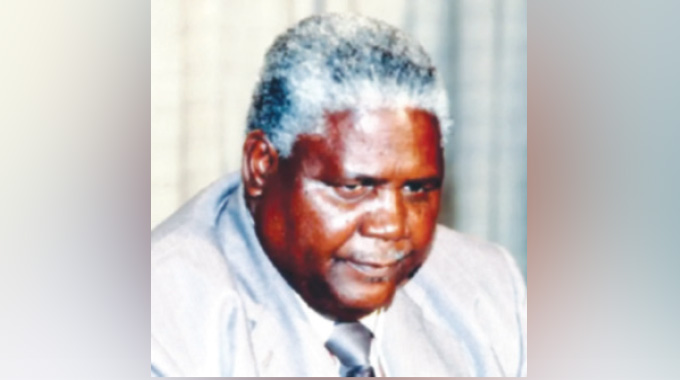
Vusumuzi Dube, Online News Editor
THE enduring legacy of the late Vice-President, Dr Joshua Mqabuko Nkomo, a revered figure in the world of nationalistic political history continues to shape the values of the Second Republic under President Mnangagwa.
In the spirit of the late Father Zimbabwe’s visionary leadership, the Second Republic under the astute leadership of President Mnangagwa has made significant strides in fostering national development and embracing the values of hard work, unity, and progress.
Father Zimbabwe, as most Zimbabweans call him, was born in Kezi or Matobo District on 17 June 1918 and was the country’s Vice-President at the time of his death on 1 July 1999.
After leading Zapu and its predecessor, the National Democratic Party (NDP) and playing a pivotal role in the protracted armed struggle and in uniting the country since 1987, it was but a natural call for the moniker Father Zimbabwe to be given to this titanic and iconic figure in the national history and heritage.
Dr Nkomo played an immense role in liberating the country from white oppressors; he was notably one of the first individuals to take up the struggle for liberating the country as a full-time occupation, literally abandoning his family, job as a social worker at the railways, all in the name of nationalism.
He is ranked alongside some of Africa’s great leaders such as the late Ghana President Kwame Nkrumah, the late Mozambican President Samora Machel, Democratic Republic of Congo (then Zaire) founding Prime Minister, the late Patrice Lumumba, former South African President, Nelson Mandela and former Zambian President Kenneth Kaunda, among others.
In his autobiography, The Story of My Life, Dr Nkomo provides a compelling account of his pivotal role in the liberation struggle and offers invaluable insights into the challenges faced during the colonial and post-independence eras.
President Mnangagwa, taking from Dr Nkomo’s principles, has consistently emphasised the importance of diligence, unity and sustainable development as foundational pillars of the Second Republic’s governance, drawing inspiration from the enduring legacy of the late Vice-President.
The Second Republic has embarked on an ambitious journey of economic revitalisation, underpinned by comprehensive reforms and strategic developmental initiatives. Central to this agenda are the Transitional Stabilisation Programme (TSP) and the subsequent National Development Strategy (NDS-1), which collectively represent a resolute commitment to addressing long-standing economic challenges and laying the groundwork for sustained growth.
These far-reaching endeavours are emblematic of the administration’s dedication to realising Dr Nkomo’s vision of a prosperous and industrious nation, as depicted in many of his speeches.
A story is told that during a rally in the 1980s, Dr Nkomo had asked the crowd; “Liyayifuna imali, nxa liyifuna phendulela ibala elithi mali, LIMA” (Do you want money, if yes go and farm).
Recognising the pivotal role of robust infrastructure and industrialisation in driving economic progress, the Second Republic has also undertaken substantial investments in these crucial sectors. Noteworthy initiatives such as the construction of vital road networks, the establishment of strategically located Special Economic Zones (SEZs) and the implementation of targeted investment incentives underscore the Government’s pro-active stance in creating an enabling environment for sustainable growth.
These endeavours align closely with Dr Nkomo’s aspiration for a modern, industrialised Zimbabwe capable of harnessing its full economic potential.
Dr Nkomo is also credited for openly demanding that land be returned to Zimbabweans and also backed billionaire, Mr Strive Masiyiwa during his early days of establishing Econet Wireless Company.
Veteran Bulawayo businessman, Mr Mohamed Esat, has often stated the impact that the late Vice-President has had in the industrialisation of the country, revealing that a lot of businesspeople were inspired by him.
Speaking to our sister publication, Chronicle, Mr Esat noted that Dr Nkomo had a strong desire to empower locals and transform Zimbabwe’s economy.
He said the idea of building a new Bulawayo was brought by the late Vice-President who also suggested the establishment of Export Processing Zones (EPZ), which were meant to connect the city with the export markets through the railway.
“Dr Nkomo’s vision was very straightforward. He always said we need all players including foreigners to help develop the country,” said Mr Esat, who said he worked closely with the late nationalist.
This directly speaks to the Second Republic’s “Zimbabwe is open for business” and “Zimbabwe is a friend to all and an enemy to none” mantras that President Mnangagwa embarked on as soon as he came into power.
Agriculture, a sector deeply cherished by Dr Nkomo for its pivotal role in ensuring food security and economic stability, has garnered renewed attention under the Second Republic.
In one of his many speeches, while urging youths to engage in agriculture and desist from always looking for jobs on 12 April 1980, Dr Nkomo is quoted as saying; “I want thousands of youths to join in tilling the land so that we can turn this country into a garden. Those who are looking for jobs in factories in town are looking in the wrong places.”
The implementation of a comprehensive Agriculture Recovery Plan, complemented by a suite of supportive policies and interventions, has reinvigorated the agricultural landscape, bolstering food production and enhancing the nation’s resilience in the face of food insecurity.
These concerted efforts reflect the administration’s commitment to honouring Dr Nkomo’s enduring legacy by prioritising agricultural prosperity and self-sufficiency.
One of the overarching issues in reflecting on the life of Dr Nkomo, one of the pioneers of Zimbabwe’s modern African nationalism, was his emphasis on the importance to self-reliance.
According to late national hero, historian and veteran journalist, Saul Gwakuba Ndlovu, while Dr Nkomo attached a great deal of importance to investment, he emphasised the vital need for indigenous people to exploit and utilise their natural resources.
Ndlovu, writing in his many columns on the late veteran nationalist noted that Dr Nkomo would mention the San as an example of a community that had survived throughout the ages by sheer self-reliance.
“The San would have long become extinct if they had not adapted their lives to the harsh and most difficult conditions under which they were forced by circumstances to live in the Kalahari Desert.
“They developed self-reliance by adopting innovative modes of existence to make life comfortable in that environment,” Dr Nkomo would often say, according to Ndlovu.
Last year, The Second Republic’s industrialisation and modernisation agenda which is anchored on the NDS1, the framework towards Vision 2030 to become an upper middle-class economy yielded several resounding success stories which include the highest wheat harvest in 56 years, which saw the nation achieving self-sufficiency.
A cornerstone of Joshua Nkomo’s vision for Zimbabwe was the promotion of national unity and social cohesion, transcending historical divisions and fostering a sense of collective identity.
From the time he joined politics right to his deathbed, Dr Nkomo preached unity, peace and the importance of the land as it was the reason sons and daughters of Zimbabwe took up arms to dislodge the colonial system that led to Independence in 1980.
The values of Dr Nkomo have been carried over by the Second Republic led by President Mnangagwa who, since his taking over of power, has preached peace, unity, the full utilisation of the land and hard work.
In alignment with this vision, the Second Republic has placed a robust emphasis on initiatives that engender unity and reconciliation, seeking to forge a harmonious and inclusive society.
President Mnangagwa has made great strides in tackling issues that have remained a thorn in the nation like the emotive Gukurahundi.
The President has also emphasised on the development of all parts of Zimbabwe assuring the nation that no one would be left behind in the country’s development trajectory.
The Government has thus rolled several projects across sectors in all parts of the country for the development of the people.
President Mnangagwa has also made sure that some projects initiated many years ago but remained incomplete are accelerated through fiscal support so that they are completed.
By championing social cohesion, the Government is steadfastly upholding Dr Nkomo’s cherished ideals fostering a climate of inclusivity and mutual understanding.
Speaking on the importance of unity (29 September 1980), Dr Nkomo said; “The rulers will go, the parties will go and so will men present and to come, but the independent Zimbabwe will never go . . . our children will inherit this country and it is our duty to build it in unity and have our children thankful to us for building the country instead of destroying it.”
The Second Republic under President Mnangagwa stands as a testament to a resolute dedication to upholding the legacy of the late Father Zimbabwe, embracing the principles of hard work and national development with unwavering determination.
Through the implementation of far-reaching economic reforms, strategic infrastructure development, agricultural revitalization, and steadfast promotion of social cohesion, the administration is earnestly striving to realise Dr Nkomo’s vision of a prosperous and unified Zimbabwe.
As the nation forges ahead, the enduring spirit of Dr Nkomo’s gospel serves as a guiding beacon for the Second Republic’s unwavering pursuit of a brighter and more inclusive future for all Zimbabweans.


 Online Reporter