


 admin
admin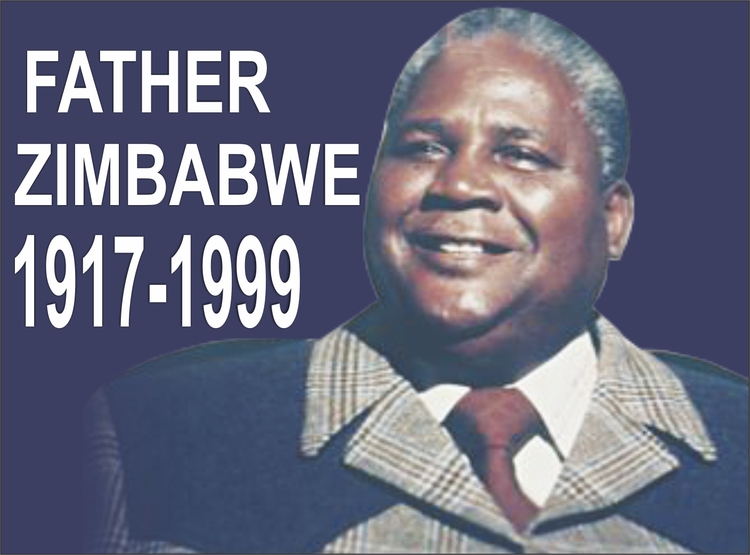

We are approaching the 16th anniversary of the death of Joshua Mqabuko Nyongolo Nkomo, the man who took the struggle to free the African people of this country we now call Zimbabwe through its final phase.
Saul Gwakuba Ndlovu
From the time Cecil John Rhodes’ British South Africa Company raised the British flag on the Harari Kopje on September 12, 1890, the African people of this land tried to get rid of the greedy land-grabbing intruders, but were always frustrated violently.
They failed not because they lacked courage, but because, first, their weapons were technologically inferior to those of the invaders, and, second, because the international socio-political atmosphere was overwhelmed by imperialism, the highest stage of colonialism, in that period.
When Nkomo was born in 1917, his parents had just been forced by the Southern Rhodesian Government to leave an area located south of where Figtree Railway Station is, for a place near Kezi in the Matobo District; a barren, arid area without any pasture to sustain any meaningful agricultural activity.
It was in that area that he spent his boyhood days, herding the family’s livestock comprising cattle, donkeys, sheep and goats.
While out in the bush with other boys, Nkomo would show his hatred for the white minority regime by organising the large number of herdboys into two rival “armies”, one representing the Rhodesian white settlers, and the other the oppressed black people.
He would be the commander of the make-believe army representing the oppressed black people, and in the mock battles the two “armies” would fight, his side would almost always be declared the winners.
His father and mother were senior members of the London Missionary Society church in the Tjimali circuit founded by the Reverend David Carnegie in the Figtree rural sector.
After the death of Reverend Carnegie and the violent removal of the black people to the Kezi area, the Rev John Whiteside, who was based at Dombodema Mission from where Rev Mongwa Tjuma was sent to take charge of the circuit in October 1917 just about four months after Joshua Nkomo’s birth, became the circuit’s overall pastor.
These two — Rev Whiteside and Rev Mongwa Tjuma — influenced Joshua Nkomo’s social attitude very much.
He developed a sense of justice and a yearning for peace, two qualities that became inseparable parts of his character.
His former school-mate at Tjolotjo Industrial School, Abel Dube (uSeka Sibonisiwe), would recall that Dr Nkomo intervened on one occasion when a teacher who was deeply annoyed by a certain naughty boy’s behaviour assaulted the boy most severely without showing any sign of stopping during a morning parade.
Joshua Nkomo stepped out of the lines and restrained the teacher and thus saved the shivering boy from more punishment.
Right from the time he succeeded the Rev TD Samkange as the Southern Rhodesia African National Congress president in 1951, Dr Nkomo preferred achieving national freedom through negotiations as the very first option, and armed revolution as a last inevitable resort.
When 10 years later he led a National Democratic Party delegation to a constitutional conference in London, he hoped that the country’s freedom —which was his life’s passion — would be granted by the colonial power, Britain, through negotiations.
But that was not to be as the British granted only 15 out of 65 parliamentary seats to blacks.
It was indeed his peace-loving disposition that saw him decide to talk to Ian Smith directly after his release from restriction at Gonakudzingwa in 1974.
Asked rather critically by one of his most senior lieutenants, Jason Ziyaphapha Moyo, in Geneva in November 1976, what he thought he could achieve by talking to Smith, Dr Nkomo calmly replied that he would talk to Smith again if he thought that such talks could resolve the Rhodesian conflict by bringing freedom and end the loss of human life and wanton destruction of property.
After signing the Lancaster House Constitution on December 22, 1979 Dr Nkomo asked through the BBC: “Couldn’t we have achieved this in 1961 and avoided all that suffering and destruction of property?”
However, circumstances completely beyond his control prevailed against him and precipitated an intolerable situation that made the use of force the only way to free the country.
Dr Nkomo was not a lover of political power; far from it.
He loved people more than political power.
He could have thrown the proverbial cat among the pigeons in the early 1960s when Dr Hastings Kamuzu Banda of Malawi called for the destruction of what he loved to call “the stupid Federation”.
His wish to become a clergyman while he was studying at Adam’s College in Natal in the early 1940s showed that his heart was more for the people than for political power.
So did his choice of social welfare as his profession.
As we follow his political career from 1957 after he was elected the SRANC president, beating James Robert Dambaza Chikerema by one vote (32-31), we should bear in mind that we are studying the life of a lawyer of humanity and not that of political power.
Saul Gwakuba Ndlovu is a retired journalist based in Bulawayo.


 derick.khumalo
 Online Reporter