

 admin
admin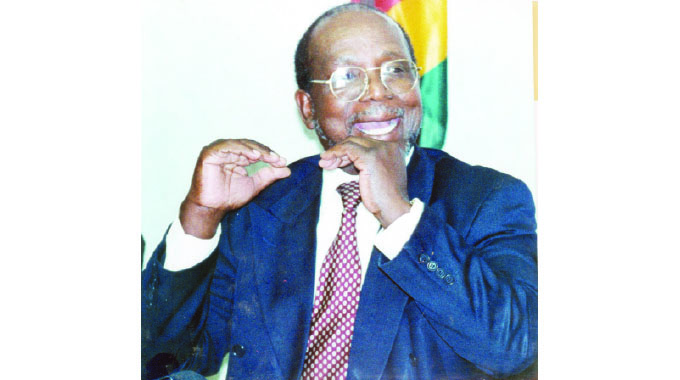
Walter Muchinguri-Senior Researcher & Writer, Zimpapers Knowledge Centre
TUESDAY September 21 was a dark day for the nation as people woke up to the sad news of the passing away of one of the most prominent and long-serving civil servants — the former Public Service Commission (PSC) chairman Dr Mariyo Mariyawanda Nzuwah.
He was 80 and is survived by his wife Janice, three children and grandchildren.
In an illustrious career spanning almost four decades, most of which he spent at the helm of the Public Service Commission, Dr Nzuwah distinguished himself as a hardworking, disciplined and focused nation builder.
A pacesetter and great administrator, Dr Nzuwah is credited with laying the ground work and foundation of the public adminstrative structures we currently have in Government today. And he did that during the challenging years soon after the attainment of independence.
What made his job particularly difficult was that he had to transform a civil service steeped in colonial bureaucracy, geared towards only serve minority interests, into a formidable broad-based system serving the majority of Zimbabweans.
It will therefore be not amiss if one sees him as one of the founding fathers of the country’s post-independence public service administrators pbecause he helped shape it into what it is today, while leveraging on the knowledge and experience he had gained through studying and working overseas.
In his eulogy during the burial of the late national hero at the National Heroes’ Acre on Sunday, President Emmerson Mnangagwa admitted as much, describing Dr Nzuwah as a patriotic, humble, hardworking person, who had a high degree of professionalism and sense of duty consciousness.
“Upon attainment of our hard won independence in 1980, the late national hero Dr Nzuwah took up the call by the new administration to return home and assist in the forming of a new Government,” he said.
“He understood the meaning of ‘nyika inovakwa nevene vayo’ (A country is built by its own sons and daughters).
Together with other leading academics such as the late Dr Chales Utete, Dr Tichaona Jokonya, Ambassador Mashaire and the current Chief Secretary Dr Misheck Sibanda, among others, he became part of the pioneering crop, which manned our nascent, post-independence administration.
“He laid the foundation for the modernisation of the public service, including results-based, agile, skilled and adaptable professionals in the public service who are highly regarded in SADC and beyond.”
President Mnangagwa, who had earlier described Dr Nzuwah as a “rare crop of leader in the public service”, said he would also be remembered for his well-crafted and thought-out professional and widely researched advice on matters of public administration.
In his condolence message, Chief Secretary to the President and Cabinet Dr Misheck Sibanda, said Dr Nzuwah was a true patriot and accomplished public servant of the nation.
“Dr Nzuwah laid a solid foundation of a modernised and highly skilled public service, which is recognised not only in the SADC region but the entire Commonwealth,” he said.
“He was a co-founder of the Commonwealth Association of the Public Administration and Management (CAPAM). He will be remembered for his hard work, meticulous advice on issues of public administration and his humble disposition towards superiors, colleagues and members of the public service.”
Dr Nzuwah’s successor, Dr Vincent Hungwe described him as a patriotic cadre who answered the call of national duty soon after independence and left his professorship at the University of Maryland in the United States of America, to help the country in defining its public institutions.
“Dr Nzuwah will be remembered not only for his great zeal for the transformation and development of the Zimbabwe’s civil service, but also for his direct involvement in the shaping of the Public Service Commissions of Namibia and South Africa,” he said.
Ordinary Zimbabweans will remember the late Dr Nzuwah as a familiar figure on television and radio during the announcement of the 1995, 2000 and 2002 election results, together with then Registrar General Tobaiwa Mudede.
On the other hand, he had a love/hate relationship with civil servants due to the pronouncements he made on behalf of Government.
One minute, he would be earning kudos as a bearer of good news after announcing hefty salary increments or advocating for civil servants to get non-monetary incentives such as cars and houses; but the next minute, he would be attacked for announcing that there would be no pay increases or for announcing impending job cuts, but he took everything in stride and accepted that these were risks that came with the job.
Dr Nzuwah was born on May 9, 1941 in Nharira, Chivhu District, Mashonaland East and had the misfortune of witnessing the appropriation of his fertile ancestral land by the settler administration, which created the present day communal lands of Manyene and Nharira.
He attended Driefontein Mission School for his primary education and proceeded to St Francis Xavier’s Kutama College where he distinguished himself as a brilliant student.
He left the country for the United States on a Roman Catholic Church scholarship and studied public administration and political science at the University of Minnesota.
He met his wife Janice Marie Stevenson during that time. In 1965 the couple moved to Washington DC and Dr Nzuwah undertook post graduate studies in philosophy and administration at the prestigious Howard University.
His fight for economic justice and fair treatment for the minority, led him to join the civil rights movement in the United States including organising the Freedom Riders Protests, where he worked closely with the United Auto Workers Union and trade union activist Dr Gary K. Busch.
During the liberation struggle, Dr Nzuwah diligently participated in organising material and logistical support for Zimbabwe’s political freedom and independence. He was always rooted and guided by African philosophy and cultural identity.
In 1970 Dr Nzuwah joined the faculty of the University of Maryland where he assisted in setting up and teaching of the first Department of Afro-American studies where he worked with Dr Mary Berry, the former chairperson of the Civil Rights Commission.
Alongside other luminaries such as the late national hero Edson Jonasi Mudadirwa Zvobgo, Drs Busch and Berry, they made representations to the United States Congress and various organisations, lobbying against the brutal white settler regime.
While at the University of Maryland, Dr Nzuwah, established a research journal – the Journal of Southern African Affairs, which was instrumental in providing academic and practical insights into Africa’s liberation movements and Pan-Africanism.
This was part of the wider revolutionary agenda where pen and paper became tools to propel the liberation and development agendas of the African people.
At independence, Dr Nzuwah and his family returned home and he was appointed deputy secretary responsible for administration, finance, posts and telecommunications under the Ministry of Roads and Road Traffic, Posts and Telecommunication.
In December 1982, he was appointed permanent secretary of the Ministry of Roads and Road Traffic, taking over from Engineer Penry Mainwaring, who had retired.
Dr Nzuwah was redeployed to the Ministry of Local Government and Town Planning in 1986, which was later renamed the Ministry of Local Government, Rural and Urban Development, in the same capacity.
In December 1987, he was appointed chairman of a nine-member board of the newly established Urban Development Corporation that had been set up by the late Minister of Local Government, Rural and Urban Enos Chikowore.
On February 13, 1992, then Secretary to the Office of the President and Cabinet Office Dr Utete, announced Dr Nzuwah’s promotion by the President to chairman-designate of the PSC.
In a statement issued at the time, Dr Utete said that Dr Nzuwah, who was at the time the Senior Secretary for Local Government, Rural and Urban Development would effectively become chairman on May 1, 1992 after the retirement of the chairman, Mr Malcom Thompson in April of the same year.
Soon after the resumption of his duties Dr Nzuwah announced that senior Government officials would work on a contract basis starting in 1993 to increase performance and reduce inefficiency in the public sector.
In 1995 he was the chairman of the Election Directorate that oversaw the elections that were held in April of that year.
On May 10, 1995 Dr Nzuwah was re-appointed PSC chairman for another three-year term. And in 1996, he received death threats after someone sent him a bullet through the mail. He was appointed chairman of the Zimbabwe Electoral Commission National Logistics Committee in October 2005.
As chairman of the National Resource Mobilisation and Utilisation Committee, Dr Nzuwah in 2008 travelled extensively across the country, overseeing the distribution of fuel, seed and fertilisers to farmers with a proven record of producing and delivering their crops to the Grain Marketing Board.
In November 2013 the PSC was renamed the Civil Service Commission with him being appointed chairman of the new organisation.
Dr Nzuwah retired from the Public Service Commission in 2018, but those who succeeded him proceed with his work, brick-upon-brick.


 Peter Tanyanyiwa
 Online Reporter