Online Reporter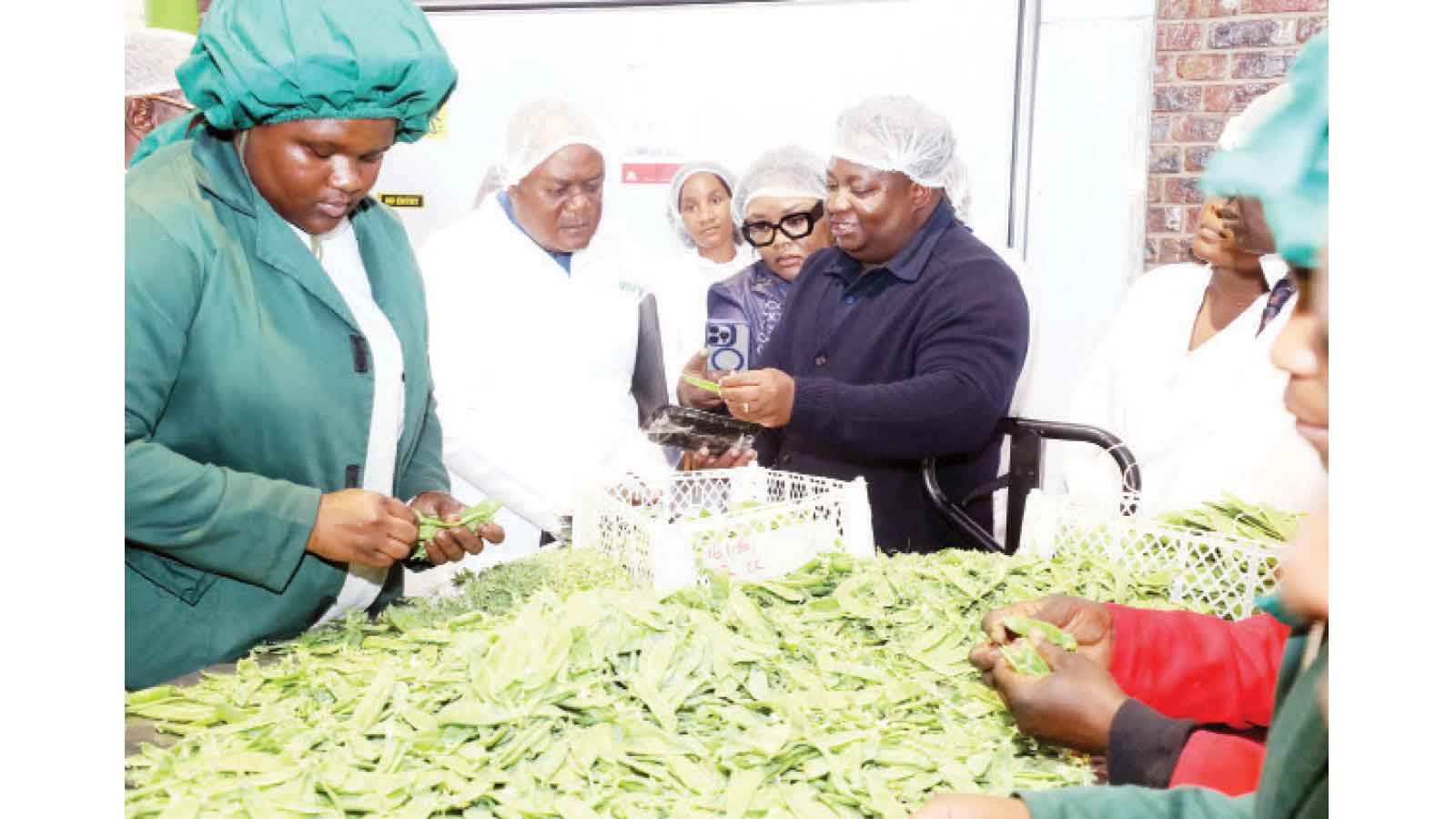
Theseus Mauruki Shambare-Herald Correspondent
THE Democratic Republic of Congo’s Lualaba Province has turned to Zimbabwe for agricultural expertise as it seeks to diversify its mining-dependent economy and accelerate food production through a proposed investment partnership that could see Zimbabwean skills, seed, machinery and agribusinesses exported to the Central African nation.
A high-level delegation from Lualaba Province, led by Minister for Land Affairs, Agriculture, Fisheries and Breeding and Rural Development Jean-Pierre Kalenga Mupataie, is this week undertaking a three-day scoping mission in Zimbabwe as both parties move towards signing a Memorandum of Understanding (MoU) on agricultural cooperation.
The visit follows engagements held during the 7th Edition of the Katanga Business Meeting in May, where discussions focused on operationalising an agriculture investment partnership between Zimbabwe and the resource-rich province.
Speaking at a courtesy call by the delegation, Agriculture, Mechanisation and Water Resources Development Permanent Secretary Professor Obert Jiri said the visit was a direct outcome of Zimbabwe’s recent engagement with officials in the DRC.
“For the DRC delegation in the Democratic Republic of Congo touring our agriculture, this follows our visit to the DRC where we engaged, and they expressed interest in our agriculture and certainly to develop their own agriculture, particularly in terms of cropping and livestock rearing,” said Prof Jiri. “So immediately following that visit which we did to the DRC, they are here now to follow through and learn what we do in terms of agriculture.”
As part of the mission, the delegation is today (Wednesday) expected to tour wheat production projects, dairy enterprises, blueberry farms, seed companies, agro-processing facilities, agricultural research institutes and machinery manufacturers.
The delegation will also visit Best Foods Processing Company in Norton, Aspindale Grain Marketing Board and National Foods facilities, Seed Co Stapleford, and research institutions specialising in soils, crop development, seed production and mechanisation.
Prof Jiri said Zimbabwe intends to showcase the full breadth of its agricultural value chains as a foundation for future cooperation.
“The expectation is that following this visit, we will then enter into a memorandum of understanding where we will then transfer skills, transfer our seeds and machinery, working together with the private sector to ensure that we go there and initiate our production there,” he said.
In a significant development, Prof Jiri revealed that Lualaba Province has already offered land for agricultural production.
“They have already offered land in DRC where we can start to kick-start production of crops immediately. So, very exciting that the DRC wants to learn from us,” he said.
“They have seen and heard what we do and now they want to really see in the course of this week, and we will give them the best of what Zimbabwe can offer and certainly we will develop the agricultural industry in the DRC.”
The proposed partnership has been under discussion since 2025 when the Governor of Lualaba Province first expressed interest in working with Zimbabwe on agricultural development.
During meetings held in the DRC last month, the Governor reiterated the province’s commitment to the initiative, indicating that Lualaba would provide land, financing and local labour for the venture.
Lualaba’s leadership views agriculture as a strategic sector for economic diversification as the province seeks to reduce its dependence on mining revenues.
Head of delegation Hon. Kalenga Mupatale said Zimbabwe’s agricultural transformation had made it an ideal partner for the province.
“We are in Zimbabwe because we have seen the remarkable progress the country has made in agriculture, particularly in crop production, seed development, irrigation, mechanisation and livestock production. Our objective is to learn from these experiences and identify practical areas where we can work together to develop agriculture in Lualaba Province,” he said.
“We believe there is enormous potential for cooperation between our two countries. Lualaba Province is ready to provide land, support infrastructure and facilitate investment. We want this partnership to move beyond discussions and translate into increased production, food security, skills transfer and economic opportunities for our people.”
The visit is expected to culminate in recommendations for an MoU, followed by feasibility studies and the establishment of a technical team, likely led by the Agricultural and Rural Development Authority (ARDA), to drive implementation of the proposed partnership.