


 Andrew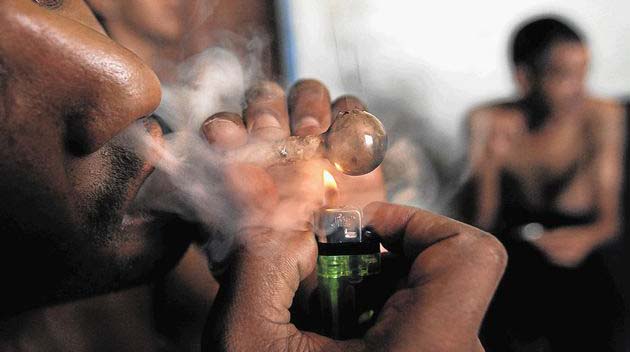
Memory Dananayi Gusha
TAPIWA is an 18-year-old boy living in Epworth.
He is a school dropout who is now hooked on drugs, and is just one of the many youths in such a predicament.
Drug and substance abuse is on the rise in Zimbabwe and prevalent in urban areas.
Poverty, peer pressure, breakdown of family support systems due to divorce or death of parents, limited knowledge about the effects of drug abuse and stress are some of the major factors that drive many to substance and drug abuse.
In the past, the most commonly abused drug was cannabis (mbanje). However, there is an increase in the types of drugs being abused.
Among them is crystal methamphetamine (mutoriro or guka), cough mixtures such as Histalix and Broncleer, and heroin. Some sniff glue.
Cocaine is readily available for those with deep pockets.
But there has been talk of the use of used sanitary pads and diapers as cheaper alternatives to get high.
Young people in Zimbabwe are the most affected. Those from poor backgrounds are tempted to abuse drugs and substances as they assume this will help them escape from life’s challenges that include hunger, unemployment and lack of access to education.
Drug abuse is prevalent in schools due to social media and associated peer pressure. Several cases have been reported in private schools probably because the learners have easy access to money.
Drug abuse is criminalised in Zimbabwe. As a result, the youth may find it difficult to open up and seek necessary help when they are faced with this challenge.
Instead of getting help, they suffer in silence.
However, the Government has come up with some interventions, but more still needs to be done. Public rehabilitation centres are few, thus, most struggle to access help.
Family members are not trained to deal with the challenges they encounter with the victims. Some tend to be violent and it can be fatal. In one unfortunate incident that occurred in Gweru, a few years ago, a mother was stabbed by her son after refusing to give him money for drugs.
Serious addiction cases are often referred to Sally Mugabe Hospital or Parirenyatwa.
Due to limited resources, victims are discharged at the first sign of showing improvement to create space for others.
Private institutions and therapists are beyond the reach of the majority, as their charges are high.
State psychologists are few and often overwhelmed with patients.
The country has lost several of these professionals to foreign countries, as better remuneration packages are offered abroad.
The Covid-19 pandemic, which claimed millions of lives across the globe, has not made the situation any better.
Most developed countries are on a recruitment drive to fill vacancies created by the deaths.
Back home, stigmatisation has resulted in a lot of people suffering from mental health while staying in the closet.
However, this has only exacerbated the situation.
In my opinion, the Government will have to intervene and come up with more rehabilitation institutions and programmes for victims who cannot afford private institutions.
We need to deal with the issue of street kids as most of them are involved in drug and substance abuse.
Education for all programmes will also help in addressing the drug and substance abuse challenge by getting rid of idleness.
There is also need for funding of supervised projects like livestock breeding and poultry farming.
The First Lady Amai Auxillia Mnangagwa has taken an initiative and is working with street kids, which is a very welcome development.
Such initiatives will go a long way in curbing drug and substance abuse.
Social media should also be used to educate youths about the dangers of drug and substance abuse since this is a platform that most of them have access to.
We have over the years seen several university students graduate. Naturally, this means we have more educated young adults, hence the need for more employment opportunities or projects.
An idle mind is always tempted to do bad things to fight stress. That said, we need to applaud the Government for making education accessible to all.
The New Dispensation has also gone an extra mile in creating employment opportunities by attracting foreign investors. The Manhize Iron and Steel Plant project in Mvuma is one such example. It has created thousands of jobs for the community both directly and indirectly in line with Vision 2030 that is aimed at creating an upper middle-income society.
We also expect foreign investors to play their part in corporate social responsibility programmes in their respective areas.
In conclusion, let us remember a lot still needs to be done to curb drug and substance abuse among youths in Zimbabwe.
Memory Dananayi Gusha is a Masters in Counselling student with Great Zimbabwe University. She writes here in her personal capacity. She can be contacted on [email protected]



 Bongani Ndlovu
 Online Reporter