admin
admin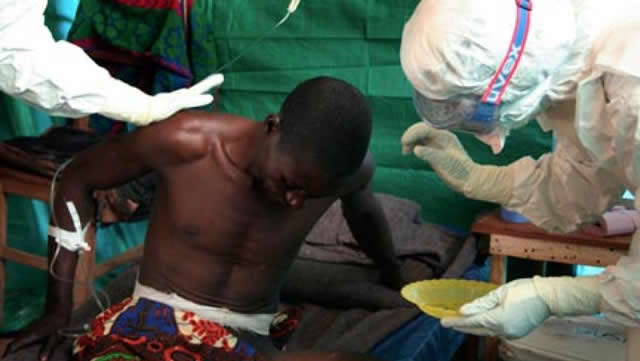
Beatrice Tonhodzayi-Ngondo Make a Difference
THE images of people suffering and dying from Ebola are nothing short of frightening. The Ebola virus, which has caused devastation, death and havoc across West Africa with countries like Liberia, Nigeria, Sierra Leone, Guinea and lately the Democratic Republic of Congo reeling under the strain of this virus, has re-emerged after causing massive destruction in some parts of the continent some years back.
While as a continent, we have seen our fair share of disease with the deadly HIV in its prime killing thousands of people from AIDS related complications; with this Ebola I shudder to think how many more would die if we do not do things differently. One of these days I received an email alert warning Zimbabweans against buying second-hand clothing in light of the Ebola epidemic.
The email, whose contents I am not going to substantiate since I am not a medical person, got me a bit disturbed. If by trading and wearing second-hand clothes, people could be exposed to Ebola, just how many people would be potentially at risk? Ebola is spread through direct contact with bodily fluids such as sweat, semen, saliva or urine, imagine what this could mean to thousands of people who trade and wear second-hand clothing if this is a risk?
The truth of the matter is Zimbabweans have really embraced second-hand clothing. The industry is big business. Those who trade in second-hand clothing do not just sell to the poor with low incomes or no incomes at all, but also to professionals who can afford new clothes with no major problems. However, some people just seem to love second-hand stuff. Some people actually believe that the second-hand stuff is of better quality than local designs.
For a chance to wear a genuine Chanel or Prada, one becomes willing to delve into these mabheros and fish out a couple of lucky finds.
While some men are also into this practice, it is mostly women who deal in this second-hand clothing business. Just look at who throngs the Sakubva Market, Mupedzanhamo and others more? At these markets you will find women trying these clothes without even washing them?
Just imagine if clothes handled by an Ebola-infected person were to make their way here? Or worse still, if someone with Ebola were to enter the country?
While most of the clothes in the country come from Mozambique, the truth is with previously worn clothing one never knows where they would have originated from. You come across Italian, British and French designs mumabhero.
Who knows where they would have come from? So just imagine?
While Zimbabwe says it has put in place screening systems at all entry points into the country, the reality is there are more illegal entry points into Zimbabwe than legal ones. Do we know who is coming in and from where they are coming?
Reports that Ebola has now been certainly diagnosed in the DRC are a major cause for worry. A number of local drivers and trucks service these routes.
Who knows what and who they are in contact with? Why do we still have them going in and out of there? Some countries have since stopped their citizens going into certain areas. Some airlines have even stopped flying into certain countries.
While some will be quick to dismiss them for being rash, the truth of the matter is that desperate situations call for desperate measures. Although some countries are our friends, we should learn from those airlines who have even decided to forego profits in the short-term because they are looking at the long-term picture.
It does not help for us to want to continue to play Big Brother when the reality is that if Ebola enters the country, we are sitting ducks. Remember there is an incubation period of up to 21 days?
Only last week, a senior official in the Ministry of Health and Child Care admitted that our systems are not very good and some specimens would have to go to South Africa for confirming. But if it is truly Ebola, by then one would have died.
If you want proof that our systems are not in order, go to Harare Hospital or any of the clinics in the high-density suburbs. If you want to really see difficulties, go to some health centres on the peripheries. Or have your relative admitted and get told you have to buy the medication, blood and everything else that will be used on them on your own. Then you will see why every possible measure should be taken to ensure Ebola never enters Zimbabwe.
If you want to see that we would never cope, just see how many medical practitioners and hospitals still accept your medical aid. The majority are not. Ask any person if you want to see that the health delivery system is ailing. The poor know that the difference between life and death is in the money in one’s pocket. So they would not want Ebola in Budiriro, Chitungwiza and Mabvuku.
The poor people know what happened in the Budiriro of the Cholera days or Mabvuku’s typhoid outbreak. They will tell you that if possible, we should ban any travel to and from affected countries. This is because they lived with death in the days of Cholera. They even lost loved ones.
The fact that we even have Zimbabweans on mission in some of these Ebola-affected countries to this day is worrisome.
Do we need to take chances? Yes, they can take precautionary measures like washing hands and avoiding contact but we all know the nature of travel. You get to sit with strangers. You share toilets with strangers. Would it be bad if we thought of ourselves first for once?
Why do we still allow our people to DRC and other affected countries? Are we sure we can screen them successfully on their return? I am not an expert but one thing is true I am a woman and mother, who is a citizen of Zimbabwe. Schools open next week and our children will be mingling with their friends, some of whom are foreigners from some of these countries.


 Online Reporter