Online Reporter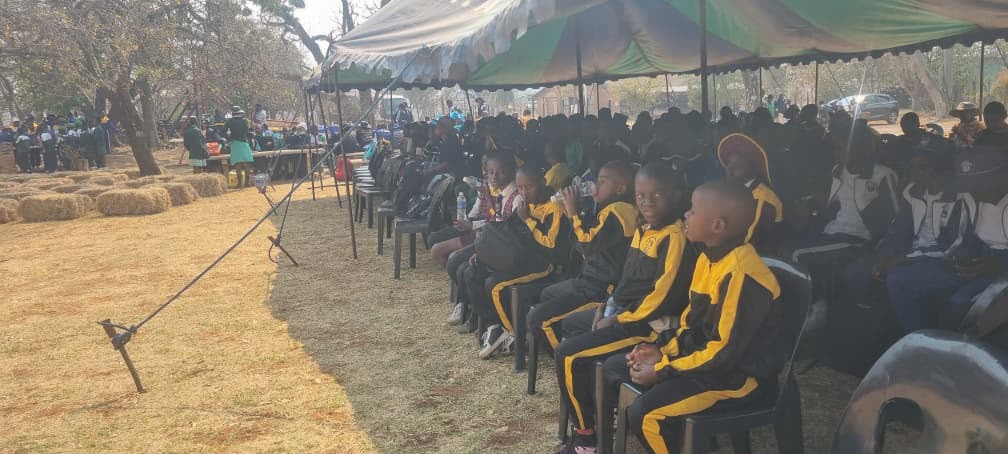
Herald Reporter
Schoolchildren from across Harare and beyond are at Mukuvisi Woodlands Education and Environment Centre for the 2026 Mukuvisi Woodlands Eco-Challenge, whose aim is to turn lessons on conservation, biodiversity and climate change into practical action.
The event has brought together learners from 14 schools, who are competing in environmental quizzes, creative arts, exhibitions, speeches, song and dance.
The programme focuses on key environmental issues including wetlands, waste management, forests, birds of prey, biodiversity and climate change.
it also included the recognition and prize-giving of outstanding participants in the various categories.
The initiative seeks to promote environmental awareness among young people and encourage learners to play an active role in protecting the environment.
Dr Elisha Chamunorwa Kujeke, a District Schools Inspector, said the initiative was important in developing a generation of young people capable of taking responsibility for the environment.
“Today is a very important day in the history of Mukuvisi Woodlands in terms of ecological issues, especially when we are looking at the Eco-Schools programme,” Dr Kujeke said.
He said the programme exposes learners to different aspects of environmental conservation through competition and interaction.
“Learners are competing in various aspects which give them awareness in terms of wildlife, waste management and all ecological aspects,” he said.
Dr Kujeke said the environmental lessons learnt at school should be taken into homes and communities, with learners becoming ambassadors for environmental protection.
“It is my fervent hope that these ambassadors for environmental reclamation should not just end at school level, but get into the communities and become a global issue,” he said.
“Water has got to be reclaimed and waste has got to be properly recycled.”
He said Zimbabwe was facing a range of environmental challenges that require innovative solutions, including plastic pollution and sewage management.
Dr Kujeke said recycling initiatives in Harare were helping to address the plastic waste problem, while more could be done to explore the conversion of sewage into useful forms of energy such as biogas.
“We still have areas where sewage is flowing and, apart from it being a health hazard, we feel environmentalists can turn that sewage into renewable gas, biogas, which can actually benefit people,” he said.
More than 100 educational institutions, including schools, colleges and universities, have subscribed to the Mukuvisi Woodlands Eco-Schools programme.