Nyasha Simbisai in BULAWAYO
GOVERNMENT is strengthening Zimbabwe’s strategic grain reserves, expanding storage infrastructure and accelerating irrigation development as the country prepares for an anticipated below-normal rainfall season, with the southern region assured of continued grain supplies.
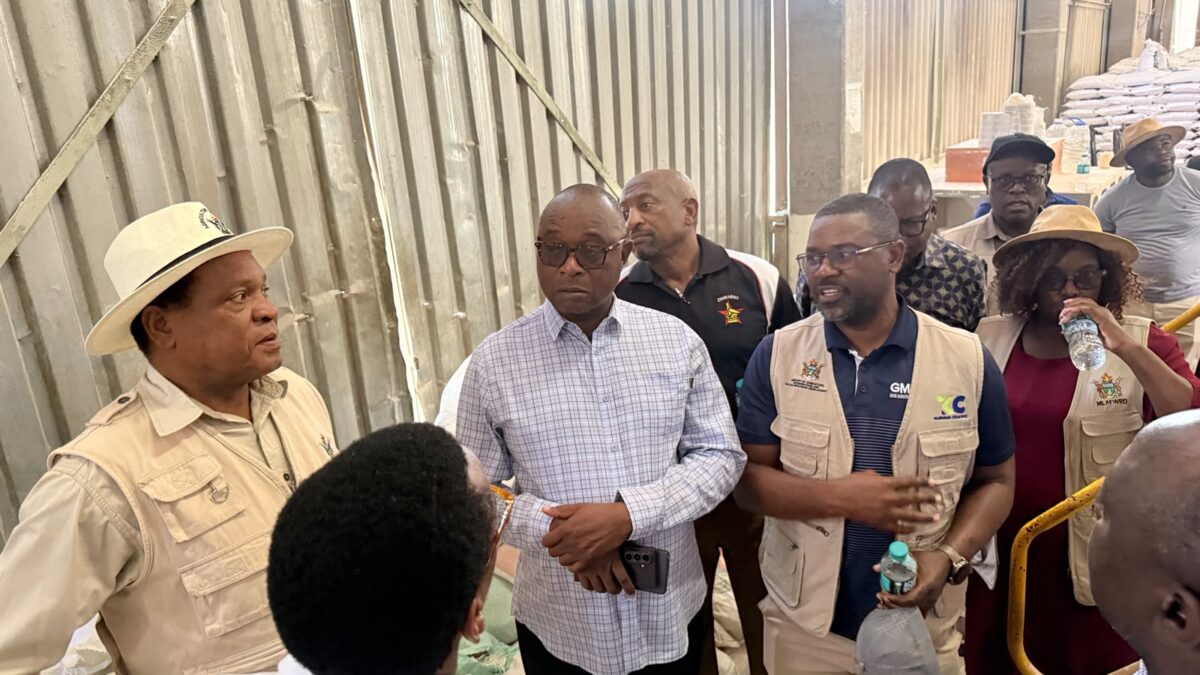
This emerged during a tour of the Grain Marketing Board (GMB) Bulawayo depot by Agriculture, Mechanisation and Water Resources Development Minister Dr Anxious Masuka, who said the country was implementing a comprehensive six-pillar drought mitigation strategy to safeguard national food security and minimise dependence on emergency grain imports.
The visit was aimed at assessing GMB’s preparedness to receive and distribute Presidential agricultural inputs and its capacity to store and distribute grain during the anticipated dry season.
The Bulawayo depot received 28 000 tonnes of grain from the previous and current marketing seasons, comprising 5 500 tonnes of maize and just over 19 000 tonnes of wheat, while stocks included approximately 300 tonnes of basal fertiliser, 1 500 tonnes of top-dressing fertiliser and sunflower seed.
Minister Masuka said the available grain stocks, coupled with flexible supply arrangements, would ensure continued availability of maize meal and bread in the southern region.
“There should not be a shortage of bread or mealie-meal in the southern part of the country because millers who have any shortfall in their positions can come for a swap arrangement with GMB, as we have stated in terms of the policy,” he said.
Dr Masuka said millers purchasing maize from other parts of the country could notify GMB and collect equivalent quantities from its Bulawayo depot without transporting the grain across the country.
He said GMB was also providing third-party storage facilities at concessionary rates, allowing farmers and other grain holders to store their produce securely without investing in their own silos.
He said the Government was expanding the country’s grain storage footprint through 14 new sites, strategically located not only in traditional production areas but also in regions likely to experience increased demand during droughts.
“Lupane, Rutenga and Gokwe are among the areas where we are putting these smart silos because production is low, but demand would be higher in a dry year,” he said.
“Government is also upgrading existing silos by installing grain dryers to improve storage efficiency and preserve grain quality over extended periods.”
Minister Masuka said household grain reserves remained a critical component of the national strategy and urged communities to retain part of their harvests and adopt proper storage practices to prevent pest infestation and fungal damage.
“ ZIMSTAT is conducting a post-harvest survey to establish the extent of household-retained grain stocks,” he said.
He said the country was transitioning from emergency import-dependent food security towards production-driven self-sufficiency, supported by Pfumvudza/Intwasa and Statutory Instrument 87 of 2025, which promotes local sourcing of major cereal requirements, with a 100 percent local sourcing target by 2028.
GMB chief executive Dr Edson Badarai said the organisation was targeting post-harvest losses of below one percent through regular fumigation, grain rotation and aeration.
“We fumigate every 14 days. We also rotate the maize within these silos so that we prevent bin burn,” he said, adding that farmers were also supplied with chemicals and fumigants to protect their grain.
Small to Medium Millers Association chairman and drought mitigation pillar five chairperson Mr Davis Muhambi said millers had been permitted to import grain, with the main constraint being their financial capacity to increase imports.
He said imports had increased during September and October following the reduction of levies from US$40 to US$15, while engagements with customs had resulted in the establishment of green routes to accelerate commodity movement.
“The issue for us is to import enough so that we avert a crisis, but also do so responsibly so that we can protect the farmer. We need the farmer so that we can be self-sufficient in the future,” he said.