admin
admin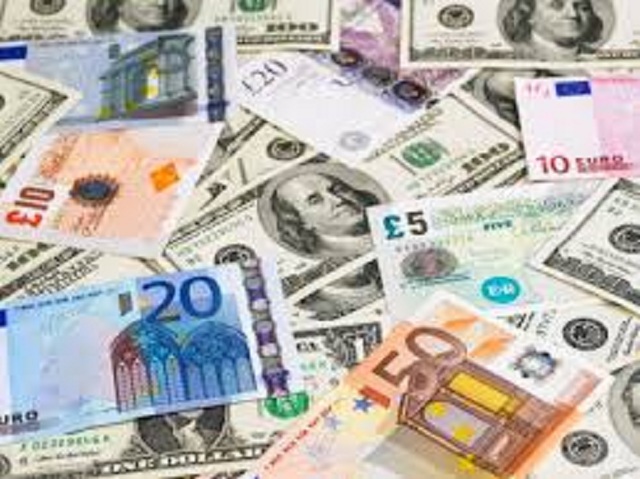
Dr Bongani Ngwenya
Preamble:
I REMEMBER during the hyperinflation era, the then Reserve Bank Governor, Dr Gideon Gono was applauded for employing home-grown economic solutions which ranged from quasi-fiscal measures to printing of the Zim-dollar, and the impact of such policies do not need to be over emphasised.
Zimbabwe is still trying to recover from that era. Some of us have even, and time and again misquoted or misunderstood President Mugabe’s sentiments about “bookish” economics. Of late I have been vilified also, and reminded of, and accused of being “bookish”.
Zimbabwe is not an island and does not exist in isolation. Economically, Zimbabwe is part of regional and international or global trade. In last week’s article I alluded to the concept of “comparative advantage”. Like any other country, Zimbabwe has its own comparative advantage over its trading partners, be it regional or global.
Economic activity has always been driven by economic principles and fundamentals since creation, Stone Age, Iron Age, civilisation and to date. Nothing has changed.
While it may be true that the economy is grappling with high costs of doing business that has negatively impacted the country’s domestic product competitiveness, people need to understand that Zimbabwe is experiencing this phenomenon primarily because of dollarisation or multi-currency regime. Zimbabwe is the only country in the Sadc region that has shelved its sovereign currency, and lost a real “fixed exchange rate”, which in one of my articles I referred to as the “missing vital cog” in the internal devaluation engine and machinery, and opted for a stronger currency, the US dollar. Unfortunately, our regional trading partners still maintain their sovereign currencies, albeit weak against the US dollar as they are.
There has been so much debate of late about “internal devaluation” and a possible “internal devaluation of the US dollar as a currency”. Mind you, these are two different economic concepts. The debate has even culminated in a beautiful study on cost driver analysis of the Zimbabwean economy by Zepura. I would like to commend the participants for coming up with such an insightful study. The country needs to come up with solutions to these challenges. My argument is, bookish as it may sound to some people, there are economic fundamental conditions that are structurally missing for internal devaluation and internal devaluation of a currency option to work in the Zimbabwean situation. I made my argument quite clear last time on the internal devaluation option. I am not going to bore my readers with tautology.
Currency devaluation and conditions for the option
Devaluation means official lowering of the value of a country’s currency, not another country’s currency within a fixed exchange rate system, by which the monetary authority formally sets a new fixed rate with respect to a foreign reference currency. The fundamental principle here is that Zimbabwe’s monetary authority, that is, the Reserve Bank has no monetary sovereignty over the multi-currency regime. Zimbabwe cannot cause or effect an official devaluation of the US dollar. Zimbabwe has no sovereign monetary control over the US dollar. Yes, our monetary authority can command some leverage on the multi-currencies circulating in the Zimbabwean economy. RBZ Governor Dr John Mangudya alluded to that in his monetary policy statement, that is, the plans to unplug the leakages of liquidity in the economy, for example.
That is as far as it can go, but for us to think that we can devalue the US dollar, I don’t see the practicality and possibility of doing that in the absence of the so called “bookish” fundamental economic principles and conditions in place. In simple terms devaluation of a currency in monetary economics is a reduction in the value of that currency with respect to those goods, services or other monetary units with which that currency can be exchanged. In contrast, depreciation is used to describe a decrease in a currency’s value (relative to other major currency benchmarks) due to market forces, not Government or central bank policy actions. By the same token, Zimbabwe cannot influence depreciation of the US dollar, or the South African Rand, unless if it is in a situation of exposure.
Of late the South African rand has been depreciating against the US dollar. Under the second system central banks maintain the rates up or down by buying or selling foreign currency, usually but not always the USD. The opposite of devaluation is revaluation. Depreciation and devaluation are sometimes incorrectly used interchangeably, but they always refer to values in terms of other currencies. Inflation, on the other hand, refers to the value of the currency in goods and services (related to its purchasing power). Altering the face value of a currency without reducing its exchange rate is a redenomination, not devaluation or revaluation. Devaluation is most often used in a situation where a currency has a defined value relative to the baseline (fixed exchange rate). This baseline can only be manipulated by the relevant and legitimate monetary authority, in this case the Federal Central or Reserve Bank of America, not Zimbabwe.
Historically, early currencies were typically coins struck from gold or silver by an issuing authority which certified the weight and purity of the precious metal. A Government in need of money and short on precious metals might abruptly lower the weight or purity of the coins without any announcement, or else decree that the new coins have equal value to the old, thus devaluing the currency. Later, with the issuing of paper currency as opposed to coins, Governments decreed them to be redeemable for gold or silver (a gold standard). Again, a Government short on gold or silver might devalue by abruptly decreeing a reduction in the currency’s redemption value, reducing the value of everyone’s holdings. The fundamental aspect here is that of an “issuing authority”.
Zimbabwe cannot all of a sudden assume or claim to be an issuing authority for the US dollar currency in circulation in Zimbabwe. People should not confuse the success of issuance of bond coins in Zimbabwe. For the bond coins to hold they needed that bond issue to ride on and above all, the baseline (US dollar fixed exchange rate). That’s why they had to be pegged at the US dollar value. This was to create that firm solid base and foundation to anchor on. A structure built on sandy foundation would not stand. This is simple basic economics.
Present day currencies are usually fiat currencies with variable market value. Some countries hold floating exchange rates while others maintain fixed exchange rate policies against the United States dollar or other major currencies.
These fixed rates are usually maintained by a combination of legally enforced capital controls or through Government trading of foreign currency reserves to manipulate the money supply. Under-fixed exchange rates, persistent capital outflows or trade deficits may lead countries to lower or abandon their fixed rate policy, resulting in a devaluation (as persistent surpluses and capital inflows may lead them towards revaluation).
In some cases, a country may revalue its currency higher (the opposite of devaluation) in response to positive economic conditions, to lower inflation, or to please investors and trading partners. This is exactly what the United States of America has been doing of late to its US dollar or currency. In an open market, the perception that a devaluation is imminent may lead speculators to sell the currency in exchange for the country’s foreign reserves, increasing pressure on the issuing country to make an actual devaluation. China devaluated their currency twice within two days by 1,9 percent and one percent in July 2015.
In conclusion, I would like to bring my readers to the fact that when Zimbabwe adopted multi-currency regime, there was an oversight on the challenge and a problem of “price distortion”. There is serious price distortion taking place in our economy. If the Government, industry and labour can get together in the spirit of tripartite negotiations and sort out the problem of price distortion, I think that option could go a long way towards bringing the cost of doing business in Zimbabwe to sustainable levels.
Dr Bongani Ngwenya is a Bulawayo-based economist and senior lecturer at Solusi University’s Post Graduate School of Business. Feedback: [email protected]/ [email protected].



 derick.khumalo