Online Reporter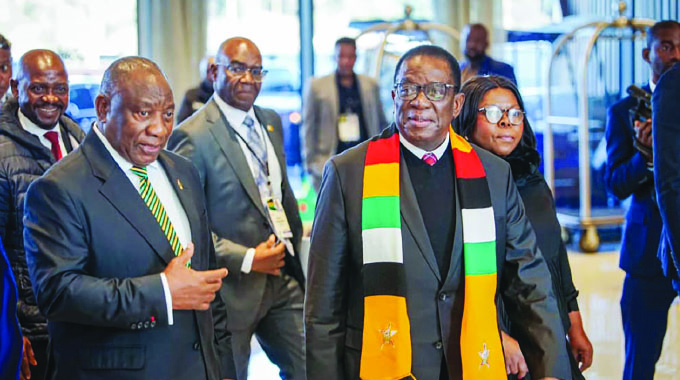
Innocent Mujeri, Correspondent
THE recent gathering of southern Africa’s liberation movements was more than a symbolic reunion of veteran revolutionaries — it was a bold declaration that the struggle for genuine African emancipation is far from over. The summit, attended by the ANC, Zanu-pf, MPLA, Swapo, Frelimo, and CCM, served as a powerful reminder that these movements remain vital in defending sovereignty, resisting neo-colonialism, and propelling the continent towards economic liberation.
In a world where foreign powers continue to attempt to dictate Africa’s destiny through sanctions, economic coercion, and political interference, the dissolution of these movements would amount to surrender. Their continued existence is not merely about honouring history; it is about ensuring that the sacrifices of past generations were not in vain.
The struggle did not end with the fall of colonial regimes — it simply entered a new phase. Today, the battlefield is economic independence, technological self-sufficiency, and the right to shape Africa’s future free from external manipulation.

Discussions at the summit revealed a clear consensus: liberation movements must remain vigilant against modern-day imperialism. While the guns of colonialism may have fallen silent, the war continues through subtler means — economic strangulation, media propaganda, and the imposition of foreign ideologies disguised as “democracy promotion”.
The West’s persistent sanctions on Zimbabwe, its alleged interference in Mozambique’s Cabo Delgado crisis, and its attempts to influence electoral outcomes across the continent are evidence that the enemy has merely changed tactics.
Liberation movements, precisely because of their roots in resistance, are best equipped to counter these threats. Their ideological foundation — forged in the fires of anti-colonial struggle —provides both a moral and strategic compass for navigating a world still dominated by exploitative powers. The presence of allies such as China and
Russia at the summit was no coincidence; it signalled a deliberate shift towards a multipolar world in which Africa can engage on its own terms, free from the suffocating grip of Western paternalism.
Perhaps the most striking aspect of the summit was its forward-looking vision.
Unlike critics who dismiss these movements as relics of a bygone era, the leaders gathered recognised that their mandate has evolved. Political independence was only the beginning; the real challenge lies in transforming that freedom into prosperity for the masses.
The emphasis on the African Continental Free Trade Area (AfCFTA) and regional industrialisation was particularly significant. For too long, Africa’s economies have been constrained by colonial-era structures designed to extract resources rather than build self-sustaining industries. Liberation movements, with their deep understanding of exploitation, must now lead the charge in dismantling these remnants of economic servitude.
The call for increased intra-African trade, youth empowerment, and technological advancement was not mere rhetoric — it was a strategy for survival.
Detractors argue that liberation movements have grown stagnant, citing corruption and governance failures. These criticisms are not without merit, but they are not definitive. Every revolutionary project encounters periods of stagnation; the solution is not abandonment but renewal.
The inclusion of younger voices in the summit’s deliberations was a promising sign that these movements recognise the need for reinvigoration.
Africa’s youth — frustrated by unemployment, disillusioned by broken promises, yet brimming with potential — must not reject these movements outright. Instead, they should reclaim them, infusing them with fresh energy while preserving their core principles. The fight for economic justice, technological sovereignty, and cultural dignity is the new frontier of liberation, and it demands the same fervour that toppled colonial regimes decades ago.
If liberation movements fade into obscurity, who will protect Africa from the predators circling its resources? Who will ensure that the continent’s future is not auctioned off to the highest foreign bidder? The summit’s message was unequivocal: these movements are not optional. They are the last line of defence against recolonisation in the 21st century.
The revolution remains unfinished. The guns may have fallen silent, but the war for Africa’s soul rages on — in boardrooms, in cyberspace, and in the global economic arena. Liberation movements must not die, because Africa’s freedom is still incomplete. To let them wither would be to betray the blood of those who fought before us — and to surrender the future of those yet to come.