admin
admin
Nqobile Bhebhe, [email protected]
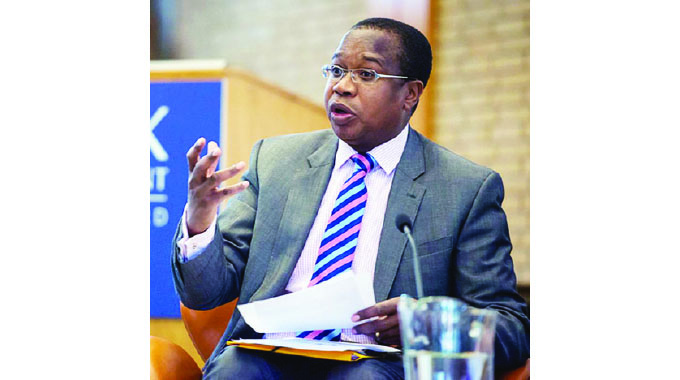
FINANCE and Economic Development Minister, Professor Mthuli Ncube has said the economy is firmly on course to achieving the desired fiscal deficit target of 1,5 percent of the Gross Domestic Product (GDP) by year-end as evidenced by a budget surplus of $608,5 billion attained in the first six months.
In his 2023 mid-term budget and economic review statement, Professor Ncube said preliminary cumulative revenue collections from January to June amounted to $4,3 trillion against expenditures of $3,7 trillion, resulting in a budget surplus of $608,5 billion.
“With this performance, the budget remains on course to achieve the desired fiscal deficit target of 1,5 percent of the GDP by year-end,” said Professor Ncube.

Giving an overview of the economic performance in the period under review, the Minister said domestic economic growth is now projected at 5,3 percent in 2023.
Professor Ncube said sound public finance management during the first half has ensured a healthy fiscal position, important in engendering stability of the economy.
“Already, ZimStat estimates economic growth during the first quarter of 2023 at 6,2 percent and 6,5 percent for the year 2022. Such growth rates put Zimbabwe among the fastest-growing economies in Africa.
“Implementation of the 2023 National Budget remains on course despite the exchange rate and inflation volatility experienced during the first half of the year,” said Professor Ncube.
The revised projected growth of 5,3 percent in 2023 is on account of strong performance in agriculture (9,7 percent), ICT (4,9 percent), accommodation and food (20,5 percent), and substantial improvements in electricity supply following successful synchronisation and subsequent commercialisation of Hwange Thermal Power Station Units 7 and 8.
Minister Ncube said the agriculture sector, which is at the centre of the national vision aimed at ensuring a prosperous upper middle-income society by 2030 and was initially projected to grow by four percent this year ,is now projected to grow by 9,7 percent.
“The total cereal production, excluding the winter wheat crop, is estimated at 2,6 million tonnes for 2023, a 40 percent above the production levels achieved last year. Overall growth in the mining sector during 2023 is now projected at 4,8 percent, benefiting from increases in the production of lithium, chrome, diamonds and PGMs,” he noted.
The manufacturing sector is expected to grow by 2,3 percent on account of a better agricultural season and measures being implemented by the Government to tame inflation and exchange volatility.

On the energy front, the Minister said the road map toward electricity has seen the successful commercialisation of Hwange Units 7 and 8 adding 600 megawatts to the national grid.
Early this month, President Mnangagwa officially commissioned the US$1,5 billion Hwange Thermal Power Station Units 7 and 8 Expansion Project.
The country is already feeling the positive impact of this massive investment, which has been facilitated by the Second Republic and is a critical enabler towards the realisation of the National Development Strategy 1 (NDS1) and Vision 2030 targets.
In his Mid-Term Monetary Policy Review Statement issued on Wednesday, Reserve Bank of Zimbabwe (RBZ) Governor, Dr John Mangudya stressed that the prevailing normalcy in the economy is critical in anchoring the robust economic growth projected at 5,3 percent in 2023, supported by a good performance by the agriculture and mining sectors, recovery in tourism and expected improvements in electricity generation in the second-half of the year.
Professor Ncube said weighted annual inflation was generally slowing down this year until June when it shot up to 175,8 percent.
However, he said prices have started to decline with month-on-month inflation for July at 15,3 percent, while year-on-year decelerated to 101,3 percent.
Going forward, he said inflation is expected to continue to decelerate in response to a raft of measures implemented by the Government in May and June 2023 to instil confidence, strengthen demand for the local currency and foster market discipline.
Macroeconomic stability is expected on account of recent bold interventions to close all sources of excess liquidity, a favourable global economic environment, stronger financial regulation and the enforcement of value for money principle in Government contracts.
“Focus will be on consolidating the stability achieved so far by maintaining tight fiscal and monetary policies while implementing measures to restore aggregate demand.
“It is also critical that all stakeholders work together with the Government to achieve the growth and stability objectives of NDS 1 by embracing the local currency as the legal tender, ending speculative/forward pricing tendencies and observation of Exchange Control regulations.”
In the period under review, Professor Ncube said Government disbursed $4,3 billion for social protection programmes with $36,1 billion allocated to the Basic Education Assistance Module (BEAM), drought and mitigation ($6 billion) and harmonised cash transfer getting $3,2 billion.
Under health, resources amounting to $248,2 billion were channelled towards employment costs, drugs, medical supplies and equipment including health infrastructure construction, rehabilitation and upgrading of facilities as well as procurement of medical equipment.
“In addition, an amount of US$2,6 million was availed during the first half of the year to the Zimbabwe Health Facilities Programme being implemented by the NMS Company,” said Prof Ncube.
He said a total of $478 billion was availed towards infrastructure development projects including inter-governmental fiscal transfers.
“Regarding water and sanitation, resources amounting to $48,5 billion were availed towards the dams projects which facilitated the completion of Chivhu dam that was commissioned in June 2023. In addition, $9,75 billion was availed towards borehole drilling under the Rural Development Programme.”
On housing development, Government availed $49, 3 billion towards construction of houses for both residential and institutional accommodation.



 Online Reporter