admin
admin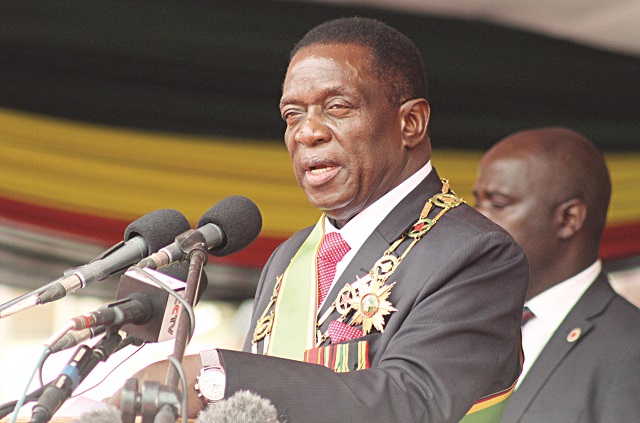
Vincent Gono, Features Editor
IDEOLOGICAL crisis is the fitting phrase that describes the hurt that the country’s new political dispensation brought to the assorted collection of opposition political parties both old and new.
Their campaign lines that bordered if not entirely pinned on the Mugabe must go mantra, security sector reforms, demand for free and fair elections, economic revival, review of indigenisation laws, robust investment promotion, an end to high level corruption among have been dealt a jaw breaking sucker punch and it remains to be seen whether they will recover from the ideological injuries and severely bruised if not crushed political hope and ego.
Although multi-party democracy as is in Zimbabwe is encouraged as a measure of an acceptable democratic political system, it is imperative to point here and now that in most African states opposition politics is born not out of the need to make the sitting Government accountable but mostly out of an neo-imperialist agenda by former colonisers.
As a result the continent has lived to witness not only foreign funded opposition parties but those that also rely on ideas and solutions from their sponsors too, solutions that are not relevant and those whose nature and culture is not African.
The opposition in Zimbabwe has always thrived on people’s suffering. It has always been feeding its ideological coffers by blaming Zanu-PF for the land occupations that attracted a punishment of sanctions and isolation from the international community.
The isolation led to a souring relationship with most Western countries and a closure of lines of credit for the country from the international monetary organisations.
But that was under an old page in Zanu-PF. Now a new page has opened and the writing is all too clear and bold that the new political leadership is determined to correct the wrongs wrought under the previous political administration and bridge the gap between the Government and the governed.
President Mnangagwa has proved to be sensitive to the plight of any Zimbabwean as evidenced by his swift response and intervention to the plight of civil servants mainly teachers whose salaries were being gobbled by money lenders despite paying off the loans.
The Mugabe must go mantra
It was now a tired everyday political song, almost an anthem of sorts for all the opposition political parties where even day-old political parties learning how to campaign and without a manifesto would sing it. It was a song as popular in opposition circles as the national anthem is to primary school pupils.
He is stealing elections, he is old, he has overstayed in power, and he has presided over the so many economic challenges that the nation is facing, he is a dictator and all those other unpleasant superlatives which I am not going to be jury over were part of the reasons for the song.
Now he is gone and the song has to stop. In fact it has stopped and the opposition has to find a lyricist to do them another political song but not certainly in the same tune and lyrics as the Mugabe must go song.
Therefore the song just has to die and be buried and the memory of it be swept away by the winds in the minds of oppositional politicians and their supporters.
Free and fair elections
President Mnangagwa has promised the nation that the country is going to hold free and fair elections next year. He seems to be walking the talk as evidenced by the extension of the Biometric Voter Registration (BVR) process to allow as many people as possible to register to vote.
War veteran leader Cde Victor Matemadanda also mentioned the important promise of free and fair elections even before the new political dispensation was in place when he said the people of Zimbabwe were going to vote freely and fairly for whoever they so desired to occupy the political office.
And these are all pointers that the elections are going to be free and fair. And they just have to so that the international community that the country is courting for investment will not doubt the legitimacy of the country’s political administration.
The country and Zanu-PF in particular has to cast away the aspersions of election cheats and that is exactly what the President is working on.
Investment promotion, indigenisation and corruption
A number of measures have been put in place in pursuance of the country’s economic and development trajectory that counter the opposition’s election trump card of an ailing economy.
A complete departure from the Cde Mugabe government has been adopted where the country is gearing itself for the removal of red tape in investor promotion from across the globe.
The President said he would look West, East, North and South for investment.
The previous political administration was accused of flouting the basic principles of investment promotion. Some political actors especially from the reactionary G40 cabal cultivated a culture of corruption and intolerance through a high margin Indigenisation and Economic Empowerment Act.
Opposition parties have always vowed to reverse the law or at least make it more accommodative to the foreigners something President Mnangagwa is already working on.
His declaration when he presented the State Of the Nation Address (SONA) that the time for politicking was over and all focus was supposed to be shifted to the economy should be taken seriously.
He has promised an end to corruption which had become cancerous under the previous political administration. It had become rampant almost embedded and an accepted way of life for the Zimbabwean society.
The political system paid little attention to the effects of the vice despite its many economic dangers.
Corrupt practices distort markets and stifle economic growth and sustainable development including robbing countries of critically needed resources.
It reduces efficiency and increases social inequality while capital has a strong tendency of shying away from risky markets where corruption is rampant.
The rampant corruption cases in Zimbabwe were repelling foreign direct investment which Zimbabwe so much needed to turn around its economy.
Allegations that government and public sector bureaucrats were demanding bribes if an investor was to gain entry into certain sectors of the country’s economy were raised but there was no political will to prosecute such glaring malpractices despite this having an adverse effect of increasing the cost of doing business in the country thus frustrating and turning away investors in the process.
As a result of damning reports of corruption, the competitiveness of Zimbabwe in attracting foreign direct investment was seriously compromised as foreign investors make use of global corruption indexes before they decide on where to invest.
Zimbabwe has however, been performing obscenely on the global corruption index.
All this according to President Mnangagwa will be part of history to be read to the future generations as he has declared a zero tolerance to corruption and has granted an amnesty to those who have been externalising money to straighten their issues with the authorities.
He has promised to review the indigenisation laws with a view to lower the threshold and attract investment.


 Online Reporter