Online Reporter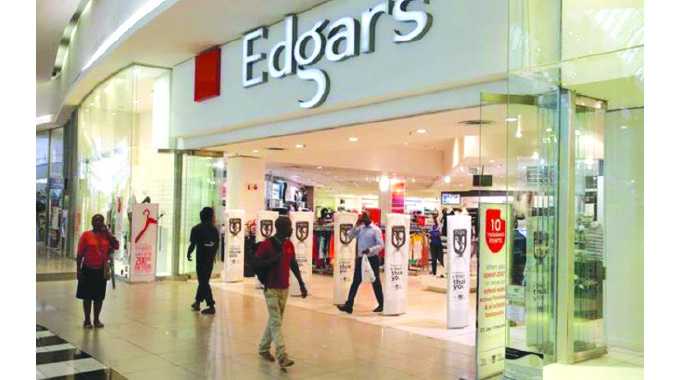
Tapiwanashe Mangwiro
EDGARS STORES LIMITED says innovation anchored in quality and a deliberate market segmentation strategy is the backbone of the company’s resilience in Zimbabwe’s turbulent retail sector.
This has enabled the clothing giant to stay afloat while several competitors have collapsed or entered business rescue processes.
During the inaugural National Tariff and Competition Conference, group chief executive officer Sevious Mushosho said Edgars made a conscious choice to avoid competing with informal players on price, instead turning to product differentiation, exclusive garment development and a redesigned market structure to maintain relevance.
He said the business’ ability to ride the tide when others failed was rooted in strategic decisions taken early, especially when the wave of smuggled, poor-quality apparel from unregulated manufacturers began distorting the clothing retail market.
Mr Mushosho told delegates that Zimbabwe’s clothing sector had been heavily disrupted by the rise of informal traders who were not only evading taxes, but flooding the market with garments made from substandard and sometimes unsafe materials.
“When the informal sector are evading tax, they are not paying significant rates, they are smuggling poor-quality products,” he said, adding that some of the fabrics were actually a health hazard to the users.
He noted that many formal players responded by sourcing from the same downtown manufacturers in an attempt to match prices.
The result was an industry-wide race to the bottom, eroding both quality standards and brand credibility.
Edgars refused to follow that path.
“What we realised as a business was that we cannot play the game with the informal sector selling the same product,” said Mr Mushosho.
“So, we innovated and we created products out of genuine fabrics, out of high-quality fabrics and offered our customers exclusive products.”
Mr Mushosho said some of the garments offered through Edgars’ in-house labels were now so distinct that they cannot be found anywhere else in Africa, a strategy that gave customers a solid reason to keep coming back to the stores.
This pivot to innovation became the centrepiece of Edgars’ survival strategy.
Instead of competing on price alone, the company began competing on value, superior material, better design, safe fabric choices and exclusivity.
Through shifting the basis of competition, Edgars insulated itself from informal traders while protecting brand integrity in a sector increasingly vulnerable to counterfeits.
Another critical pillar of the retailer’s defence was tightening control over the supply chain.
Mr Mushosho said reliance on external suppliers had proven dangerous, particularly in Zimbabwe’s unpredictable macroeconomic environment where any disruption could cripple availability.
“In retail, if you do not have control over your supply chain, any shocks in the market will take you out,” he noted.
To mitigate that risk, Edgars boosted in-house manufacturing capacity at its 32nd Street factory in Bulawayo, giving the group greater stability and reducing exposure to market volatility.
The move allowed quicker turnaround times, tighter quality management and the ability to support its innovation-driven product strategy with consistency.
From product innovation, the group moved into redefining how it approached its customers.
Market segmentation became a deliberate design rather than a passive response to income disparities.
Mr Mushosho said the company re-examined its entire market structure and chose to actively differentiate between premium, middle-income, and budget shoppers.
He explained that Edgars launched its Express Stores specifically to reach underserved low-income communities, while maintaining strong apparel lines for the upper-income and mass markets.
“We launched Express stores to reach the underserved market and expand our reach and create potential for more volumes and sales,” he said.
The model ensured that the group retained relevance across income brackets without diluting product quality or brand positioning.
He stressed that offering differentiated merchandise was a central component of the company’s turnaround.
“We maintained a focus on differentiated merchandise for upper-income segments as well as the mass market,” Mr Mushosho said.
The aim, he said, was to ensure clear distinction between premium, mid-tier and budget lines, with each receiving products that resonate with each market, while still maintaining higher fabric standards than those found among informal traders.
The segmentation strategy was complemented by improved financial controls, stronger margin management and a disciplined credit-sales system.
Edgars’ customer base includes thousands who rely on store credit, many of them low-income earners.
Mr Mushosho said effective credit screening and maintaining arrears below market and below even their margins helped preserve asset quality while supporting customers who depend on instalment purchasing.
He also emphasised disciplined cost control and margin protection, saying these were essential in preventing quality dilution or unsustainable pricing.
“That was very important to remain focused, and we have that discipline to manage your margins and control your costs and keep them down,” he said.
Ultimately, the group’s ability to combine innovation with segmentation allowed it to withstand intense pressure from informal competitors while continuing to offer Zimbabweans value-driven, quality clothing.