admin
admin
Today Zimbabwe celebrates 40 years of independence from British colonial rule.
Forty years is more than just a milestone in the development and growth of a nation. It is a time to take stock of the country’s trajectory since 1980 and a time to reflect about the selfless sacrifices of all Zimbabweans who contributed in bringing a free and independent nation.
The challenges remain, as do the opportunities, at 40, it is time to reflect. We take a hard look at the challenges, and how to collectively solve them, even as we celebrate what can only be a shared future ahead of us.
Sadly, for the first time since 1980, Zimbabweans are commemorating the day in-doors due to the Covid-19 pandemic that has claimed thousands of lives worldwide.
Before the outbreak of Covid-19, the Government had planned to hold the main commemoration in Bulawayo, the country’s second largest city.
The commemoration in Bulawayo was going to be a first as all other previous commemorations had been held in Harare.
Planning celebrations in Bulawayo, as intended, was evidence of a clean break from a past of division, to one of inclusion and respect.
This year is going to be different in that citizens would be in-doors following the 21-day lockdown announced by President Mnangagwa to curb the spread of Covid-19 disease.
Nevertheless, nothing will dampen the joy associated with the day as Zimbabweans across the political divide celebrate the dismantling of colonial rule that treated black people as second class citizens.
This year’s celebrations are being held under the theme: “Defining a decade towards 2030”.
In short, while we reflect on the valiant liberation struggle that gave birth to Zimbabwe, we envision a prosperous future in which we are the masters of our own destiny.
Despite the Covid-19 pandemic and other challenges the country is facing, Zimbabweans find cause to celebrate given the arduous journey travelled and endured in the quest for Uhuru.
We are a proud nation that takes pride in its national sovereignty, peace and unity.
As we commemorate the coming of age of our nation, we remain conscious of the critical junctures that we have had to endure.
We are conscious of how in 1889 Britain’s imperial emissary Cecil John Rhodes was granted mining rights by King Lobengula and established the British South African Company (BSAC) with a mandate to colonise the area.
As we celebrate 40 years of Uhuru, we pay homage to the spirit medium of Mbuya Nehanda, Sekuru Kaguvi, Mkwati and others for leading the First Chimurenga which became an inspirational reference point for the Second Chimurenga.
The majority of Zimbabweans remain indebted to our freedom fighters.
Hundreds of such fighters lie buried in mass graves in neighbouring countries of Zambia and Mozambique.
Independence bestowed Zimbabweans universal suffrage; freedom of movement, freedom of association and speech, respect of our culture and our traditional leaders, it broadened education access and corrected a historical injustice on land through the land redistribution exercise initiated in 2000.
As a nation, we remain grateful to the assistance rendered by fellow African brothers in Botswana, Zambia, Mozambique, Tanzania in the form of training bases, refugee camps, moral and material support including countries like Russia, Cuba, China and others.
While the First Republic was about consolidation of our independence, the Second Republic led by President Mnangagwa is about economic development.
The Second Republic is also about entrenching fundamental reforms as contained in Part VII of the Transitional Stabilisation Programme (TSP) blueprint entitled “Government Reforms”, in which the Government committed itself to ensuring the rule of law; political governance and democratisation; respect of human and property rights; national unity, peace and reconciliation; tolerance, freedoms of expression and association.
The hallmark of any democracy is inclusive politics. In his quest to promote national dialogue, President Mnangagwa set up the Political Actors Dialogue (POLAD) comprising of presidential candidates that participated in the 2018 election.
This clearly distinguishes the old and the new.
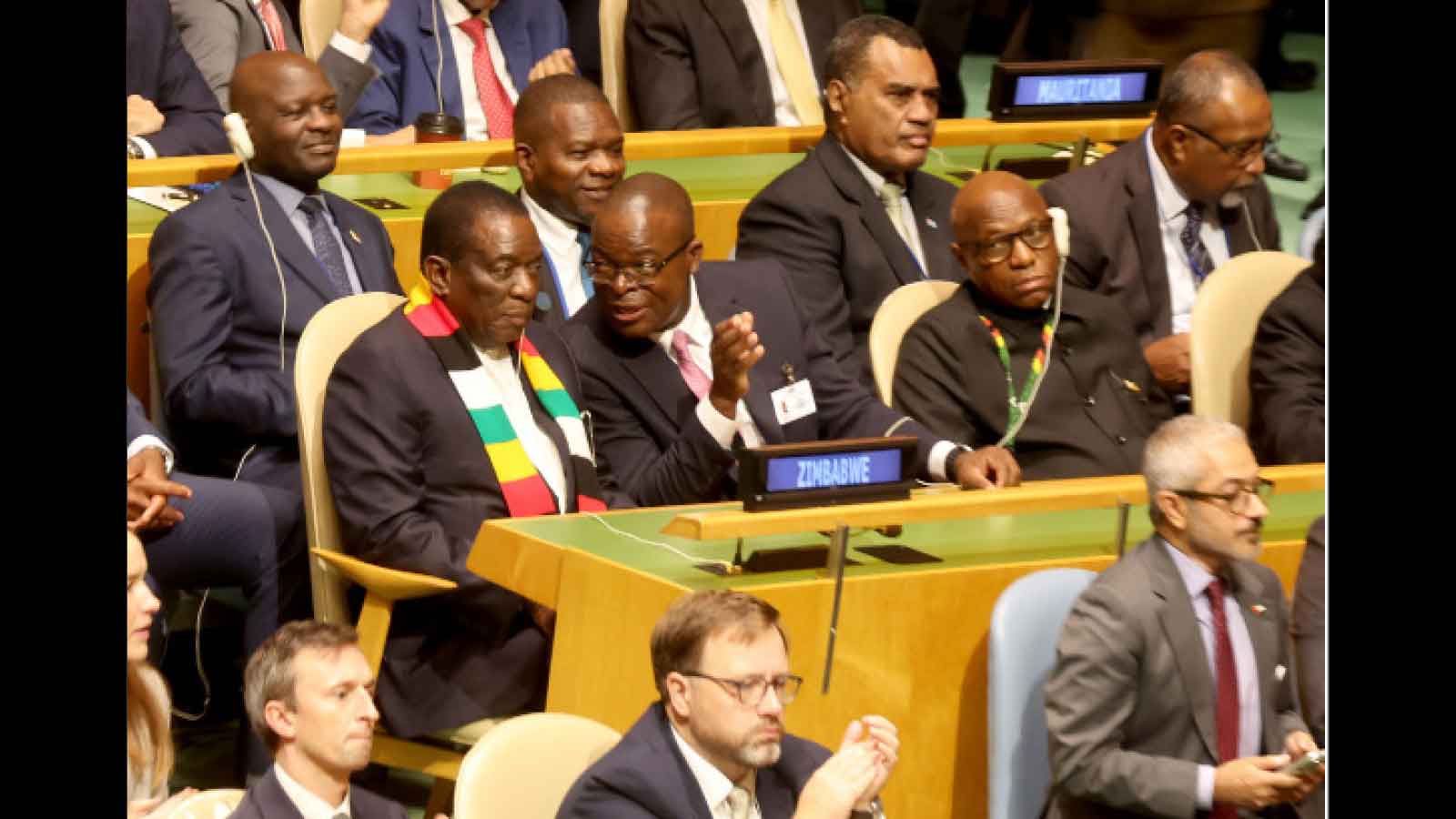
At his inauguration, President Mnangagwa set the tone for what was to become his administration’s foreign policy when he said: “Whatever misunderstandings may have subsisted in the past, let these make way to a new beginning, which sees us relating to one another in a multi-layered, mutually beneficial ways as equal partners.
“In this global world, no nation is, can, or need be an island, one unto itself. Isolation has never been splendid or viable, solidarity and partnerships are and will always be the way.”
As we mark 40 years of independence, it is without doubt that Zimbabwe will forge ahead with its agenda of serving its people without being stampeded by anyone to subvert its internal constitutional systems and processes.


 Online Reporter