admin
admin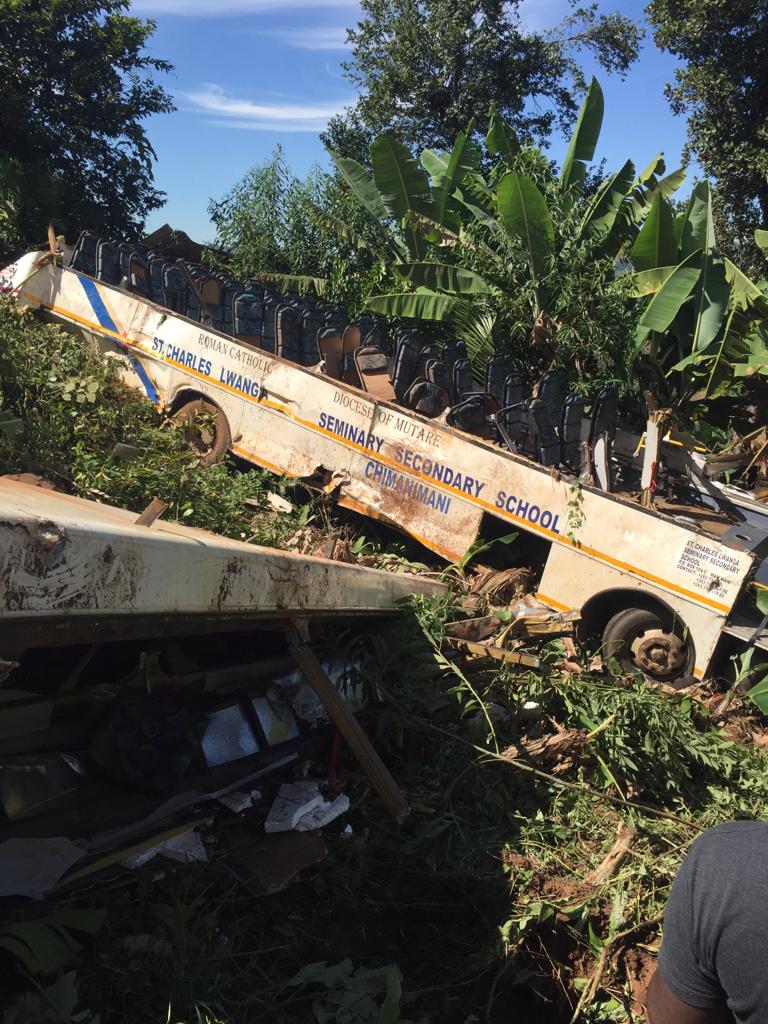
THIS year was the first near normal four-day Easter and Independence holidays since 2019 (in light of the relaxed Covid-19 regulations), and the carnage showed that Zimbabweans were ready and pleased to travel for religious, family and social gatherings.
A total of 73 people died in road accidents, three times the 24 killed during the same period last year.
The police were quite blunt. Almost all of the 264 recorded accidents were the fault of bad driving, not bad vehicles.
While a lot of Zimbabwean cars, trucks, kombis and buses are on the old side, a vehicle fault almost always means a vehicle parked on the verge while someone makes the repairs: a broken down vehicle does not move.
And these days power steering and the modern disc brake systems and the other safety features common for several decades, and so included on old cars, mean that even something like a burst tyre, a broken suspension or a leaking brake line can be controlled, that the driver can just pull over to the side of the road and call for help.
The list of what causes crashes and deaths is long, but human: speeding, fatigue, overtaking in the face of oncoming traffic, drinking alcohol, swerving in traffic, refusing to obey red traffic lights and stop signs and all the rest.
Sadly the major work being done on our highways and side roads must have had its bad side as well. On a broken pot-holed road, drivers are forced to reduce speed and take a lot more care, keeping a far sharper lookout. And if not they are likely to be parked at the side of the road waiting for a new suspension part or a repair to their sump. On a reasonably decent highway they can speed, despite the fact that our roads are designed, when it comes to the sharpness of curves and other features, for the maximum legal speeds, not for what far too many see as something that is possible.
The other noticeable fact was the night driving. Over the last two years there were curfews, and on the open road at least these were enforced. This had two beneficial effects.
First drivers could see ahead far enough to notice curves and obstacles and were able to slow down in time, stop in time or at least keep on the road instead of carrying on straight when the road curved.
And it was noticeable that some of the worst crashes were drivers just going off the road at full throttle.
The second benefit of the curfews was that drivers were forced to rest. They could not carry on all night and then all day, or even drive for hours into the night after a hard day on perhaps difficult side roads.
One interesting point in comparing last Easter and this year was the reduction in accidents and yet a far higher death toll was recorded, even when the bus disaster in Chimanimani with half the deaths is taken into account.
Last year there were 401 accidents and this year 264.
The cut back in crashes, but the sharp rise in serious injuries and deaths can be explained.
Last year, with curfews and travel restrictions, there was a lot more urban driving and a lot more day driving. Accidents are common in urban areas, but very few are fatal since people ram each other at far lower speeds.
We need to remember that doubling speed quadruples the energy that has to be dissipated in a crash, and tripling speed multiplies it ninefold.
So your average urban crash provides a lot of work for a panel beater but not much for a hospital, while the high-speed highway crash kills.
So what can be done?
Several steps are obvious. As we upgrade the police and enforcement of road rules we need to make speed traps common.
Countries with low accident rates keep almost all drivers within the limit through enforcement and these days technology even allows automatic traps that simply snap the licence plates of the vehicle as it races through.
The recent drive to make sure everyone has plates fitted would help.
Secondly, we need to think about different speed limits. The actual limit is set on the basis of a decent clear day. In rain or at night people are supposed to slow down. Many do not, so with enforcement we need to force people to slow down at night. When you drive too fast at night, even within the limit, you are adding to the danger.
Headlights, especially dipped lights, only show up the road for a fixed number of metres and if your reaction and stopping time is greater than that distance, you simply will not see the obstacle, or the curve or the degraded verge in time to slow down or stop. You can be a good professional driver but if you do not see something all that skill is useless.
One major curiosity of our driving training and driving testing is that we do not train or test for highway driving or night driving.
Learner drivers are taught to pass a test, not drive well in all conditions, and so generally learn to drive adequately on a fairly crowded urban road in daylight.
Lack of skill and ignorance can be fatal so we need to make legal changes with slower limits at night, even in urban areas now that most urban authorities have allowed street lights to vanish and the Government is fixing urban roads.
It would be sensible to allow the static checkpoints to breathalyse drivers. Few people realise that more than one drink is likely to break the legal blood-alcohol limit and a lot of people drive on a holiday at night after more than one drink, so really adding up the risks.
Talking on a phone has been found to be as dangerous as being over the blood alcohol limit. You can see how the dangers accumulate.
Some countries enforce renewal of driving licences. After someone has been driving for some years they normally have the skills, but forget the cautions and the laws, ignore the laws or have never bothered to learn the new laws and legal changes.
This can be seen in defensive driver training when, usually, an employer brings in an instructor.
The drivers have to go through the latest edition of the Highway Code, and yet the marks on the subsequent exam are quite often a bit dismal. At least people should be forced to relearn the theory adequately every few years. Zimbabwe should consider doing this.
There are lots of measures that need to be taken. Excellent advice is given every year and most people ignore it, since accidents “only happen to other people”.
Yet if the advice is followed, and if people drive within their limits, then more than 90 percent of the risk can be avoided and that is usually enough to keep you safe.
We all need to think a lot more seriously. We cannot kill 74 people in four days ever again.


 Online Reporter