admin
admin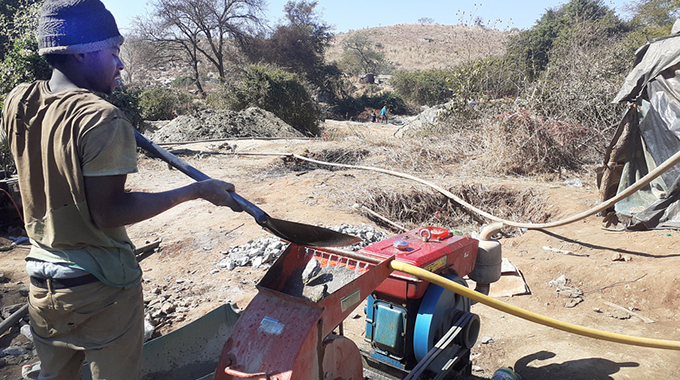
Falling seasonal gold deliveries from the small-scale and artisanal miners as rains flood sandbanks and trenches and pour into gold workings have led to calls for more regulation and Government help in this sector.
No one disagrees. The problem comes in implementing any systems that make the informal mining sector run a lot more smoothly and safely.
The formal miners, even including the owners of very small gold mines, is regulated and inspected.
Gold claims are registered, administrators and the courts can sort out conflicts, miners have to follow standard safety regulations, full compensation and usually a bit more has to be paid to farmers if a mine owner believes that the land is more valuable for mining, and generally the whole corpus of mining law, statute and the result of court decisions, is available and followed.
These miners can approach banks and other lenders if they need additional capital, staking their mining claims and equipment as security, and companies can be formed.
The problem comes with the informal sector, where almost nothing is on an official record neither the claim nor the operation, and where trying to enforce rights and safety is a nightmare.
People start panning sandbanks in rivers, without telling anyone, or start digging, even next to house walls, or climb down mineshafts owned by others.
Disputes can be settled with machetes and even when there is some order in an area this is often enforced by something similar to a Mafia don rather than the authorities.
When we contrast this with farming, where the Government has been making huge inroads into empowering even the poorest farmers, we can see the difference and see the sort of conditions that are necessary for a similar scheme of supporting informal miners.
All farmers have access to land, otherwise they could not farm. Sometimes this land is communal land, but their name and location is recorded in the headman’s book and everyone knows who has the right to use the land.
Sometimes the land allocation is recorded with the Ministry of Lands, Agriculture, Fisheries, Water and Rural Development when it comes to the resettlement areas. In a few cases there are title deeds.
Agritex is now building up its own records for all farms, regardless of the allocating authority, since they need to know who is farming where.
The point is every farmer has a high level of security of tenure, even in the communal and resettlement systems where reallocations of unused land are possible, but only by the authorities and only after everyone agrees that the land is not being used.
Secondly, land rights are rarely disputed and where they are it is easy to sort out who has the headman’s allocation or the offer letter or the title deed.
Disputes are settled in a traditional court or a land court without much trouble, and lawyers are the preferred weapon, not machetes.
No one can just walk into someone else’s fields and start planting, acting as if the land was theirs. And while enforcement of good environmental practice is difficult in the abstract, in practice these days farmers wanting free inputs or credit need to practice good quality agriculture to minimise the risks from climate.
Informal miners have never heard of conservations practices or how to minimise degradation or clean up their own mess.
We are starting to see from the formal mining sector, which does include some very small mines, and the farming sector with farms ranging upwards from very small patches, what basic conditions have to be met before some seriously useful and helpful Government schemes could be launched.
Much of these initial conditions need the active co-operation of informal miners and a willingness to play by the rules and accept that registers, licences and the like can benefit those mining as well as the State organisations that have to regulate mining.
The Zimbabwe Diamond and Allied Workers’ Union that claims to be the representative of these small miners thus needs to help generate the required degree of a willingness to help formulate and enforce rules.
If there are some aspects of licensing or the like that make business very difficult then there needs to be discussion on what is reasonable and what works better than the present theory.
The present Government is pro-business and is always willing to listen to good ideas and grabs those that it thinks are good.
But what is not up for discussion is the need to have a licensed and regulated mining environment.
The way it works can be adjusted; its abolition cannot be on the table.
Once all this is accepted by the miners, and any obviously wrong regulations are dumped or replaced, then we can start the process of licensing all miners and then granting licensed miners, or groups of miners, access to required machinery, something resembling security of tenure and enforcement of basic safety conditions.
Informal miners can almost certainly do a lot better if they are willing to co-operate and like the subsistence farmers convert themselves into small businesses rather than try to go it alone. This requires everyone to come together, and that includes the artisanal miners.


 Online Reporter