Online Reporter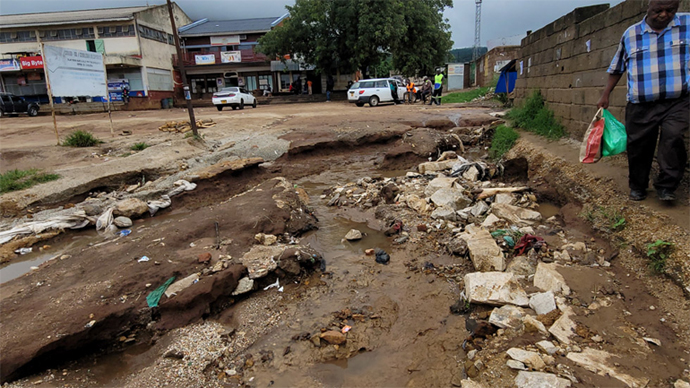
THE incessant rains pounding Manicaland have once again exposed the fragility of our road infrastructure and the glaring neglect by local authorities and road agencies tasked with maintaining it.
For motorists in Mutare, the notorious Flyover, Sakubva Swimming Pool, Park Road and Magamba Road have become symbols of frustration and danger, with potholes multiplying daily and transforming what should be smooth journeys into nerve-wracking ordeals.
The situation is not confined to these four stretches alone; potholes now litter the length and breadth of most roads in the province, turning travel into a gamble with safety and an expensive exercise in vehicle maintenance.
The rains are not an anomaly—they are seasonal and predictable. Yet year after year, the same story unfolds: roads disintegrate under the weight of water, drainage systems fail, and motorists are left to bear the brunt.
This points to a deeper issue of poor planning, inadequate maintenance, and a reactive rather than proactive approach to infrastructure management.
Road authorities cannot continue to treat rehabilitation as an emergency response to rains; it must be embedded in a long-term strategy that anticipates weather patterns and invests in durable solutions.
The economic cost of neglecting road maintenance is staggering. Motorists are forced to spend hundreds of dollars repairing suspensions, replacing tyres, and fixing damaged undercarriages.
Public transport operators, who ferry thousands daily, pass these costs onto commuters, making travel more expensive for ordinary citizens. Worse still, the pothole-ridden roads increase the risk of accidents, with vehicles swerving dangerously to avoid craters or breaking down in the middle of traffic.
In effect, poor roads are not just an inconvenience—they are a public safety hazard and a drain on the economy.
Local authorities must therefore reframe their priorities. Roads are not luxuries; they are arteries of commerce, education, and social life.
Every broken road is a broken link in the chain of development. The Flyover in Mutare, for instance, is a critical connector, yet its current state undermines the city’s role as a gateway to the province.
Magamba Road, equally vital, has become a nightmare for motorists, eroding confidence in the ability of authorities to deliver basic services. These roads should be rehabilitated urgently, not patched with temporary fixes that wash away with the next downpour.
The solution lies in a deliberate, well-funded, and transparent road maintenance programme. Authorities must invest in proper drainage systems to prevent waterlogging, use durable materials suited to local conditions, and schedule regular inspections to identify and fix problems before they escalate. Partnerships with private contractors and community involvement can also enhance accountability and efficiency.
Importantly, rehabilitation should not be confined to urban centres; rural roads, which connect farmers to markets and children to schools, are equally vital and deserve attention.
There is also a need for stronger coordination between local authorities, Zimbabwe National Road Administration (ZINARA), and Central Government. Funding allocations must be timely and sufficient, while monitoring mechanisms should ensure that resources are not diverted or wasted. Transparency in tender processes and project implementation will reassure the public and sponsors that road rehabilitation is not just another avenue for mismanagement. Beyond the technical fixes, authorities must recognise the symbolic importance of roads.
A well-maintained road network signals progress, competence, and respect for citizens. Conversely, pothole-ridden roads communicate neglect and indifference.
For a province like Manicaland, which prides itself on being a hub of tourism, agriculture, and education, the current state of roads undermines its potential and reputation.
The rains will not stop, and climate change may even intensify them. What must change is the attitude of those entrusted with infrastructure.
Road maintenance should be treated as a continuous responsibility, not a seasonal scramble.
By prioritising rehabilitation now, authorities can save lives, reduce costs for motorists, and restore confidence in public institutions.
In the end, the call is simple, but urgent: fix the roads. Mutare’s Flyover, Sakubva Swimming Pool and Magamba Road must be rehabilitated without delay, and a province-wide programme must be rolled out to address the pothole crisis.
The travelling public deserves safe, reliable roads, and motorists should not have to pay the price of official neglect through endless repairs to their vehicles. Road authorities must rise to the occasion, for every pothole left unattended is a reminder of failure—and every repaired road a step towards progress.