admin
admin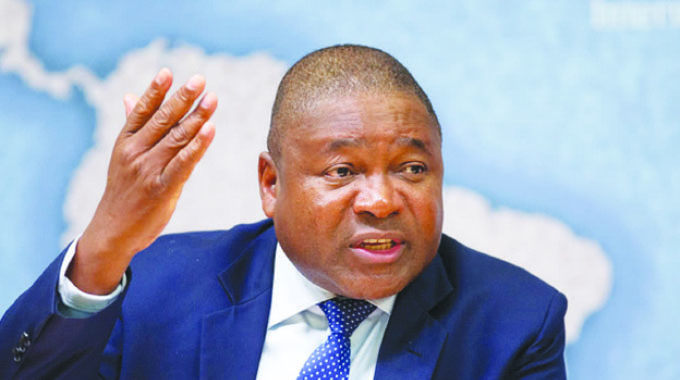
MOZAMBIQUE- Zimbabwe relations do not always get the sort of attention from the private sector that they really deserve and this can slow growth and investment in the sort of infrastructure that both countries require.
President Filipe Nyusi of Mozambique pertinently noted this development yesterday when officially opening the Zimbabwe Agricultural Show, the day after opening the Maputo Trade Fair.
Seeing the double sets of exhibits close to simultaneously obviously made him wonder how well the two countries fitted together and how they could accelerate development with more cooperation right across their economies.
The fact that President Mnangagwa and President Nyusi are on the same page when it comes to investment and their strong commitments to infrastructure makes cooperation even easier.
In many ways Mozambique is perhaps Zimbabwe’s most important neighbour. We might have five immediate neighbours that touch our borders, but easily the longest at 1 402km is the Mozambican border, making up 43,4 percent of the total, wrapping itself around almost half the country on the east.
Two of its ports are Zimbabwe’s natural outlets to the sea, and certainly the shortest, with a third being added in the foreseeable future south of Maputo.
That suddenly makes the joint infrastructure rather critical, as President Nyusi also noted. In any case this joint infrastructure is needed when talk about how a lot of other Sadc members can get access to the Indian Ocean, to Mozambique’s largest two ports, for everyone’s benefit and all those services in Zimbabwe and inland Mozambique can grow with some of that transit traffic.
President Nyusi has, during his two terms, placed very strong emphasis on Mozambique’s rail connections, with the doubling of the track leading from Maputo into South Africa and the rehabilitation of the line from Beira to Machipanda.
His desire to see that Beira line upgraded right across Zimbabwe strikes him as obvious, and no one in Zimbabwe could possibly disagree. We need it for ourselves as we build up our steel industry and mineral exports and the rest of the region needs such a respectable line.
In fact, a lot of that particular line on both sides of the border was created by a single investor or group of investors, Cecil Rhodes and his friends, in the 1890s after they manipulated the colonial authorities in both Britain and Portugal.
Now we can do it better and properly as neighbouring states, and we need to since the original requirements still exist. What we inherited is not good enough although the rail reserves exist to do it right.
But it does not stop there. Already there are recent agreements to extend the inherited grid into central Botswana with an upgraded set of lines all the way down to Maputo and that new port to the south of Maputo, and the upgrade will benefit all three countries with a better quality grid.
Mozambique is our second most populous neighbour, with almost exactly twice our own population, so the joint market is large, and with both countries having the fastest growth rates in Sadc, sometimes the one and sometimes the other topping the list, that market is becoming larger rather fast.
The fact that we are the two at the top of the growth list also opens up more opportunities for large joint investments, as there is no lag on one side of the border.
Both countries have been stressing inward investment as a way of bringing in the sort of capital required for industry and infrastructure, but President Nyusi did bring up the idea of joint marketing of investment opportunities, and of mobilising more of our own resources. Again converting theory into practice.
Both countries in industrial terms are near the start of the sort of major industrialisation drives that are required for true wealth, with what is there only a small fraction of what will be required in rich countries.
Their natural resources tend to be complementary rather than competitive. Even in agriculture, and in both countries the farmers are the largest section of the population, the variations in altitude produce a lot of complementary crops as well as many similar harvests.
That even allows more co-operation in such things as inputs. Between the two of us we have the bulk of the ingredients for fertilisers, combining Zimbabwe’s phosphates and Mozambique’s ammonia from its growing natural gas output.
Already this is being done, but our private sectors could push the process along.
Even in tourism some joint marketing and investment seems ideal. When someone takes a long plane trip to Africa they want multiple experiences.
So far more joint holiday programmes that can include Victoria Falls, game and a white beach on the warm Indian Ocean current seems obvious. Combined we would have far more to offer.
At the same time a bit of rebuilding of former links, beach holidays for Zimbabweans a short drive away and mountain holidays for Mozambicans seems another complementary set of destinations.
Even in energy there is a respectable balance between the two countries. Zimbabwe is now starting to more than double electricity output from coal within the next few years. Mozambique has two natural gas stations, one larger and really new and still being developed.
Both use Zambezi water, but Cabora Bassa has both a larger output than the two Kariba stations, and being fed with several more Zambezi tributaries has a more assured water supply. And it does sometimes get a fast fill from some of those cyclones that turn up more frequently. But the triple source of power does make energy production more secure.
The point of co-operation and joint investment internal and external is that the two fastest growing Southern African economies can grow even faster together than apart.


 Online Reporter