admin
admin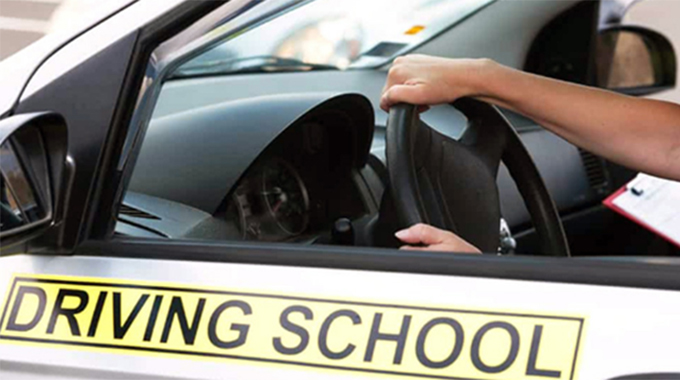
Running a driving school is a legitimate small business for many, the only capital investment needed being a fully roadworthy car with a second rear view mirror and a good handbrake that is accessible from both front seats.
The requirements are simple. The driving school has to be registered as a company, a private limited company in most cases, and must be registered with Zimra for taxation, and Zimra will explain the records that have to kept and the taxes that must be paid and when, and must be registered with NSSA and the appropriate national employment council if there are any employees under 65. It must also have premises of at least 14 square metres.
The driving school must also be registered with the Zimbabwe Traffic Safety Council, with details of the registered driving instructor or instructors, and this is the other set of requirements.
A prospective instructor has to have a clean class four driving licence, and have held it for five years with zero traffic offences in the last two years.
They then sit a written and practical test with the Zimbabwe Traffic Safety Council and if they pass this they can become an assistant instructor, which means they must then work for an additional year under the supervision of a fully registered instructor.
These terms are not onerous. Basically they are the standard business conditions that all small companies must follow, plus the need for the car or cars used in instruction to have passed a VID inspection and have the name of the driving school emblazoned on their side, and with the mounted L-plates, plus the need to have qualified instructors or at least one qualified instructor and the rest assistant instructors working out their year under supervision.
There are additional, but similar requirements, and far higher investments, for the larger schools that teach drivers of heavy vehicles and buses, but these are a small percentage of the total number of driving schools, many of which have just a handful of cars and instructors and some which are basically one-person businesses owned by a registered instructor with one car.
So the fact that very few of the 700 or so driving schools in Zimbabwe meet the full set of business and instructor requirements is worrying, both as an example of sloppy business and, more critically, as a potential danger to the learner drivers and the rest of the public using the roads if there are unregistered and unqualified instructors in the front passenger seat.
The Zimbabwe Traffic Safety Council is now taking action and fulfilling its responsibility of checking up on all driving schools, something which is not just allowed to do, but is supposed to do under the law.
Some schools that are deficient in some respect will be given a deadline to sort themselves out. Most of these presumably will be schools with proper safe vehicles and registered instructors, so are not a danger, but which have not been keeping the best financial records, making tax returns and keeping their tax payments up to date.
The Zimbabwe Traffic Safety Council can legitimately give them a bit of leeway to sort out the business side of their licensing and operations, since these deficiencies are not going to make them useless at teaching and do not create any safety issues.
Where the council needs to be a lot harsher is when it comes to the vehicles, if they have missed their last VID inspection, and especially when it comes to the instructors.
These must be fully qualified, that is experienced drivers who have passed the tests set by the council and who have renewed their registration at the required intervals.
Those who sign on with a driving school and had over their fees expect, and have the right to expect, that they will be taught properly by someone qualified to teach and that the vehicle they are taught in, regardless of how old, is a safe vehicle.
If one or both of these requirements are not being met then the Zimbabwe Traffic Safety Council needs, in our opinion, to at least suspend the registration while those are being fixed, or cancel the registration if it is clear that this is a deliberate policy by what amounts to a con-artist.
We do not need business as usual while a deadline is being met but no business at all while everything is sorted out.
A suspended registration does not destroy the business, but it prevents unsafe practices while the school is being sorted out. What it does stop is the dangerous practices of a failed or fake school.
These are safety issues and need to be at the forefront of the council’s inspection programme. Sloppy tax payments are one thing, but unsafe instruction is a whole order of magnitude more serious.
The other matter that concerns many is the quality of the driving needed to pass a road test. The VID has been cleaning up the corruption that once riddled this operation, but even then there are many gaps.
For a start, there is no need for any instruction in night driving nor any test of night driving. There is just the provision oral test, where the Highway Code mentions the need to dip lights when another vehicle is approaching, plus some very sensible advice on night driving, without anyone checking up whether a new driver can implement these.
Highway driving, which tends to be done at much higher speeds than inner city driving instruction or needs to be shown off in any test, is another area that needs to be addressed.
In Germany, where there are autobahn with no limits, all learner drivers have to successfully undergo instruction in high speed freeway driving, one of the many reasons why becoming licenced in Germany is an expensive and time-consuming process, but one that produces very low accident rates as a result.
Much of our teaching on driving is intended to get a learner through their driving test, which is fair enough since that is what they are paying the school to do, so we need to look at what we actually test during that critical, and for most that test that is taken just once in a lifetime. There has been little advance since these were first introduced almost a century ago.
But while we are considering this, the Zimbabwe Traffic Safety Council could perhaps set a syllabus for driving schools that goes further than what the VID examiners require, such as a compulsory night-driving practical lesson or lessons and at least one lesson on the open highway. More would be better of course.
We need to avoid the near misses and bad driving, as well as reduce the accident rates.



 Online Reporter