admin
admin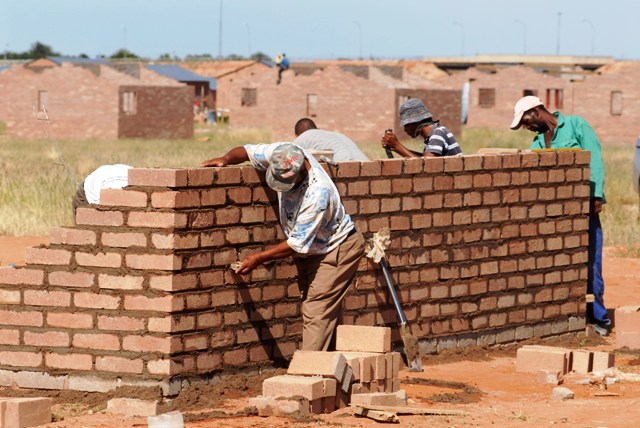
 The housing scheme in Budiriro set up by Harare City Council and CABS is designed to have 3 102 basic core houses costing between US$17 000 and US$27 000 that buyers can extend and develop over the years as they earn more money. It is the biggest housing scheme in the city for more than 20 years and the basic homes will be affordable, with 10-year mortgages, for many families.
But, magnificent as it is, it will do little more than dent the pent-up demand for homes in Harare, simply because so little has been done in recent years. The figure of a demand for 500 000 new houses for Harare often bandied around is clearly a gross over-estimate of housing demand.
That seems, from census results, to be roughly what the total housing stock of the Harare Metropolitan Province needs to be, including all the houses and flats already built. But while some estimates are wrong, we certainly need many tens of thousands of new homes very quickly, and with the rural-to-urban migration continuing unabated as the Zimbabwean economy modernises, thousands more new urban families will require homes every year.
Zanu-PF made housing one of its major election platforms, so the city council will have the backing of the Government in whatever schemes it can come up with. While the Government itself has little money to spend on housing, except for its own employees, it can provide a great deal of help in things like making land available, guaranteeing loans, and having a good look at legislative matters like the model building by-laws that might inhibit home building.
It is highly unlikely that a single approach will cope with the immense building programme required. There must be many ways for a family to buy its first basic home, or move out of that into something grander. We need not worry about people moving around since every new home means one more family housed. People moving house release their older house that can then be bought or rented by another family.
The private sector has done a lot in recent years to open up housing development for the better off. Large areas of former farm land now sport the mansions or large comfortable homes of the most successful. All the council has had to do in these cases is ensure that proper planning rules are obeyed and it has been most sensible, using the 1980s master plan, in allowing a considerable element of higher density cluster housing in what used to be low-density suburbs. So for this segment of the population we seem to be coping.
The middle-income groups have had some benefit from the private developers, but not as much as they need.
More thought put into planning regulations might help, and there could well be council input in selling serviced stands with minimum building clauses and the deliberate creation of new middle-income suburbs.
The lower-income groups are always going to need the most help. Here the council has to be more active in acquiring land, doing the basic development and then selling the plots. City councils are entitled to do this on a no-profit no-loss programme. But they cannot use ratepayers’ money.
They need adequate capital and this will probably have to be borrowed. Here Government can help by guaranteeing city bonds and even directing pension funds and the like to invest a modest portion of their assets in such safe bonds.
CABS has done well on the Budiriro scheme, but there is a limit over how much one building society, even a big one, can cope with. Other sources of finance need to be tapped.
We have seen with illegal housing scams that many families can build their own homes and, given the opportunity to buy a properly planned and developed stand, will do so. That will not be as good a mortgage scheme but will help many.
Mortgage schemes need to be extended, and the Finance Ministry can perhaps think of ways to make these more attractive to investors.
A major housing drive does more than just benefit those who want homes. Construction is a very labour-intensive industry, from making bricks and processing cement to digging the ditches for water pipes and the actual building.
Indeed, the bulk of the cost of turning earth into homes, and when you think about it this is what construction does, is the labour cost.
So vast numbers of jobs can also be created, and those earning money in these new jobs can then also start dreaming of buying a home. So a housing drive can fulfil a second Zanu-PF manifesto promise, more jobs. And as building becomes a stable long-term industry, more contractors are needed, fulfilling a third promise, more ownership of real companies doing real business by more skilled Zimbabweans.
We need to remember that in countries in large parts of Europe, plus the Western Soviet Union and Japan, all of which were totally devastated in the Second World War, 10 percent of the labour force at one stage was in the construction and associated industries as they rebuilt their cities at the end of the war.
Some of the new building was fairly basic, but millions of people were properly housed within a decade of the war end. We should be able to do the same, creating new industries, expanding older ones, giving thousands more people a decent job, and having more people in adequate homes. It is a virtuous circle.



 Online Reporter