admin
admin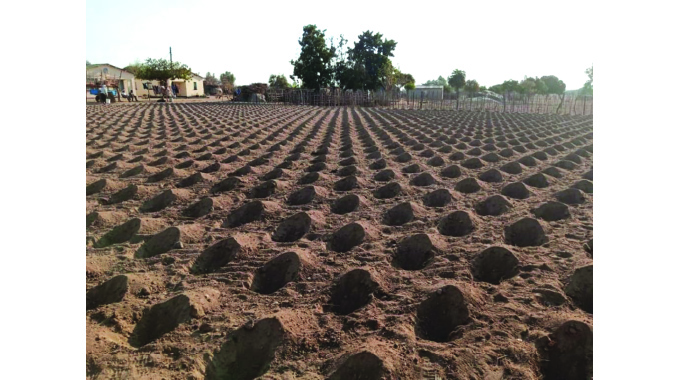
One of the most important Government programmes since independence is ensuring that no one goes hungry, with supplementary food aid distributed to those in need in rural areas and these days modest social payments to others to buy basic food.
This food aid has been distributed even in those not so good times when grain had to be imported to meet Zimbabwe’s needs and foreign currency was very short. Preventing starvation was recognised as an exceptionally high priority.
The Second Republic saw a couple of major changes to fulfil the responsibility of the Government. For a start subsidies on roller meal and other essential foods were removed, since these simply created black markets that prevented those who needed them from ever buying the cheaper food.
In any case subsidies, even when they work, subsidise the rich and the poor alike and create other waste. At one time there were even farmers selling their maize and buying subsidised mealie meal to feed pigs.
But when the Second Republic abolished subsidies, the money saved was instead channelled to making social payments to those who really needed help. This converted a modest subsidy for everyone, rich and poor, into more effective help for the really poor.
On a far grander scale the Pfumvudza/Intwasa programme, and later other programmes such as the Presidential poultry programme, were launched for the double aim of ensuring that many more households would be able to grow enough food and should even have surpluses that they could sell as they moved from dubious subsistence farming to becoming small farm businesses.
The inputs, for up to five Pfumvudza plots, were free, but much of this money came from the savings made on food aid.
It was not just more cost effective to help people grow their own food, there was that very important component of restoring self-respect and self-support to so many, as well as enhancing rural development by creating the surpluses for sale and thus pumping cash into the accounts of so many smallholder farmers.
As the programme developed there were modifications, all designed to boost effectiveness, with the grain types and varieties in the seed packs chosen to maximise harvests regardless of climate zones, and the introduction of sunflower as the major oil seed crop, and a major cash crop for income.
With a significant majority of smallholder farmers now involved in Pfumvudza, the Ministry of Public Service, Labour and Social Welfare, which runs the food aid programmes, and the Ministry of Lands, Agriculture, Fisheries, Water and Rural Development, which runs Pfumvudza and associated programmes, have joined forces to get the minority who did not care involved.
For able-bodied adult smallholder farmers, food aid is now a sort of insurance, there if disaster strikes through drought, flood, cyclone or other climatic horrors.
And to get on the lists for this help in a disaster the household needs to be preparing and farming at least three Pfumvudza plots, enough to ensure they grow their own grain and have a bit over for sale.
Of course there are the elderly, child-headed households, those living with physical disabilities and the like who will continue to need aid, and the two ministries have taken that into account, with village heads empowered to create the needed lists. Even then, we think many in these special households can make some contribution, but clearly cannot be expected to grow all their own food.
The reasoning for the policy shift was made clear last week in a joint statement. The Government will go out of its way to assist everyone to be self-supporting, and will continue to pump resources into programmes that ensure this.
Food handouts are not seen as a solution for those who can support themselves, simply by accepting the offered training and the offered inputs support.
We agree. It is, for a start, far more efficient use of available resources to help people help themselves, which means that there should be more resources for the many other programmes and services that Zimbabweans need.
The budget, the amount the Government is allowed to spend in a year, is largely fixed by the amount of taxes raised. Within that total there are many demands and many needs, and a major job of Government and Parliament is to work out the best allocations of that finite amount of cash.
There are also the views of those who provide the cash, the taxpayers. The Pfumvudza programme has seen zero criticism.
Taxpayers seem to accept, and many positively support, the idea that the Government has a network of extension officers who give training and advice, and that smallholder farmers prepared to put in some hard work are given inputs and cannot just feed their households, but can also earn and keep some money.
But to support those who could be in these programmes but who either want to follow old-fashioned ideas or even do very little work does not really appeal.
Everyone agrees that there are those who cannot work their farms, or not work them flat out, through age and the like, but those who can should.
There is also that central policy, in both Government and in communities, that free-loading is not an attractive option for most people.
One reason Pfumvudza was embraced so eagerly by so many was that it allowed self-respecting households, the large majority, the chance to move away from poverty through their own efforts. What they achieved was their achievement.
Dependency syndromes are a brake on development, and no country can progress if people who should be working are sitting back and not working.
When the culture is do what you can to get ahead, then a lot of progress can be expected. It is that attitude that is so important.
This, for example, is how Zimbabwe is overcoming sanctions and accelerating development, by having most people looking at their own ideas and hard work and driving their own agenda for self-support.
And we see no reason why those who have been reluctant to move away from dependency to be now given more incentive to join the majority.


 Online Reporter